If you’ve ever stepped into a mechanical room during a busy workday, you know it’s not just a room—it’s the heartbeat of the building. Pumps humming, gauges twitching, warm pipes on one side, cold pipes on the other. In all that organized chaos, water loops are constantly moving heat in and out of the building. What keeps these loops working smoothly—almost silently—isn’t always obvious at first glance.
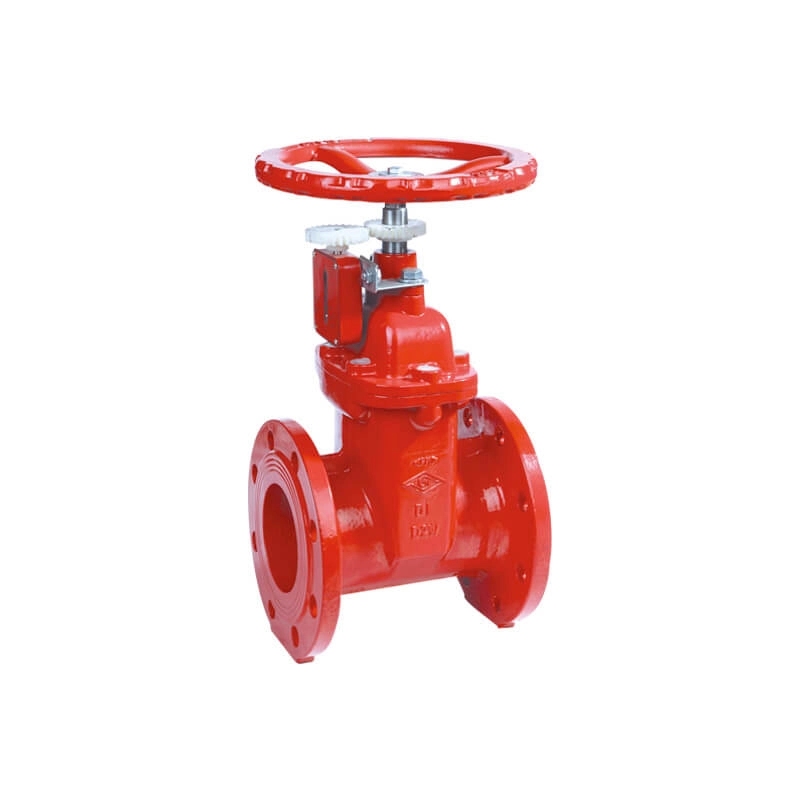
Hidden among the pumps and insulated pipes, gate valves sit quietly doing their job. They don’t attract attention, and maybe that’s the sign of a well-designed system. Gate valves are still one of the most relied-upon components in chilled water (CHW) and hot water (HW) loops because they offer something engineers value: straightforward, predictable behavior and long-term durability.
Even though HVAC systems have evolved quickly over the last decade, the gate valve’s purpose inside these loops has stayed surprisingly steady. Let’s dig into why.
Why HVAC Water Loops Still Rely on Gate Valves
Commercial HVAC systems have very different personalities depending on where they live. A hotel wants quiet and steady. A data center wants cold—always cold. A shopping mall is constantly fighting temperature swings. But they all share one requirement: the hydronic loop needs to run reliably and make maintenance possible without tearing apart the building.
Gate valves help make that happen because they offer:
- A nearly unobstructed waterway when fully open
- A good, firm shut-off
- Predictable performance even after long periods of sitting untouched
- Strength to handle pump cycling and temperature swings
It’s simple engineering, and that’s often why it works.
Full Open Flow: Why It Matters So Much in Chilled Water Loops
Pump energy is one of the biggest long-term costs in large buildings. Engineers fight to reduce friction loss anywhere they can—bigger pipes, fewer fittings, and valve selections that don’t disturb the water more than necessary.
A gate valve, when fully open, is almost like a section of straight pipe. No big disc blocking the middle. No sudden change in shape. That matters because:
- Water moves with less resistance
- Pumps don’t need to work as hard
- Balancing becomes easier
- Chilled water delta-T stays closer to the design range
Anyone who has spent hours troubleshooting an unbalanced chilled water loop knows how much small resistances add up. The gate valve’s unobstructed design is one of the reasons it’s a “safe choice” for main headers, risers, and large branch lines.
Reliable Shut-Off: A Must for HVAC Maintenance Work
If you’ve ever tried to replace a coil, flush a strainer, or work on a pump without proper isolation valves, you know the stress. Water finds its way everywhere. Gate valves reduce this headache because they shut off cleanly and predictably.
They’re used to isolate:
- Air-handling unit coils
- Floor-level branch circuits
- Chiller or boiler headers
- Plate heat exchangers
- Pump suction and discharge lines
A good gate valve stays tight, even after sitting untouched for several seasons. That’s why maintenance teams prefer them—they don’t want downtime or draining half the loop just to access one piece of equipment.
Handling Thermal Expansion and Contraction
Chilled water might run at 5–7°C. Hot water can reach 80–90°C. In one day, depending on system design, a valve might experience a swing of 60° or more. Multiply that by years of daily operation, and weaker valve designs start showing their limits.
Gate valves—especially ductile-iron ones—tend to handle thermal cycling without deforming or loosening because:
- Their internal components move vertically, not sideways
- The body walls are thick enough to tolerate expansion stress
- The sealing surfaces aren’t constantly flexing or rotating
This stability makes them a natural fit for systems with large temperature variations, such as boiler loops and central cooling plants.
Pump Startup, Pressure Surges, and Gate Valve Durability
Many mechanical rooms experience something like this:
A pump kicks on → the pressure spikes for a moment → the whole loop feels it.
This momentary shock, often called water hammer, can rattle thin-walled valves or valves with complex moving parts. Gate valves generally handle these surges better because their structure is inherently strong.
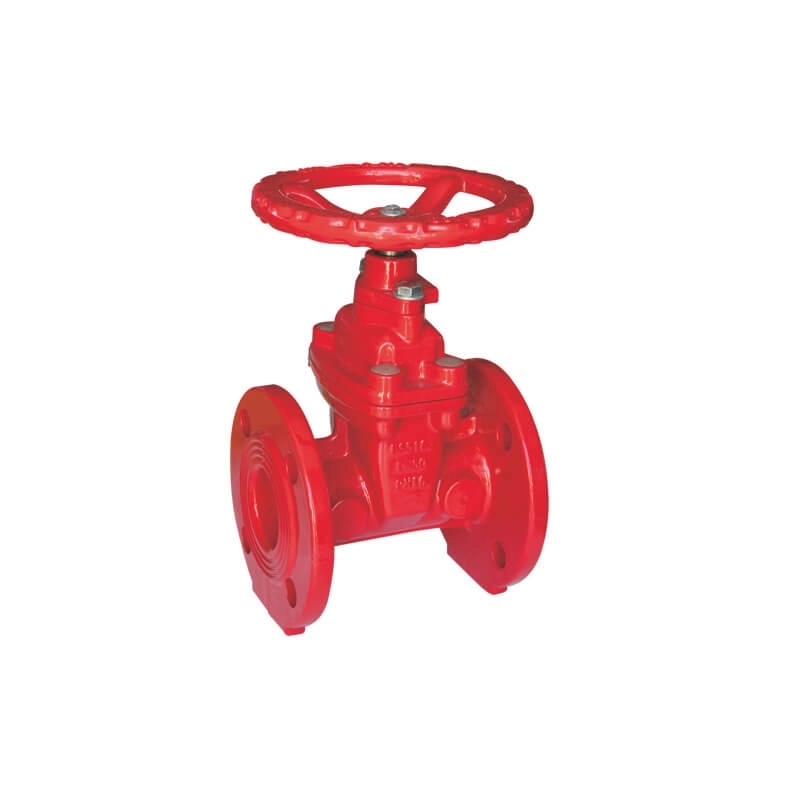
A well-built gate valve, like those produced by Fluid Tech Piping Systems (Tianjin) Co., Ltd., typically has:
- A durable ductile-iron body
- A wedge mechanism that spreads force evenly
- Coatings that resist corrosion even in humid mechanical rooms
- Machined sealing surfaces built for repeated cycles
This makes them reliable for the long haul—an important trait in buildings where pump cycling happens dozens or even hundreds of times per day.
Essential for Redundancy Loops and Equipment Switchover
Modern commercial buildings rarely rely on just one piece of HVAC equipment. They use:
- Multiple chillers
- Multiple boilers
- Standby pumps
- Redundant heat exchangers
- Emergency bypass loops
Gate valves are what make these backup systems usable. They allow operators to:
- Take one chiller offline
- Switch over to a backup boiler
- Open or close bypass lines
- Replace a pump without shutting down the entire plant
In a system where “continuous operation” is a requirement—not a luxury—this isolation capability is invaluable.
How Gate Valves Stack Up Against Other Types
Different valves have different jobs. But here’s the short version:
- Butterfly valves → great for tight spaces, but higher flow resistance
- Ball valves → excellent on small pipe sizes, less ideal for large CHW/HW loops
- Globe valves → perfect for throttling, not for full-open flow
- Check valves → prevent backflow, not shut-off
Gate valves remain the practical choice for large-diameter HVAC piping where wide-open flow and clean isolation matter most.
A Closer Look at Fluid Tech Piping Systems (Tianjin) Co., Ltd.
In an industry where equipment failures can affect hundreds of occupants—or disrupt an entire building—contractors and engineers lean toward suppliers with consistent manufacturing quality.
Fluid Tech Piping Systems (Tianjin) Co., Ltd. has earned its place in hydronic and fire protection projects thanks to:
• Strong Ductile-Iron Valve Bodies
Their gate valves are built to withstand pressure, vibration, and year-round thermal stress.
• Attention to Manufacturing Detail
Casting quality, machining accuracy, and coating durability all follow strict QC practices shown on their website.
• Reliability in Real-World Conditions
Their valves are used across commercial buildings, factories, hotels, and multi-building campuses—environments where downtime is expensive.
• Project-Ready Experience
Years of supplying global markets has shaped their product line into something contractors trust and engineers specify.
Their valves are built not just to work but to keep working—day after day, season after season.
Conclusion
Gate valves have a certain reputation in the HVAC world: not flashy, not new, not complicated—but consistently the right tool for the job. Their low resistance, solid shut-off performance, and long-term durability keep chilled water and hot water loops stable, even in demanding commercial buildings.
As mechanical systems get larger and more interconnected, reliability becomes more valuable—not less. And that’s where gate valves continue to shine.
Manufacturers like Fluid Tech Piping Systems (Tianjin) Co., Ltd. support this stability by supplying valves built for the realities of modern HVAC systems: thermal swings, 24/7 operation, and maintenance demands that never seem to go away.
Gate valves aren’t going out of style anytime soon—and for good reason.
FAQs
Why are gate valves commonly used in HVAC chilled water loops?
Because they open fully, creating almost no flow obstruction. This keeps pump energy low and circulation steady.
Are gate valves a good fit for hot water systems?
Yes. Their ductile-iron bodies and wedge design stand up well to continuous heating and cooling cycles.
Do gate valves provide reliable shut-off during maintenance?
They do. Gate valves offer clean, full isolation, which is essential for servicing coils, pumps, and heat exchangers.
How do gate valves handle thermal expansion?
Their structure tolerates temperature swings without warping, making them dependable in both hot and chilled loops.
Why work with Fluid Tech for HVAC gate valves?
Fluid Tech focuses on casting quality, material strength, and long-term durability—traits contractors appreciate in high-use mechanical systems.