
A threaded fire line can look perfect on day one and still become a maintenance problem later. The reason is rarely “bad luck.” It is usually the cumulative effect of movement and loading that nobody sees in a static shop drawing. In real buildings, how temperature and pressure cycles affect threaded fire sprinkler pipe connections shows up as slow seepage at joints, intermittent dampness after pump events, or a leak that only appears after the system has been in service for a few months.
This article explains what thermal cycling and pressure cycling actually do to threaded joints, why some leaks wait until after hydrostatic testing, and how to control the risk through design choices, installation discipline, and commissioning checks. The focus is practical: what you can verify on site, what you can standardize across crews, and what to document so the next inspection doesn’t turn into a debate.
Why Joints That “Passed the Test” Can Still Leak Later
Hydrostatic testing is a snapshot. It tells you the system can hold pressure at a moment in time, under one set of temperatures, with joints that have not yet experienced repeated expansion, contraction, and pressure swings. After turnover, conditions change. Outdoor runs heat up in the sun and cool down at night. Indoor zones stay relatively stable. Pumps start and stop. Valves cycle. Water temperature can shift, especially in systems that sit idle and then see sudden flow.
Threaded joints rely on a combination of metal-to-metal engagement and the behavior of the sealing method used at the threads. If cycling reduces contact pressure over time or degrades the sealant at the interface, a joint that held during one test can begin to weep later. Research on threaded connections under thermal cycling has reported reduced contact pressure at sealing surfaces and sealant degradation at elevated temperatures, both contributing to increased leakage rates.
Thermal Expansion in Plain Language (With One Quick Calculation)
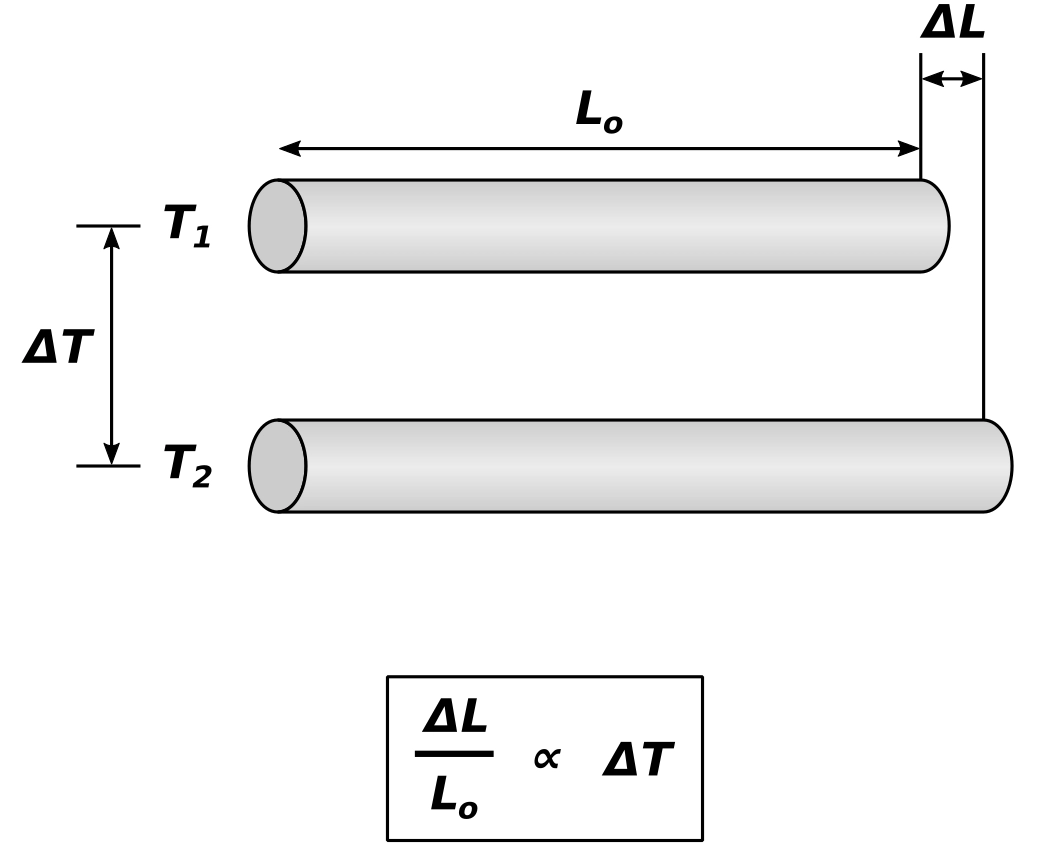
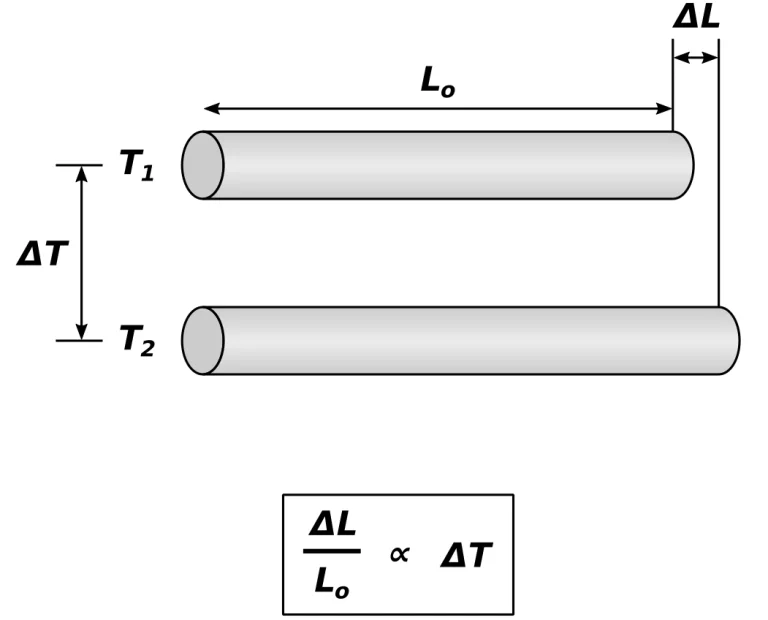
What expansion and contraction do to a threaded joint
Pipe expands when it heats up and contracts when it cools down. That sounds basic, but the real issue is where that movement is “allowed” to occur. If expansion is restrained by supports, anchors, tight penetrations, or rigid equipment connections, the system looks for relief in the weakest places. Threaded joints can become one of those places, especially when the joint was marginal to begin with—slightly over-tightened, contaminated, or assembled with inconsistent engagement.
Even when the joint does not physically loosen, small relative movement can work the sealing interface. Over many cycles, that can reduce the effective sealing stress and create microscopic pathways for leakage.
A quick steel-pipe example you can sanity-check on site
A common rule of thumb for carbon steel’s linear thermal expansion coefficient is about 12 µm per meter per °C (12 × 10⁻⁶ /°C).
Take a 30 m (about 98 ft) run exposed to a 35°C temperature swing between a cool night and a hot day. The length change is:
ΔL = α × L × ΔT
ΔL ≈ 12 × 10⁻⁶ × 30,000 mm × 35 ≈ 12.6 mm (about half an inch)
That half-inch does not mean the pipe slides neatly by half an inch at one location. It means the system is trying to move, and if the layout or supports prevent free movement, loads build up at joints, penetrations, and transitions. The longer the run and the higher the swing, the more important it becomes to manage movement intentionally.
What Pressure Cycling Does Differently (And Why It Speeds Up Problems)
Pressure changes, pump activity, and micro-movement at threads
Pressure cycling is a different kind of stress. Instead of thermal strain along the length, you have repeated internal loading that can slightly change the stress state of threaded engagement. In many facilities, pressure variations can be frequent—jockey pump activity, periodic pump tests, valve operations, and operational transients. The threaded joint experiences repeated loading that can aggravate any weakness created by poor engagement, damaged threads, or inconsistent sealant application.
A useful way to think about it is this: pressure cycling is less likely to create a brand-new failure mode on its own, but it is very good at accelerating a marginal joint toward leakage.
Why some leaks are intermittent
Intermittent leaks frustrate everyone because they disappear right when you want to observe them. Cycling is often the explanation. A joint may remain dry at a steady temperature and pressure, then show a faint weep after a pump event or a temperature shift. If the sealing interface is right on the edge, small changes in contact stress can move it from “sealed” to “not sealed” without any obvious external sign.
When you see intermittent behavior, avoid the instinct to “just add more sealant.” That can actually make diagnosis harder by masking symptoms while the underlying interface continues to degrade.
Sealant Behavior Under Cycles: The Overlooked Failure Mode
Why heat and cycling can reduce sealing effectiveness over time
Threaded joints are not inherently fluid-tight on metal engagement alone; sealing is typically achieved through a sealing method at the thread interface. Under cycling, two things matter: whether the sealant maintains integrity at operating temperatures and whether it maintains the ability to fill micro-gaps as the joint experiences movement.
Thermal cycling can reduce contact pressure at sealing surfaces, and elevated temperatures can degrade certain sealant behaviors, which together can increase leakage rates over time. That does not mean every joint in every building will fail, but it does mean your sealant method should be chosen and applied with realistic service conditions in mind.
What this means for sealant selection and application
For fire protection work, the key is consistency and compatibility with the job’s temperatures and cycling environment. If outdoor piping sees high surface temperatures and daily swings, select a sealing approach known to tolerate temperature fluctuations and pressure changes without becoming brittle. Anaerobic thread sealing technologies, for example, are often described as being suitable where vibration and changing pressures or temperatures are present.
Regardless of the sealant approach, the site variable that ruins outcomes is inconsistency: different crews, different habits, different cleanliness, different make-up feel. A standardized method statement and supervision spot checks typically do more for leak reduction than switching products mid-project.
Common Field Symptoms and the Fastest Way to Diagnose Each One
Leaks during hydrostatic testing
If a joint leaks during hydrostatic testing, treat it as a controlled learning moment. Confirm first that the moisture is truly coming from the threads and not a neighboring interface or condensation. Once the leak point is confirmed, the next question is whether the joint failed because of thread compatibility, damaged threads, poor engagement, or sealing method.
In practice, thread mismatch and cross-threading often leave clues: rough assembly, unusual resistance, or a joint that “tightened” too quickly. If multiple joints fail in a similar pattern, suspect a systemic process issue, not isolated installer error.
Leaks after commissioning
Leaks after commissioning are typically linked to cycling and access constraints. At that stage, focus on conditions that changed after the test: temperature exposure, vibration, pump cycling, and any changes in support or restraint introduced during final works. A joint that was barely acceptable at the test can become a problem once it experiences daily thermal movement and repeated pressure variations.
“Weep marks” and slow seepage
Slow seepage is often a sign of a marginal seal that is gradually being worked by movement. Repeated resealing without addressing root cause can trap teams in a cycle of recurring callbacks. The more effective approach is to standardize the repair method, document the observed condition, and verify whether the joint is in a zone of high movement or high cycling.
Design Controls That Reduce Cyclic Stress on Threaded Connections
Allowing expansion and contraction in layouts
The most reliable way to protect threaded joints is to avoid forcing them to absorb movement they were never meant to carry. In practical terms, that means evaluating long straight runs, transitions between outdoor and indoor zones, and areas where penetrations or rigid supports constrain movement. When movement is expected, the design should intentionally allow it—through layout choices, support spacing, and restraint strategy—rather than letting joints become accidental movement points.
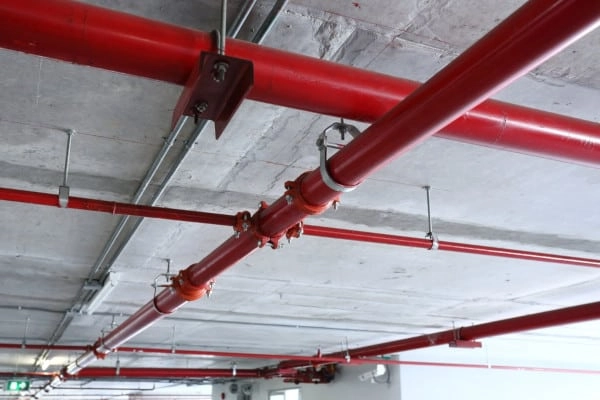
Support, restraint, and “where movement happens”
Supports do more than hold weight. They decide where the system can move and where it cannot. When supports are placed without considering expansion, thermal strain can concentrate near threaded joints, especially at changes in direction or near equipment connections. If your project experiences wide temperature swings or frequent pressure events, it is worth treating support and restraint as part of leak prevention, not as a separate discipline.
If you want a broader view of piping layout considerations, support strategy, and core system components, the overview in Fire Protection Piping Systems: Design, Components, and Best Practices is a useful complement to this discussion.
Installation Controls for Threaded Malleable Iron Fittings
Compatibility checks before assembly
Cyclic loads punish weak interfaces. That makes pre-install verification critical. Confirm thread standard requirements in the approved submittals and match them to what arrives on site. If procurement involves multiple channels, treat compatibility as a formal incoming inspection step, not an assumption.
Engagement and make-up discipline
Thread engagement and make-up are where “craft” becomes “repeatability.” Over-tightening can damage threads and create a joint that is more likely to seep later, while under-engagement can fail under test. The goal is consistent engagement and consistent assembly practice across the crew, supported by supervision that is willing to stop work when a joint does not feel right.
Dust, staging, and handling in real site conditions
Contamination is an underrated leak driver. Dust and grit at the threads can interfere with sealing, especially when combined with inconsistent sealant habits. Keep fittings protected until use, avoid staging open threads near cutting and grinding, and make thread cleanliness part of the crew’s normal rhythm.
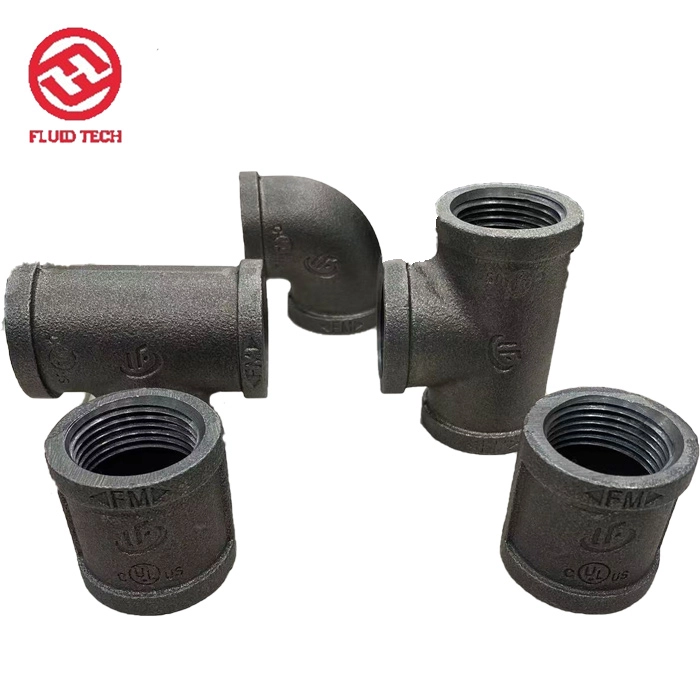
For buyers who need standard-aligned product options, the site groups its malleable iron fittings into BS/EN, American, and DIN families, which can help procurement match project documentation more directly.
A Reusable Pre-Install and Commissioning Brief (In Prose)
A good pre-install brief is short enough that a foreman will actually use it, but specific enough to prevent “everyone does it their own way.” Start by defining the thread standard and documenting how incoming verification will be performed. Then define the sealing method and the cleanliness requirement. Be explicit about what constitutes an unacceptable assembly feel—forcing engagement, rough threading, or joints that bottom out unusually early.
Next, define the commissioning expectations: what “leak-free” means during testing, how leak points will be confirmed, and what the rework method is when a joint fails. Finally, define the post-test reality. If the system will experience large temperature swings or frequent pressure cycling, include a planned recheck window after initial operation. That is not extra work for its own sake; it is a controlled way to catch marginal joints before access becomes difficult.
Product Alignment Without Guesswork
From a procurement standpoint, cyclic reliability improves when product selection, standards documentation, and installation method all align. Fluid Tech’s website positions the company as a comprehensive fire protection system supplier with product scope that includes piping components used across commercial fire projects, and it states that it can support common certification needs such as FM and UL as well as market-specific requirements.
The practical takeaway is not marketing. It is alignment: when the product family, documentation package, and installation plan are consistent, commissioning becomes confirmation rather than troubleshooting.
About Fluid Tech Piping Systems (Tianjin) Co., Ltd.
According to the company’s About Us page, Fluid Tech Group describes itself as a fire protection specialist based in northern China, and it notes that in 2018 it partnered with senior foundries and pipe fittings processing plants to establish Fluid Tech Piping Systems (Tianjin) Co., Ltd., expanding its manufacturing and service capability for fire protection products. For background on the company and how it presents its scope and positioning, see About Fluid Tech.
Conclusion
Temperature cycling and pressure cycling are not abstract theory in fire protection piping. They are daily site and operating realities that can turn a marginal threaded joint into a leak—sometimes during testing, sometimes months later. The strongest programs manage movement intentionally in design, standardize engagement and sealing practices during installation, and treat commissioning as a process that anticipates cycling rather than assuming one test ends the story. When the system is designed for movement, assembled with repeatable discipline, and verified with clear documentation, threaded connections can remain stable even under demanding service conditions.
FAQ
How do temperature and pressure cycles affect threaded fire sprinkler pipe connections?
Temperature cycling causes expansion and contraction that can change contact stress at threads, especially when movement is constrained by supports or penetrations. Pressure cycling repeatedly loads the joint during pump events and operational transients. Over time, these cycles can reduce sealing effectiveness and expose marginal assembly practices.
Why can a threaded joint pass hydrostatic testing but leak later?
Hydrostatic testing is a snapshot. After turnover, joints experience repeated thermal movement and pressure changes. If engagement was marginal, threads were damaged, or the sealing method degrades under cycling, the joint can begin to weep later even if it held during the test.
How much can steel fire pipe actually expand with temperature changes?
A common coefficient for carbon steel is around 12 µm/m°C. Over a 30 m run with a 35°C swing, expansion is roughly 12.6 mm (about half an inch). Whether that becomes a joint problem depends on where the system is allowed to move and where it is restrained.
What installation practices reduce leak risk in high-cycling environments?
The biggest wins come from consistency: verifying thread compatibility before assembly, keeping threads clean, applying the sealing method the same way across the crew, and avoiding assembly practices that damage threads. Pair that with a commissioning approach that confirms leak points accurately and corrects root causes rather than repeatedly resealing.
When should a project reconsider threaded connections?
If a zone has long restrained runs, large daily temperature swings, frequent pump cycling, or vibration, the project should treat cyclic loading as a design input. In some cases, that leads teams to add movement accommodation, adjust restraint strategy, or select connection approaches that better tolerate movement, rather than relying on threaded joints to absorb it.

 French
  English
  Arabic
  Spanish
  Italian
  Russian
  Portuguese
  German
  Dutch
Dutch  Japanese
  Vietnamese
  Korean
  Malay
Malay  Thai
Thai  Danish
  Swedish