
Commercial projects in the Middle East have a way of turning small installation lapses into expensive punch-list items. A threaded joint looks fine on day one, passes a quick visual check, and then starts weeping during hydrostatic testing—or worse, weeks after handover when ceilings are closed and access is a headache. In many cases, the fittings aren’t the real culprit. The failures trace back to repeatable field conditions: mixed thread standards, rushed make-up, inconsistent sealant habits, dusty staging, and heat-driven movement that gradually exposes marginal joints. This article focuses on common installation issues with malleable iron fittings in Middle East fire projects and explains how to diagnose, fix, and prevent them with straightforward, site-ready methods.
The goal is practical control, not theory. You’ll see where thread mismatch (BSPT vs NPT) typically shows up, how overtightening and poor thread engagement create slow leaks, and why contamination and storage practices matter more than most crews expect. If you’re also evaluating the broader regional picture—materials, standards, documentation expectations, and selection tradeoffs—a dedicated Middle East fire piping guide will be published separately; this page stays on the installation side so you can reduce rework and keep testing predictable.
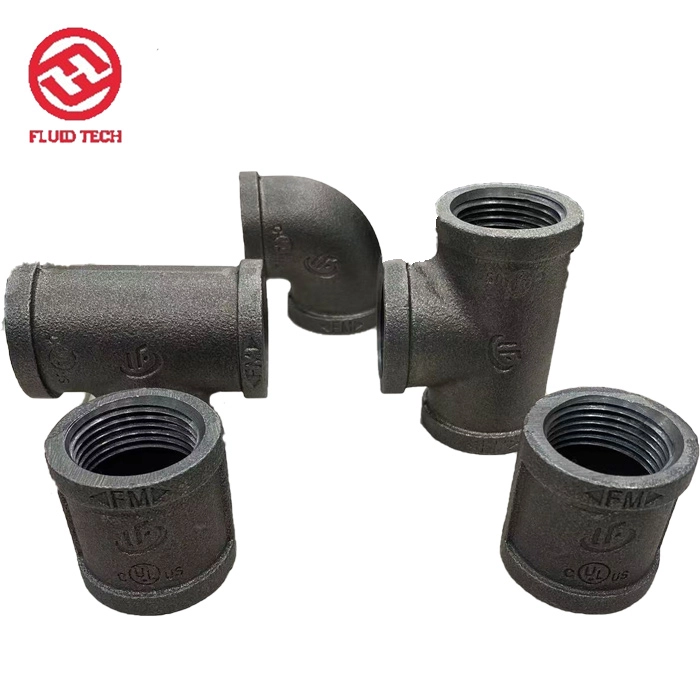
Why Middle East Sites Magnify Threaded Fitting Failures
Threaded systems are sensitive by nature: they depend on clean threads, correct engagement, compatible standards, and the right sealing method. Middle East sites add stressors that make marginal workmanship show up faster. High daytime temperatures and sharp temperature swings between outdoor runs and air-conditioned interiors can create subtle movement at joints. Desert dust can contaminate threads and sealants if fittings are staged open or stored improperly. Coastal salinity in Gulf-adjacent areas can accelerate external corrosion if coatings and handling don’t match the environment. None of this is exotic. It’s normal jobsite reality—so your installation process has to be normal-jobsite-proof.
The good news is that most of these issues are preventable with a tighter “spec-to-purchase-to-site” chain and a repeatable pre-install briefing that everyone actually follows.
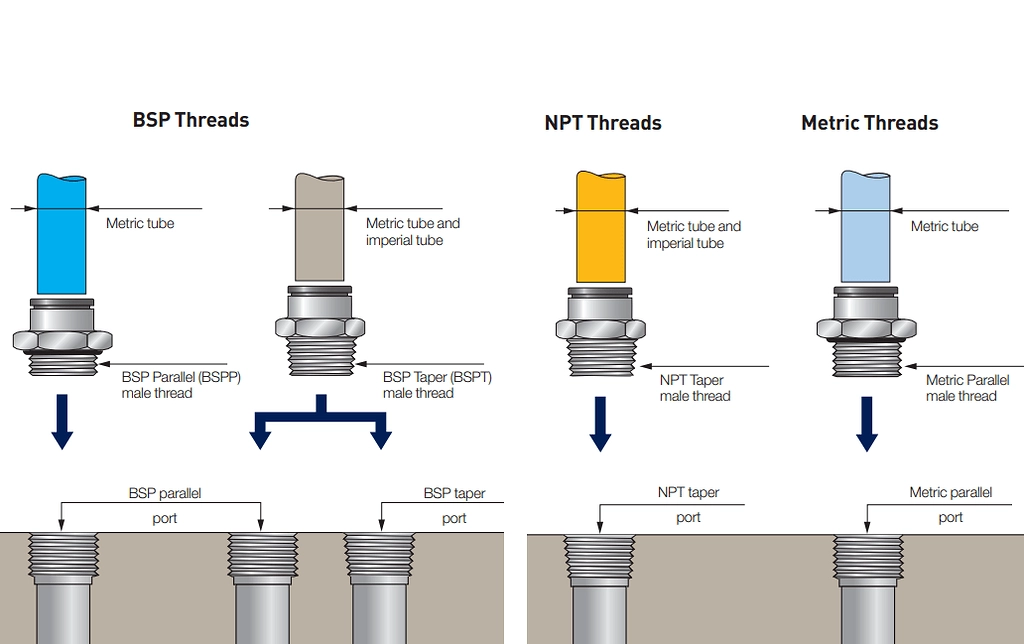
Issue A: Thread Standard Mismatch and Compatibility Assumptions
What it looks like onsite
A thread mismatch rarely announces itself as “wrong thread standard.” It shows up as joints that feel rough going in, fittings that “bottom out” too early, or connections that look tight but still weep during hydrostatic testing. Teams often blame sealant first, then blame the fitter, and only later discover that the fitting and pipe were never meant to mate.
Why it happens in the Middle East supply chain
Middle East projects frequently involve multi-country procurement. Pipes may arrive specified one way, fittings sourced another way, and the crew on the ground assumes tapered threads are interchangeable. They are not. If your procurement package doesn’t explicitly lock thread type, you’re effectively asking the field to resolve a standards question with a pipe wrench.
How to catch it early
The practical fix is procedural, not philosophical. Before installation starts, confirm the thread standard on the submittal and match it to purchasing records and incoming inspection. If your project has multiple contractors, the check has to be shared, not assumed. When a mismatch is found, it’s cheaper to quarantine and replace than to “make it work” with extra tape, extra torque, or luck.
Issue B: Incorrect Torque and Poor Thread Engagement
The “too tight” mistake that causes slow leaks
Over-tightening is one of the most common causes of long-term seepage in threaded systems. It can damage threads, distort the joint, or scrape away sealant during make-up. The connection may pass initial testing, then begin to seep after thermal cycling, vibration, or normal system handling. This is exactly the kind of defect that burns project teams, because it appears after ceilings are closed and access gets expensive.
The “not engaged enough” mistake that fails under test
The flip side is incomplete engagement. If the fitter stops early—because the thread feels rough, because the wrench slips, or because the crew is trying to avoid cracking finishes—the joint can look aligned but lacks the mechanical fit needed for a reliable seal. Under pressure, it finds the path of least resistance.
A field-friendly diagnostic approach
When a joint leaks, don’t jump straight to “more tape.” First, isolate whether the leak is truly at the threads or at a neighboring interface. Wipe the area dry, observe the first point of moisture, and check whether the joint shows signs of cross-threading or galling. If the fitting had to be forced into place, that’s a strong indicator the problem started before sealant ever mattered.
Issue C: Sealant Problems in Dusty, High-Tempo Installations
What goes wrong with tape and compound in real conditions
Thread sealant failures on Middle East sites often come from inconsistency, not product choice. Crews vary on how many wraps they use, where they start, how they handle the first thread, and whether they keep sealant out of the line. In dusty environments, the bigger issue is contamination: grit becomes embedded in tape or compound, and the joint stops behaving like a controlled sealing interface.
How to prevent contamination without slowing the job
Clean threads before assembly. Keep caps on fittings until the moment they’re used. Store open cartons away from cutting and grinding zones. These steps sound basic, but they’re the difference between repeatable work and recurring punch-list leaks.
A practical rule that reduces rework
Whatever sealing method your project uses, standardize it across the crew and enforce it through spot checks. Variation is the enemy. Two installers using two different “personal methods” creates two different failure patterns—and troubleshooting becomes guesswork.
Issue D: Thermal Cycling and Corrosion That Accelerate Joint Failure
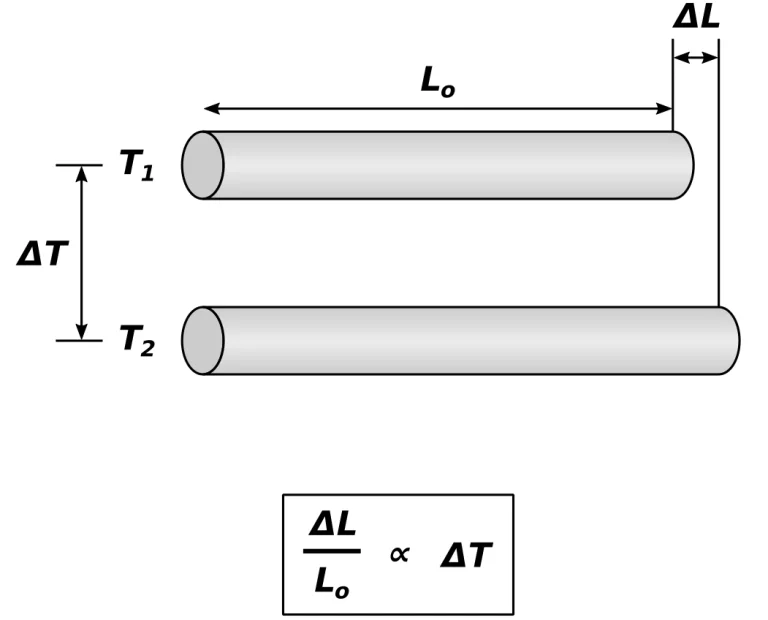
Why day-to-night movement matters
Even when joints are assembled correctly, temperature changes can expose weak practices. Outdoor runs heat up, indoor zones stay cool, and the system experiences expansion and contraction. If joints were over-tightened, damaged, or marginally engaged, movement can turn a borderline joint into a leaking one over time.
Corrosion reality in coastal regions
In coastal areas, external corrosion can start at exposed edges and progress under coatings if handling and storage are poor. If fittings are left wet, stored on bare ground, or exposed to salty air for extended periods before install, you’re effectively aging the product before the system is even commissioned.
Prevention that actually works onsite
The field fix is boring—but effective. Keep fittings dry. Protect threads. Avoid storing fittings where they collect dust and moisture. Make sure coatings and finishes are handled as protective layers, not as packaging that can be scraped off without consequence. When crews treat corrosion prevention as part of installation quality, long-term leakage and maintenance calls tend to drop.
Issue E: Debris, Blockage, and Hidden Commissioning Failures
Why blockage is under-detected
Debris problems don’t always show up as dramatic failures. A small amount of thread cutting debris, tape fragments, or construction dust can collect at restriction points and create inconsistent flow, nuisance alarms, or poor discharge performance. Teams may only notice symptoms during testing, then struggle to trace the root cause back to early installation habits.
How it happens during construction
It happens when lines are left open, fittings are assembled in dusty areas, or sealing materials are applied in a way that sheds into the pipe. It also happens when site tempo pushes crews to assemble quickly without the small discipline of keeping interfaces clean and protected.
The decision point: rework now or pay later
If obstruction risk is suspected, address it before ceilings close and before final finishes make access difficult. The cost curve is unforgiving. Early correction is usually straightforward; late correction often becomes a schedule problem.
Documentation and Inspection Reality in Middle East Fire Projects
What inspectors and client teams typically want to see
In many Middle East projects, inspection isn’t only about whether the system holds pressure today. It’s also about whether the project can demonstrate controlled installation: correct materials, traceability where required, consistent workmanship practices, and test documentation that matches the approved method statement.
The compliance package that reduces friction
When documentation is prepared in a consistent way—product identification, relevant certificates where applicable, installation and inspection records, and clear test reports—site conversations become faster and less adversarial. When it’s missing, small issues get escalated, because nobody can prove what was installed and how it was installed.
A Reusable Pre-Install Brief for Malleable Iron Threaded Joints
A pre-install brief is not a corporate formality. It’s how you align procurement, supervision, and installers before they create hundreds or thousands of joints that you’ll later have to own.
Start by locking the thread standard and confirming it matches the project submittal, purchasing documents, and incoming inspection. Then define a single sealing method for the job—what material is used, how it’s applied, and how contamination is prevented in dusty areas. Set an engagement and make-up expectation that avoids both under-engagement and over-tightening, and make it clear that “forcing” a joint is a stop sign, not a point of pride. Finally, define the inspection rhythm: spot checks during installation, a clear approach to identifying leaks during hydrostatic testing, and a rework protocol that prioritizes root cause over repeated resealing.
This brief should be reviewed with the crew at the start of each phase, not once at kickoff. Middle East sites evolve quickly; consistency doesn’t happen by accident.
Product Alignment for Specification and Procurement
For teams using threaded fittings in fire sprinkler and fire piping systems, it helps to source from a supplier that organizes products by the standards and categories your job actually references. Fluid Tech Piping Systems (Tianjin) Co., Ltd. structures its malleable iron fitting range by common market standards—including BS/EN, American, and DIN families—so procurement can align purchasing with project documentation instead of trying to reconcile it on site.
If you need to review the available fitting families and subcategories, start with the raccordi in ferro malleabile page.
About Fluid Tech Piping Systems (Tianjin) Co., Ltd.
Fluid Tech’s fire protection business presents itself as a one-stop supplier covering core system components for fire projects, including fittings and related piping system products. The company states that it established Fluid Tech Piping Systems (Tianjin) Co., Ltd. in 2018 in cooperation with multiple senior foundries and pipe fittings processing plants, positioning the business around manufacturing and services for fire protection products. For a concise overview of the company background and positioning, you can refer to the About Us page. If you’re evaluating suppliers for a project-wide procurement approach rather than a one-off purchase, the broader site overview at the one-stop fire protection system supplier page shows how the product scope is organized.
Conclusione
Most installation issues with malleable iron threaded fittings in Middle East fire systems are not mysterious defects. They’re predictable outcomes of predictable gaps: thread standard assumptions, inconsistent sealant practice, poor engagement or over-tightening, contaminated staging in dusty areas, and heat-driven movement exposing marginal joints. The teams that avoid rework do three things well. They verify compatibility before the first joint is made. They standardize workmanship so every installer is building the same connection, not a personal interpretation. And they treat documentation and inspection records as part of installation control, not as paperwork after the fact. When that discipline is in place, hydrostatic testing becomes confirmation—not a surprise.
FAQ
What are the most common installation issues with malleable iron fittings in Middle East fire projects?
The most common installation issues with malleable iron fittings in Middle East fire projects are thread standard mismatch, inadequate thread engagement, over-tightening, inconsistent sealant application, and contamination from dust during staging and assembly. These problems often show up as leaks during hydrostatic testing or slow seepage after commissioning.
Can thread mismatch cause leaks even if we use extra sealant?
Yes. Extra sealant may mask symptoms temporarily, but it does not correct mechanical incompatibility. A mismatch typically creates poor engagement and uneven sealing surfaces, which increases leak risk and can damage threads, making future rework harder.
Why do joints pass pressure tests but leak later?
This often happens when joints were marginally engaged, over-tightened, or contaminated. Thermal cycling, vibration, and normal handling can gradually disturb a borderline seal, turning a “passed” joint into a slow leak after ceilings and access are closed.
What’s the best way to reduce recurring leaks in threaded fire piping?
Standardize the installation method across the crew, protect threads from dust and moisture before assembly, verify thread compatibility early, and enforce a consistent sealant technique. Pair that with spot inspections during installation and clear rework rules that focus on root cause rather than repeated resealing.
How should we document installation quality for inspection in Middle East projects?
Keep a consistent record set: incoming material verification, any required certificates, installation and inspection records, and test reports that match the approved method statement. Clear traceability and consistent records reduce inspection friction and help resolve disputes quickly if issues arise.

 Italian
  English
  Arabic
  Spanish
  Russian
  Portuguese
  German
  French
  Dutch
Dutch  Japanese
  Vietnamese
  Korean
  Malay
Malay  Thai
Thai  Danish
  Swedish