Ask anyone who has worked on a buried water main during a winter shutdown, or stood in a muddy trench trying to isolate a leaking section, and they will tell you the same thing: reliability in a municipal network doesn’t come from flashy components. It comes from equipment that behaves the same way in year ten as it did on the day it went in the ground. That is why gate valves still anchor most municipal water distribution systems. Their mechanical simplicity, predictable sealing, and long-term stability make them a practical choice in an environment where emergency repairs cost more than any specification sheet can show.
A water distribution network is not a controlled laboratory system. Pressures climb during morning demand spikes, drop suddenly at night, change again when high-service pumps kick on, and react sharply when hydrants are opened for flushing or firefighting. In these conditions, what a city needs is not a valve packed with sensitive features, but a valve that tolerates variation without losing its ability to seal. This is where high-reliability gate valves demonstrate their value. Their ability to lift the gate fully out of the flow path reduces head loss and avoids the turbulence that accelerates wear in other valve types.
Municipal engineers talk less about performance curves and more about the number of excavations avoided over ten or twenty years. If a valve closes fully, holds pressure, and doesn’t seize up after long periods of inactivity, it has already met most of what a city expects from its underground assets.
Understanding Reliability Where It Actually Matters
In textbooks, reliability is defined in percentages. In field work, it’s defined by how often a crew is sent to dig up a roadway because a valve wouldn’t budge. A typical municipal water distribution gate valve may not be cycled often, but when it is needed—usually during a repair or an emergency—it must operate cleanly. Valves that rely on more delicate internal components tend to show their weaknesses after years of sediment buildup or ground movement. Gate valves, on the other hand, often tolerate misalignment and debris better than alternative designs.
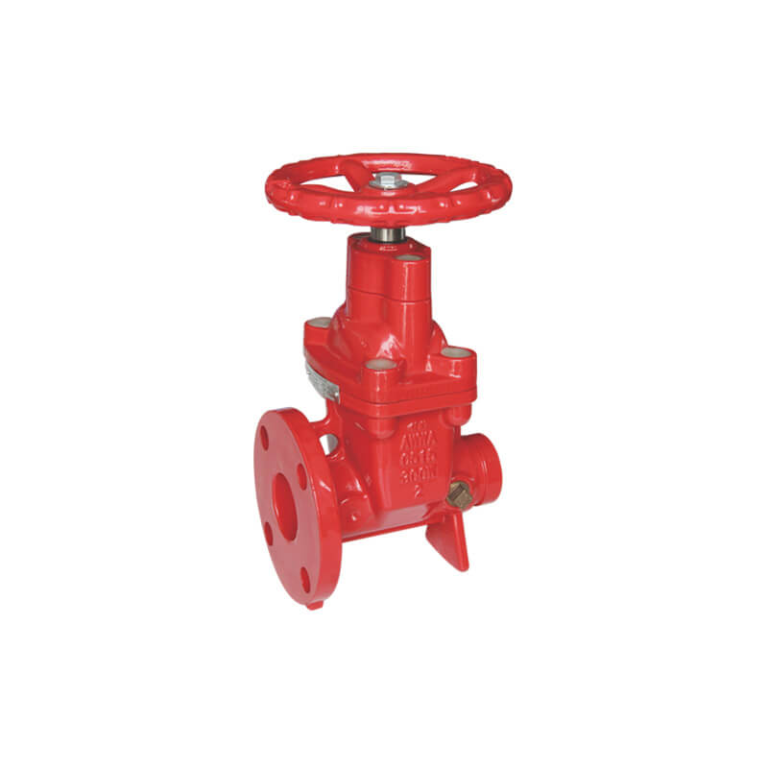
Another practical advantage is the consistent torque profile of a well-designed resilient-seated gate valve. Even after years underground, torque requirements remain within a range that operators can handle with manual wrenches or standard valve-turning equipment. This is not a small point; in cold regions, soil heave can distort pipe geometry, and valves with tight tolerances often fail under these conditions. The elastic sealing surface of a resilient seat compensates for minor variations in contact, preserving shutoff integrity.
Municipal supervisors know that if a valve sticks once, they will probably hear about it again. With gate valves, the likelihood of that cycle repeating is significantly lower.
High Pressure, Long Service Life, and the Demands of a Real Network
Urban water systems rarely operate at one steady pressure. Pump stations cycle, reservoirs empty and refill, and firefighting events can generate sudden surges that stress every component in the line. A high-pressure gate valve is designed with this instability in mind. Thick body walls, ductile iron construction, and reinforced bonnets help contain pressure spikes that would deform lower-grade equipment.
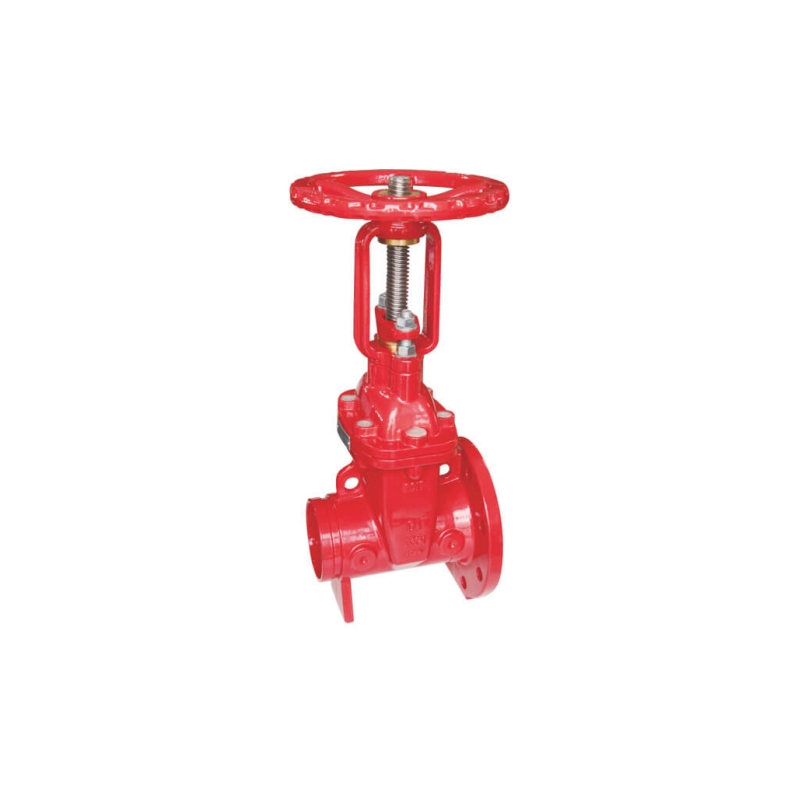
Durability also comes from how well the stem and sealing system handle long periods without movement. Many municipalities prefer gate valves because the rising-stem or non-rising-stem configurations maintain stable motion even after extended static conditions. Internal coatings also play a major role. Epoxy linings that adhere securely reduce corrosion, meaning the valve does not develop pits or rough spots that compromise sealing performance.
In engineering reviews, one question often comes up: how does the valve age? A reliable gate valve ages slowly, predictably, and evenly. That allows maintenance planners to trust service-life projections rather than guess.
Reducing Shutdowns and Maintenance Requirements
Unplanned excavations are expensive—not because of the pipe work, but because of traffic control, emergency staffing, and the coordination required with utility and city departments. The fewer times a municipality needs to expose a buried valve, the better. This is another reason gate valves for municipal systems remain the standard. Their simple vertical closure motion has fewer wear points, and once the gate is fully open, its design avoids the partial-obstruction problems that can cause vibration or accelerated deterioration in other valve styles.
In older grids, where pipes from different decades and materials intersect, gate valves also adapt better to system unpredictability. Sediment often collects in low spots; gate valves have the advantage of allowing debris to pass with minimal interference when the valve is open. The lower chance of jamming directly translates to fewer maintenance calls.
Cities planning long-term capital improvement projects appreciate valves that do not demand constant attention. In many respects, reliability is not about peak performance but about a lack of surprises.
Engineering Consistency at FLUID TECH PIPING SYSTEMS (TIANJIN) CO., LTD
For procurement teams, selecting a valve is only half the decision. The other half is choosing a manufacturer that delivers consistent quality batch after batch. Fluid Tech Piping Systems(Tianjin)Co。、Ltd has built its identity around that consistency. Their production focuses heavily on pressure-class stability, uniform casting quality, and coating processes that hold up in corrosive soils and fluctuating water chemistry.
Their gate valves undergo hydrostatic pressure testing and torque verification in controlled conditions before shipment. More importantly, the company aligns its product line with international certifications that municipal clients often require for network upgrades. These certifications are not marketing points; in practice, they validate that the valve will behave predictably under the same demanding conditions found across municipal installations worldwide.
For cities facing aging infrastructure and rising service expectations, working with a supplier that respects the realities of underground systems is essential. FLUID TECH’s engineering philosophy fits that need—fewer maintenance interruptions, fewer premature replacements, and a design approach centered on long-term stability.
結論
Municipal water networks are complex ecosystems shaped by pressure fluctuations, ground movement, variable water quality, and the expectation that buried infrastructure should function for decades with minimal intervention. Gate valves remain central to this system not because they are glamorous, but because they quietly deliver what the network needs most: dependable shutoff, stable operation, and a long service life unaffected by the ups and downs of daily demand.
When manufacturers like FLUID TECH PIPING SYSTEMS (TIANJIN) CO.,LTD commit to producing gate valves with high pressure resistance, consistent sealing, and robust construction, they support the kind of reliability cities depend on. In the long arc of municipal planning, a valve that performs without drawing attention is worth far more than one that promises advanced features but struggles under real-world conditions. Reliability, in this context, is measured trench by trench, year by year, and gate valves have earned their place precisely because they meet that standard.
FAQs About Gate Valves in Municipal Water Systems
Why are gate valves considered the most dependable option for municipal distribution systems?
Because their full-open design minimizes head loss, their sealing mechanism tolerates sediment, and their long-term torque stability makes them suitable for buried service where operation may be infrequent but critical.
How do high-pressure gate valves help manage fluctuations in a city water network?
Their reinforced bodies and resilient internal geometry allow them to absorb daily and seasonal pressure swings without distortion, helping maintain consistent performance across changing operating conditions.
Can gate valves handle the mixed-material pipelines common in older cities?
Yes. Gate valves perform well in grids where pipe alignment isn’t perfect, because the resilient seat compensates for small irregularities and maintains a stable seal even in worn or aging systems.
What makes FLUID TECH a strong choice for municipal procurement teams?
Their gate valves are tested for pressure and torque reliability, built with durable materials, and certified to international standards, which supports long-term network stability and predictable performance.
How do gate valves help reduce maintenance costs for water utilities?
Their simple mechanism reduces wear, their coatings protect against corrosion, and their consistent operation limits the need for emergency excavations, lowering both direct repair costs and indirect labor expenses.