The 2025 edition of NFPA 13, Standard for the Installation of Sprinkler Systems, went into effect late last year, and crews in the field are navigating the consequences on current installations. The standard applies tighter criteria to dry and preaction systems, introduces expanded protection approaches for sloped ceilings with pitches up to 4 in 12, adds further limitations on standard spray sprinklers below ceilings over 30 feet, and includes defined requirements for supplemental sprinklers along with vapor corrosion inhibitors. Dry-system water transmission timing stays under close control, gridded layouts receive an outright ban after the full reorganization of Section 8.2, and acceptance testing continues to expose issues that call for additional hydrostatic evaluations or layout corrections. These modifications aim to boost overall system reliability in service, but the day-to-day impact on sites involves more intensive AHJ review and longer intervals to secure approval, especially on projects falling under the 2026 adoption window.
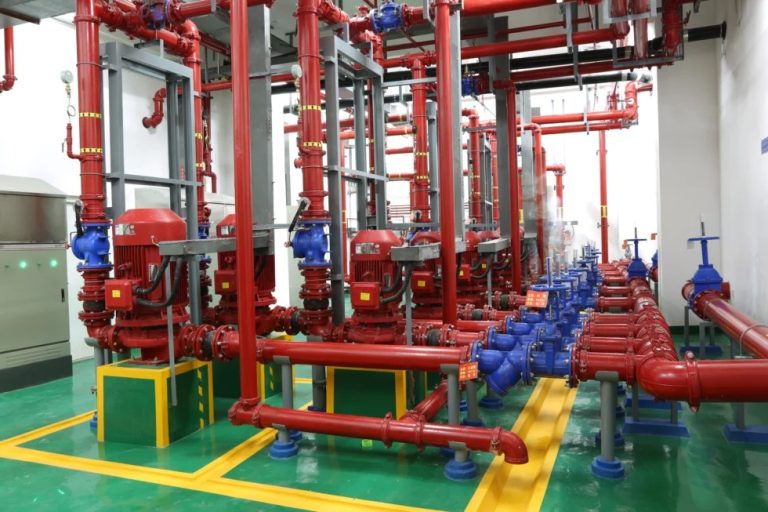
Ductile iron grooved fittings—mechanical couplings paired with compatible fittings—serve as a practical, proven solution for addressing these demands while maintaining workable timelines. This joining method substantially reduces connection time relative to threaded or welded options, creates joints that hold steady through pressure verification, and offers adequate flexibility to meet the movement provisions noted in various updated sections. Contractors dealing with constrained schedules in the present regulatory setting regularly see lower rejection frequencies and quicker final clearances when applying this connection approach.
Key Changes in NFPA 13 2025 and Why They Matter for Installers
A series of targeted revisions in the 2025 edition affect design choices, material decisions, and on-site procedures. Dry and preaction systems experienced the most extensive reorganization. The revised Section 8.2 explicitly eliminates gridded piping to ensure water delivery falls within the 60-second limit in typical cases, steering layouts toward tree or loop patterns that can complicate routing in tight plenums or around structural features.
Sloped ceilings gain significantly wider protection allowances. Research-backed rules in Section 20.9 enable ESFR and CMSA sprinklers to cover storage under slopes reaching 4 in 12, presenting six separate protection methods that sometimes include in-rack sprinklers or added shielding in complex geometries. Deflector alignment guidance receives clarification—generally parallel to the ceiling slope or oriented to the floor plane as conditions dictate—which broadens storage options in current facilities but calls for accurate placement and frequently requires supplemental heads under beams, ducts, or fixtures.
High ceilings above 30 feet now include occupancy-determined restrictions for standard spray sprinklers, paired with adjusted C-factors used in hydraulic computations. Vapor corrosion inhibitors obtain formal acknowledgment, permitting a C-value of 120 in fresh dry systems when following Section 8.2.11 guidelines, which aids in pipe dimensioning within corrosive settings. Supplemental sprinklers below obstructions gain separate definitions, with corresponding placement, spacing, and discharge calculation stipulations in Chapter 28.
Overall, the revisions stress dependable early water discharge, thorough obstruction handling, and lower long-term corrosion risks. In field application, though, they raise the odds of AHJ notations. Minor variances in dry-system timing, a deflector out of position under a sloped ceiling, or a slight drip found at 200 psi hydrostatic can require retesting and timeline extensions. Installations sticking with standard joining techniques often require extra hours to correct small flaws that rigid connections exaggerate under these demands.
Common Pain Points During Inspections Under the New Rules
Installations subject to the 2025 edition encounter several familiar difficulties at acceptance. Dry-system checks often prolong because branch volumes or routing selections near the maximum water-delivery allowance, particularly when designs carry forward pre-2025 influences. The 200 psi hydrostatic test promptly highlights problems—threaded joints sometimes show gradual leakage from overly deep threads or displaced compound, while welds may reveal concealed porosity once pressure settles.
Sloped-ceiling work demands careful focus on supplemental sprinkler locations; a single displaced head or spacing infraction fails the visual review immediately. Field reports indicate schedules slipping weeks: personnel re-thread offset runs, conduct successive drain-refill operations to trace occasional leaks at high points, or shift branches to meet obstruction updates. AHJs, implementing the amended text more rigorously, seldom pass near-miss outcomes. Results encompass postponed occupancy certificates, triggered delay penalties, and complicated relations with general contractors. These issues appear steadily in initial 2025-edition projects, notably where corrosion exposure or movement stresses test connection durability.
How Grooved Fittings Address These Challenges Directly
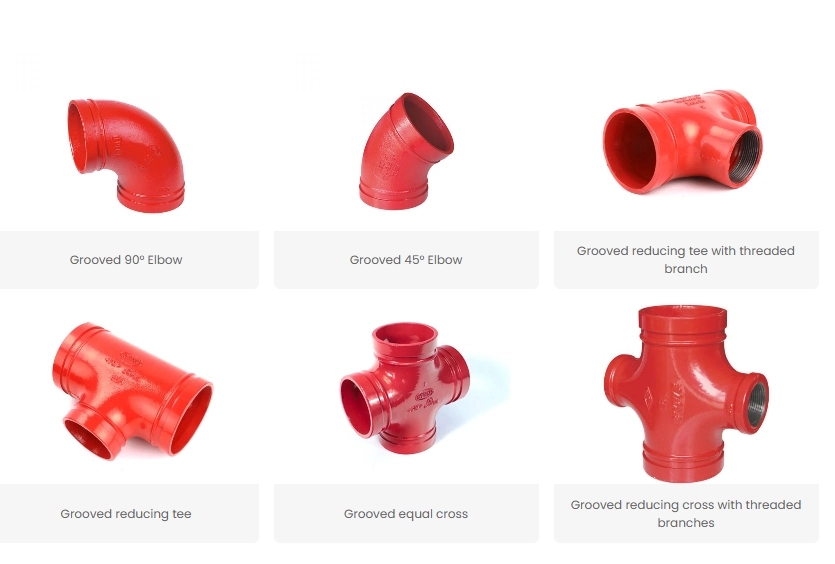
Grooved fittings transform the process by speeding joint makeup and bolstering results at key inspection stages. Assembly moves forward briskly: a ductile iron coupling secures in about 5 to 10 minutes per joint, far shorter than the time needed for threading substantial pipe or performing welds plus inspections. Removal of flame work, radiographic needs, and cooldown phases hastens advancement, particularly on lines 2 inches and above.
Sealing performance shows clearly in hydrostatic checks. The elastomer gasket, seated correctly in the rolled groove, forms a consistent seal that endures 200 psi and more with reduced variation compared to threaded sealants or weld zones. Confirmation depends mainly on visual review of housing fit and bolt torque, cutting inspection time and lessening repeated pressure cycles. Contractors under the current edition commonly record markedly better initial success rates with grooved setups.
Numerous grooved couplings naturally allow controlled axial shift and slight angular offset, beneficial for lengthy runs facing thermal variation or zones affected by pump vibration or seismic forces. This capability matches the standard’s emphasis on movement allowance and improves steadiness in dry arrangements where grids no longer qualify. For sloped-ceiling or high-storage layouts, the system’s modular setup eases changes mid-installation—disconnect, realign, reconnect—without the extensive effort of re-threading or re-welding.
Actual outcomes confirm these traits. Moderate warehouse retrofit jobs using grooved fittings on mains and branches regularly cut joint labor by over half. One noted example reduced a 40,000-square-foot dry system from close to three weeks of fitting to under ten days, ending with an acceptance test passed without rework. The cleaner environment—lacking weld residue, cutting fluids, or thread debris—also earns positive marks in AHJ workmanship reviews.
Practical Steps to Maximize Grooved Fittings for Faster Compliance
Capturing the full value of grooved fittings under NFPA 13 2025 starts with purposeful planning.
Check listing validity early in specification. Pick ductile iron grooved couplings and fittings with current UL and FM certifications matching present pressure, temperature, and compatibility standards. Sizes starting at 2 inches handle most fire-main and branch needs.
Design in grooved connections for mains and major laterals, especially in dry and preaction layouts where delivery timing draws scrutiny. Locate flexible couplings at critical spots—near risers, pumps, or long straights—to absorb expansion and contraction without loading rigid sections unduly.
In execution, groove accuracy counts. Roll or cut to exact tolerances for full gasket contact, use specified lubricant, tighten bolts in crisscross order, and inspect housing gaps directly. Avoid excess torque to guard against gasket distortion.
Before final review, perform a low-pressure flush to clear debris, then complete the required hydrostatic hold. Keep torque records and alignment images—such materials demonstrate methodical practices to AHJs. In discussions, point out how mechanical joints advance the edition’s aims: stable hydraulics, lower leak exposure, and flexibility for site realities.
When modifications arise mid-job—such as new obstructions calling for extra supplemental sprinklers—grooved modularity supports fast reconfiguration with minimal delay.
About Fluid Tech Piping Systems (Tianjin) Co., Ltd.
Fluid Tech Piping Systems (Tianjin) Co., Ltd., founded in 2018 and located in Tianjin, China, operates as a specialized manufacturer focused on fire protection products. The lineup includes ductile iron grooved fittings and couplings, malleable iron threaded fittings, valves, sprinklers, flexible drops, hangers, and seismic bracing elements. Export-oriented items hold UL, FM, CE, LPCB, and VDS certifications, with production facilities carrying ISO, SGS, and TUV approvals. Situated in a major northern logistics area, Fluid Tech stresses reliable delivery, timely technical support, and cost-effective solutions built to satisfy demanding safety and performance criteria in worldwide fire-protection work.
Conclusion
The NFPA 13 2025 edition sets raised standards for sprinkler performance, focusing on prompt water delivery in dry setups, broader coverage under sloped and high ceilings, and better resistance to ongoing corrosion. While these rules improve protection results, they highlight the value of installation approaches that curb inspection holdups and rework. Grooved fittings fit well with the updated demands by delivering secure, adaptable connections that build efficiently, maintain pressure dependably, and allow changes without heavy time or resource costs. Installers using this method in the existing standard often achieve more efficient acceptance paths, shorter overall durations, and fewer return visits. In a setting where compliance pressures keep growing, these field-level advantages carry real weight.
FAQs
What are the biggest changes in NFPA 13 2025 that affect installation timelines?
The 2025 edition bans gridded layouts in dry systems, widens sloped-ceiling protection to 4 in 12 pitch with ESFR and CMSA sprinklers, strengthens high-ceiling constraints, and defines rules for supplemental sprinklers and vapor corrosion inhibitors. These shifts require tighter layout accuracy and commonly extend testing when joints show pressure inconsistencies.
How do grooved fittings help pass hydrostatic tests faster under NFPA 13 2025?
Grooved couplings use a seated elastomer gasket for uniform sealing that outperforms threaded joints or welds prone to porosity. Visual checks of housing alignment and torque enable quick confirmation, letting many systems meet 200 psi hydrostatic standards on the first try and cutting retest needs.
Are grooved fittings compatible with the new sloped ceiling and dry system rules in NFPA 13 2025?
UL/FM-listed ductile iron grooved fittings stay fully compatible under the current edition. Flexibility in many couplings handles movement in long runs and vibration areas, and modular construction simplifies adjustments for obstructions or supplemental sprinklers without major rework.
Why choose grooved over threaded fittings for faster inspections in 2025 projects?
Grooved connections assemble in minutes without welding or intensive threading, form joints with fewer leak opportunities, and support fast visual checks. In work under strict dry-system timing or precise sloped-ceiling rules, this consistency shortens the route to AHJ approval by days or weeks.
Can grooved fittings reduce labor costs on NFPA 13 2025-compliant sprinkler systems?
Grooved fittings typically lower labor demands. Assembly speeds up 3–5 times for 2-inch and larger diameters, removes requirements for welders or threaders, and eases field changes. Project-wide, time savings generally balance material costs, particularly by avoiding repeated test failures and corrections.