Improper valve selection in fire protection systems quietly accumulates maintenance costs across the operating years, transforming an apparently economical initial decision into a recurring financial burden through persistent stem leaks, operator seizing, frequent inspection failures, and sporadic emergency isolations that interrupt operations and strain budgets. A non-listed butterfly valve installed as the primary riser control in lieu of an OS&Y gate valve, or a ductile iron body lacking complete epoxy lining in a supply line drawing from aggressive municipal water, can readily double or triple annual service expenditures as pitting erodes seats, packing hardens and cracks, and minor drips develop into full sectional drains and hydrostatic retests. These escalating expenses become apparent in portfolios of office towers, distribution centers, and manufacturing plants where valve impairments consistently appear prominently in impairment tracking records.
The patterns described below derive from examination of inspection logs, repair invoices, and total-ownership-cost analyses on actual commercial and industrial installations. Procurement engineers and facility supervisors reference these realities to transition away from lowest-bid selections toward choices that demonstrably lower long-term service requirements and sustain compliance with reduced interruptions.
Common Mistakes in Fire Protection Valve Selection
Omitting UL/FM listings constitutes one of the costliest oversights. Valves without these approvals frequently fail to endure the fire-specific pressure cycling, surge tolerance, and torque demands inherent in service, resulting in seats degrading prematurely, stems galling, or castings cracking under initial pressure events. Replacements occur far sooner than projected, each instance necessitating line isolation, draining, hydrostatic verification, and documentation that accrues labor hours substantially exceeding the modest initial price differential.
Incorrect valve type application generates ongoing service demands. Butterfly valves positioned in primary control roles rather than OS&Y gate valves require elevated torque input and suffer accelerated gasket fatigue, particularly under infrequent cycling. The compact footprint appears advantageous in constrained riser arrangements, but the absence of full-port flow and distinct stem indication necessitates more frequent lubrication rounds, torque corrections, and seat replacements.
Material selections misaligned with water characteristics accelerate corrosion-driven deterioration. Ductile iron bodies without resilient wedge seats or internal epoxy coatings pit rapidly in supplies containing high chlorides, low pH, or untreated groundwater, creating leak paths that degrade packing and restrict stem travel. Bronze or stainless trim prolongs service in severe conditions, but excluding it to reduce bid price invites disassembly and re-seating considerably more often than anticipated.
Pressure ratings disregarded during specification expose systems to surge-induced damage. Valves rated at 175 psi working pressure in booster-equipped high-rises encounter transients surpassing design limits during pump churn or main activation, splitting gaskets or fracturing bonnets. Undersized selections restrict discharge during flow tests, increase pump energy consumption, and subject trim to sustained high-velocity wear.
End-connection mismatches introduce avoidable leak sources. Threaded valves inserted into grooved headers necessitate adapters that add joints susceptible to weeping, while misaligned grooved couplings on butterfly valves distort housing alignment and load gaskets unevenly, diminishing gasket longevity.
Oversizing or undersizing further disrupts hydraulic balance. Oversized valves inflate initial expenditure without performance benefit and may operate sluggishly; undersized ones limit flow, reduce residuals below design, and expose internals to constant high-velocity abrasion that hastens degradation.
How These Mistakes Translate to Real Maintenance Costs
Direct costs manifest immediately on parts and labor lines. Packing replacement for an OS&Y gate valve generally ranges $350–$650 including seals and stems, while a complete butterfly seat change can reach $800–$1,400 after mobilization, isolation, and retest are accounted for. A leaking riser valve in a 40-valve system typically totals $2,500–$5,000 per occurrence when draining, repair, and verification are included.
Indirect costs develop more gradually but exert greater budgetary pressure. Unscheduled outages in occupied commercial properties result in lost tenant revenue or production interruptions in industrial settings—amounts ranging from $8,000–$35,000 per incident depending on facility scale. Repeated inspection failures generate AHJ citations, re-inspection charges, or insurance premium increases of 15–35% following documented impairments. After-hours emergency responses double labor rates and expedite parts delivery.
A field-derived cost comparison illustrates the divergence:
| Mistake | Added Annual Maintenance (50-valve system) | Primary Driver | 5-Year Cumulative Range |
|---|---|---|---|
| Non-UL/FM listed valves | $9,000–$17,000 | Early failures & replacements | $45,000–$85,000 |
| Butterfly for control duty | $6,000–$13,000 | Torque demands & gasket wear | $30,000–$65,000 |
| Inadequate corrosion protection | $8,000–$15,000 | Pitting & seat degradation | $40,000–$75,000 |
| Insufficient pressure rating | $7,000–$12,000 | Surge damage & bonnet cracks | $35,000–$60,000 |
These ranges reflect aggregated site-collected data and facility budgeting models adjusted for standard commercial fire protection installations.
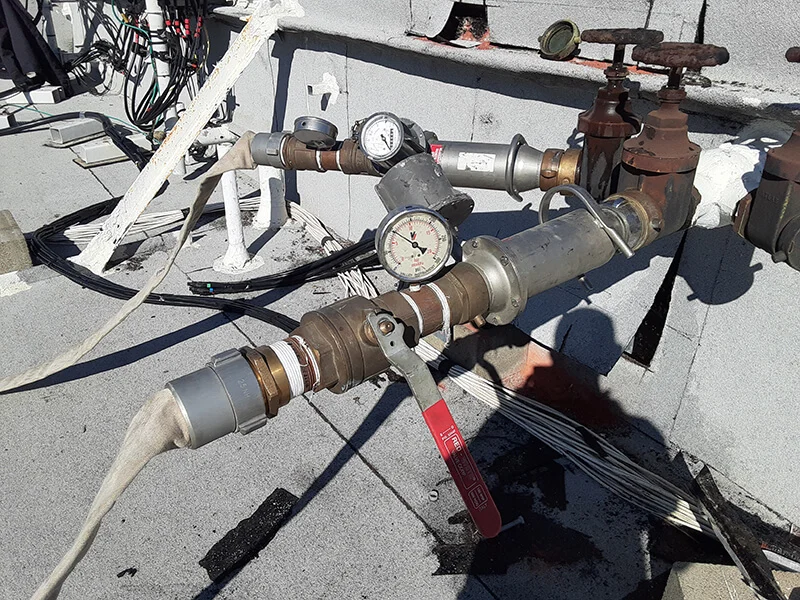
Real-World Examples of Costly Valve Selection Errors
A distribution warehouse in a region with inconsistent municipal water quality selected non-epoxy-lined ductile iron butterfly valves for branch isolation to satisfy a tight bid target. Within 20 months, seat pitting resulted in intermittent leaks on nine valves, necessitating sectional drains, replacements, and re-hydrostatics—costs exceeding $24,000 plus four days of restricted access during peak inventory periods.
A downtown office tower installed undersized pressure-reducing valves for floor-zone control. Acceptance testing demonstrated outlet pressures falling below design during full demand, requiring repeated setpoint adjustments, upsizing, and re-commissioning—totaling $16,000 in additional labor and components, with quarterly monitoring adding $3,500 annually thereafter.
An industrial facility utilized threaded gate valves from existing stock in a new grooved header run. Adapters introduced persistent weep points at each connection, and corrosion at threaded interfaces demanded re-packing and sealing on 15 valves within three years—expenses surpassing $13,000 alongside scheduled production pauses for repairs.
These cases demonstrate a consistent sequence: apparent initial savings dissipate once the system transitions to routine operation and maintenance realities assert themselves.
How to Select Valves That Minimize Long-Term Maintenance Costs
Certification forms the indispensable foundation. UL and FM listings confirm valves withstand the fire-specific pressure cycling, flow endurance, and torque requirements, decreasing the probability of early failures that necessitate unplanned service visits.
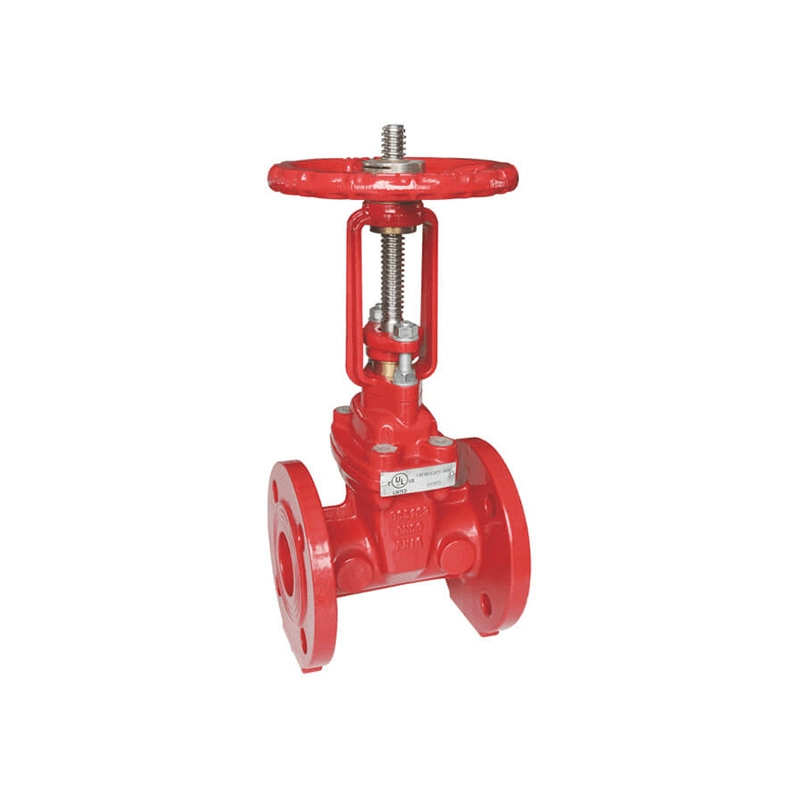
Align valve type with functional demands. Employ OS&Y gate valves for primary isolation where unobstructed flow, visible stem indication, and low operating friction are essential. Restrict butterfly valves to secondary or space-limited applications where quarter-turn convenience suits infrequent service. Check valves require dependable seating configurations with upstream debris safeguards.
Evaluate materials relative to site-specific water analysis and exposure conditions. Ductile iron with fusion-bonded epoxy lining and resilient seats manages most municipal supplies adequately; bronze or stainless trim affords additional durability in corrosive or saline environments without disproportionate upfront cost.
Verify pressure ratings exceed maximum system pressure including surge allowance—250–300 psi working common for taller structures. Review Cv values and flow data in submittals to prevent hydraulic restrictions.
Match end connections to the piping configuration—grooved for rapid assembly in grooved networks, flanged for rigid pump connections. Require comprehensive installation data including torque specifications and lubrication instructions to prevent field-induced wear.
Assess total cost of ownership rather than unit price exclusively. Balance initial cost against projected service life from listing performance data, anticipated annual maintenance frequency, labor rates, and impairment exposure. Valves offering replaceable seats, packing, and trim generally yield lower lifetime expenses despite higher purchase prices.
Prevention Tips and Best Practices
Specifications should require UL/FM approvals, corrosion-resistant linings, and complete documentation packages with torque charts, Cv coefficients, and material certifications. Request application references or lifecycle projections from comparable installations.
During design coordination, confirm valve selections against hydraulic models and water quality reports. Incorporate commissioning input early to identify mismatches before procurement.
On the jobsite, enforce calibrated torque tools for bolted connections and mandate dry cycling after installation to verify operation and seat components. Integrate NFPA 25 inspection intervals into maintenance programs from handover, prioritizing stem lubrication and internal examinations to detect wear before advancement.
Develop relationships with suppliers that maintain broad certified inventories—gate, butterfly, check, alarm, hose—with dependable lead times and application-focused support to streamline replacements and minimize specification risks.
About Fluid Tech Piping Systems (Tianjin) Co., Ltd.
Fluid Tech Piping Systems (Tianjin) Co., Ltd. has concentrated on fire protection piping components since 2018, collaborating with established foundries and machining facilities in northern China. The product range includes ductile iron grooved fittings, malleable iron threaded fittings, fire valves in gate, butterfly, check, alarm, and hose configurations, sprinklers, flexible drops, hangers, and seismic bracing hardware.
Exported products carry UL, FM, CE, LPCB, and VDS approvals, manufactured under ISO-managed systems with supplementary SGS and TUV audits. A dedicated South America market team addresses regional needs, supported by northern warehousing for reliable delivery. Emphasis remains on integrated supply, consistent quality, and practical field assistance for contractors and distributors.
Conclusie
Improper valve selection in fire protection systems steadily escalates maintenance costs through accelerated component wear, more frequent service interventions, inspection failures, and operational disruptions that far exceed any short-term savings. Deliberate selections—rooted in UL/FM certifications, application-matched types and materials, and total ownership calculations—produce clear reductions in ongoing expenses while improving system dependability. Facilities that prioritize proven durability over initial price experience fewer impairments, more predictable budgeting, and smoother compliance across the full service life.
FAQs
Does improper valve selection really increase fire system maintenance costs?
Yes, improper valve selection commonly doubles or triples annual maintenance spending through faster corrosion, leaks, seizing, and repeated inspection failures that require ongoing repairs and system downtime.
What valve type causes the most maintenance issues in fire protection systems?
Butterfly valves used as primary control points usually produce the highest maintenance load due to elevated torque requirements, gasket fatigue, and lack of clear position indication relative to OS&Y gate valves.
How do UL/FM listed valves reduce long-term maintenance costs?
UL/FM listed valves pass fire-specific endurance, pressure, and flow testing, providing longer service intervals, fewer premature failures, and lower replacement frequency with reduced emergency repair needs.
Why does choosing the wrong material for fire valves lead to higher costs?
Wrong materials—such as non-epoxy-lined ductile iron in corrosive water—accelerate internal pitting and seat damage, causing leaks and binding that necessitate frequent disassembly, re-seating, and hydrostatic retesting.
How can buyers avoid high maintenance costs from poor valve selection?
Buyers can avoid high costs by requiring UL/FM certifications, matching valve type and material to system conditions, reviewing torque tables and Cv data, and calculating total cost of ownership instead of focusing solely on initial price.