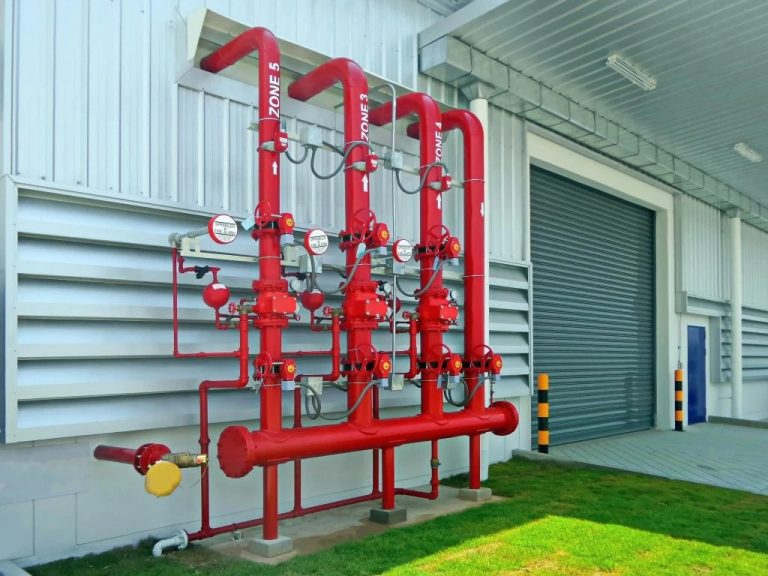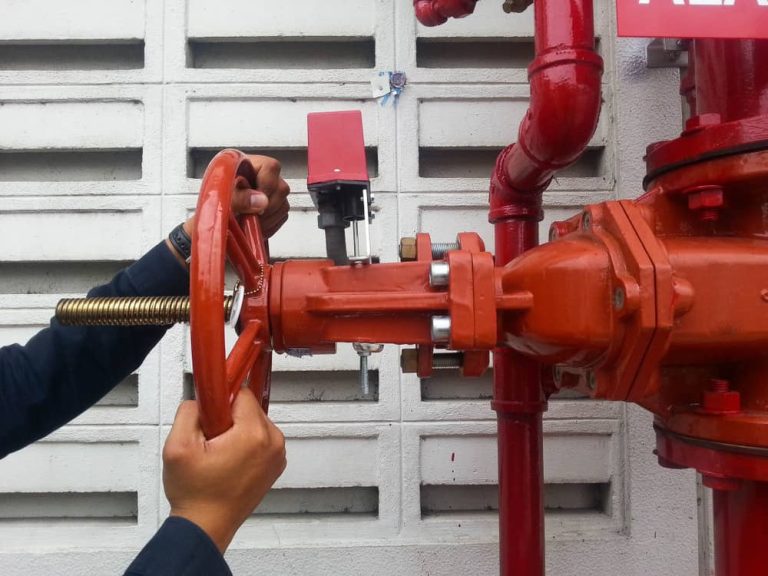
Grooved coupling & grooved pipe fittings fire systems serve as a proven mechanical joining approach that markedly cuts installation risks across extensive fire protection installations, spanning vast airport terminals through to multi-story commercial developments. Teams managing these large-scale undertakings routinely contend with stringent timelines alongside threats from open-flame processes, shortages of qualified personnel, and the ever-present possibility of leaks that undermine overall system dependability. These fittings remove any requirement for welding or threading operations, supplying straightforward bolt-on connections that come together swiftly and securely. Practical experience gathered from the field consistently demonstrates reductions in installation duration ranging from 50 to 70 percent, thereby diminishing exposure to site hazards and helping maintain project momentum. The following sections review the principal risks inherent in major fire protection endeavors, illustrate how grooved solutions counteract them, and outline actionable implementation measures that generate tangible improvements in both safety and operational efficiency.
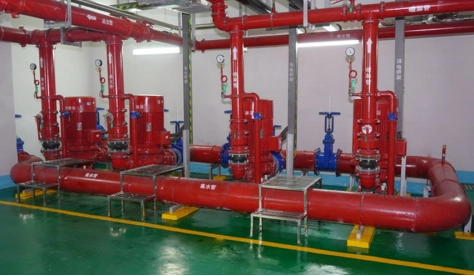
Understanding Installation Risks in Large Fire Protection Projects
Common Installation Risks in Large-Scale Fire Systems
Expansive fire protection undertakings bring forward complexities seldom encountered on smaller contracts. Consider a major airport terminal in the midst of construction: personnel operate in elevated positions with restricted access, maneuvering thousands of linear feet of piping while synchronizing efforts across multiple disciplines. Conventional welded connections necessitate hot work authorizations, continuous fire monitoring, and adequate ventilation to disperse fumes, thereby elevating the likelihood of incidents within occupied zones or areas of high activity. Any misalignment during the welding phase generates stress concentrations, and subsequent corrections prove time-consuming and disruptive. Seismic provisions required in numerous jurisdictions impose additional vibration loads that challenge rigid joints, frequently resulting in progressive cracking.
These hazards intensify within high-consequence settings. Even one instance of rework stemming from a faulty weld can postpone handover by weeks, driving up expenses through prolonged equipment leases and premium labor rates. Industrial facilities and high-rise structures present confined work zones that magnify fume exposure, while the sheer volume of connections increases the number of potential failure points should assembly prove inconsistent. Practitioners with extensive site history frequently recount instances where a single misaligned weld necessitated removal of entire pipe sections, severely impacting timelines and generating unnecessary material loss. Grooved coupling & grooved pipe fittings fire systems mitigate such variables by transferring a significant portion of preparation work to controlled environments, thereby reducing uncertainties present during on-site execution.
Real-World Pain Points: Safety, Schedule, and Cost Overruns
Field personnel involved in large-scale projects regularly witness the consequences of traditional joining methods. Safety events increase markedly whenever welding takes place in proximity to combustible materials or within partially occupied structures, often requiring temporary shutdowns and heightened supervision. Schedule slippage follows closely when access to specialized welders remains limited, compelling teams to delay progress or allocate additional resources for training. Cost escalations inevitably accompany these interruptions, compounded by mandatory fire watch provisions, enhanced personal protective equipment, and repeated inspection cycles. Documentation from a significant commercial retrofit project revealed that adoption of mechanical joining halved the labor input required for pipe runs, thereby averting several weeks of potential holdups. In a separate high-rise application, constraints on hot work extended the critical path, whereas grooved alternatives permitted uninterrupted advancement.
These challenges extend well beyond immediate operational disruptions. Suboptimal installation efficiency can produce uneven pressure distribution across the network, elevating the probability of leaks during hydrostatic testing or eventual system activation. When considering fire piping installation efficiency in large projects, the implications remain substantial: any compromised joint risks insufficient water delivery during an emergency event. Effective resolution demands components engineered to minimize operator-dependent variables, accommodate prevailing site conditions, and sustain performance under sustained operational demands.
How Grooved Systems Reduce Specific Risks
Flame-Free Installation: Eliminating Hot Work Hazards
The complete removal of open-flame processes constitutes one of the most compelling strengths when applied to large fire protection undertakings. Grooved couplings achieve pipe connection through a straightforward clamping action over pre-formed grooves, with an elastomeric gasket establishing the seal—without torches, without sparks. This approach dispenses with the necessity for fire watches and hot work permits in sensitive environments, sharply reducing ignition potential in facilities that remain operational or contain stored materials. In extensive developments such as data centers and healthcare complexes, where adjacent active systems exist, this capability permits mechanical work to continue without requiring system isolation or occupant relocation.
Real-world safety metrics reflect the impact. Projects employing these fittings register virtually no fire-related occurrences during the piping phase, in contrast to welded methods that demand persistent vigilance. The process further limits crew exposure to hazardous vapors, contributing to improved atmospheric conditions within enclosed work areas. For Grooved Coupling & Grooved Pipe Fittings fire systems safety benefits, the outcome manifests as fewer incidents, reduced insurance exposure, and enhanced cooperation with facility stakeholders who place high value on operational continuity.
Faster Assembly and Labor Risk Mitigation
Assembly velocity directly correlates with risk mitigation across large-scale installations. Grooved pipe fittings install using standard hand tools—a calibrated torque wrench suffices for the majority of connections—enabling personnel with moderate training to perform effectively. This characteristic alleviates the impact of skilled labor shortages, an increasingly prevalent constraint within the sector, by expanding the available workforce pool. On typical large-scale contracts, teams routinely complete hundreds of joints within days instead of weeks, preserving forward progress and diminishing fatigue-induced mistakes.
The inherent modularity supports extensive off-site prefabrication, where pipe grooving and fitting attachment occur under controlled conditions prior to delivery. Such practice shortens on-site duration, mitigates weather-related interruptions, and simplifies interface management among trades. Established industry figures document time savings between 50 and 70 percent, which in turn narrows the duration during which personnel remain exposed to hazards while preserving overall project timelines. When evaluating large fire project Grooved Coupling & Grooved Pipe Fittings benefits efficiency, the approach demonstrates substantial value, particularly within multi-phase developments where delays propagate rapidly across disciplines.
Actionable Solutions: Implementing Grooved Fittings in Large Projects
Step-by-Step Guide to Selecting and Installing Grooved Pipe Fittings
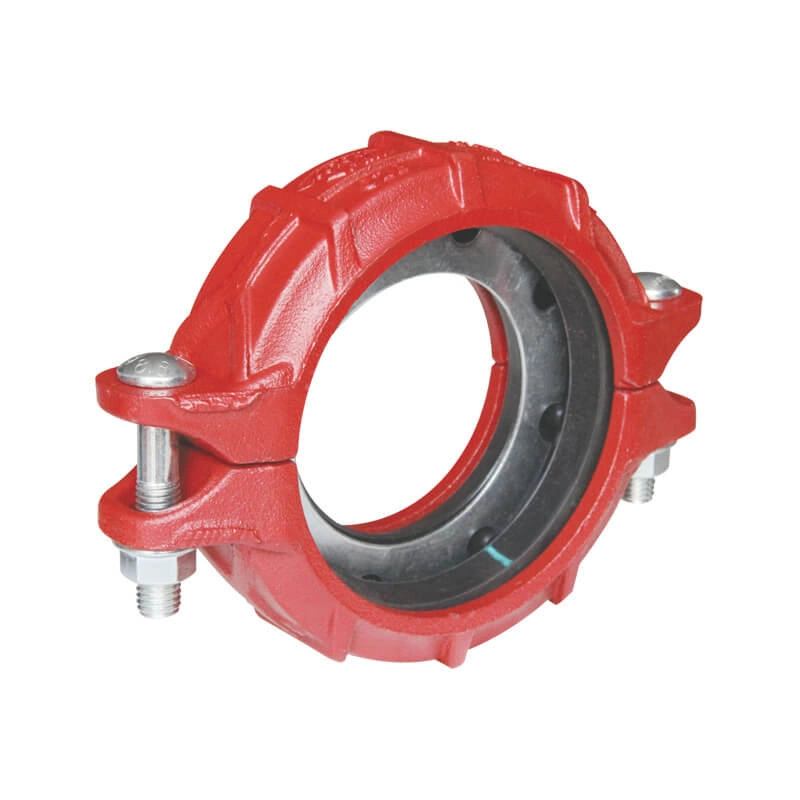
Selection commences with thorough evaluation of project parameters. Determine pipe material, nominal diameter, and required pressure rating—standard ductile iron grooved fittings routinely accommodate prevailing fire system specifications up to 300 PSI. Designate rigid couplings for linear segments demanding positional stability, while flexible variants suit zones subject to thermal expansion or seismic displacement. Within large-scale installations, mechanical tees facilitate branching operations without pipe section removal, accelerating layout modifications.
The installation sequence remains consistent and repeatable. Prepare pipes with precise groove profiles either off-site or on-site utilizing roll grooving equipment for uniformity. Position components, insert the gasket, align the coupling segments, and tighten bolts following a crisscross sequence to the specified torque values. Confirm proper alignment through visual inspection and progressive pressure testing. This procedure inherently reduces misalignment potential, as the fitting geometry promotes self-centering during bolt-up. Experienced crews routinely perform dry assembly passes to identify discrepancies at an early stage, thereby preventing subsequent rework. For selecting Grooved Coupling & Grooved Pipe Fittings large fire protection applications, this methodical protocol establishes confidence in long-term joint performance.
2026 Risk Reduction Checklist for Large Fire Projects
Routine procedures serve as the primary defense against oversights. Examine groove surfaces for contaminants prior to assembly, removing any residue to achieve proper gasket seating. Employ torque tools calibrated to specification, tightening fasteners in a balanced pattern to prevent localized overstress. Implement interim pressure testing on completed sections to detect anomalies promptly. In regions requiring seismic consideration, verify that flexible couplings permit the designated range of movement.
As 2026 approaches, integration of digital verification devices—such as torque sensors that record application data—supports compliance documentation and error reduction. Maximize prefabrication wherever feasible to further limit site-based variables. These measures, refined through repeated application across diverse projects, establish multiple safeguards against prevalent failure modes, delivering fire piping installation efficiency without sacrifice of safety standards.
Case Studies and Future Trends
Large Project Success: Grooved Systems in Action
An international airport expansion confronted aggressive completion targets alongside ongoing terminal operations. Grooved couplings facilitated installation of extensive sprinkler infrastructure with negligible disruption, achieving completion rates 60 percent ahead of welded alternatives. Flexible joints accommodated structural settlement without inducing stress-related leaks previously encountered.
Within a high-rise commercial development, retrofitting during partial occupancy prohibited hot work entirely. Rigid couplings combined with mechanical tees enabled efficient system branching, resulting in successful full-flow verification without defects. The method eliminated shutdown requirements, conserving projected schedule allowances.
2026 Trends: Evolving Grooved Solutions for Risk Management
Emerging developments anticipated by 2026 indicate continued advancement. Prefabricated grooved assemblies delivered as complete modules further reduce on-site exposure. Digital torque documentation systems deliver immediate feedback, minimizing manual error potential. These progressions enhance reliability within Grooved Pipe Fittings fire systems large projects, supporting safer execution and accelerated delivery.
Introduction to Fluid Tech Piping Systems (Tianjin) Co., Ltd.
Fluid Tech Piping Systems (Tianjin) Co., Ltd., established in 2018 and located in Tianjin, China, functions as a specialized provider of fire protection piping solutions. Operating from a dedicated facility, the company produces ductile iron grooved pipe fittings—including rigid and flexible couplings, mechanical tees, and related components—all certified to FM, UL, CE, LPCB, and VDS standards. With ISO 9001 quality management and third-party factory approvals from SGS and TUV, Fluid Tech supplies global markets through efficient logistics, offering comprehensive technical support and prompt delivery to support major infrastructure initiatives.
Conclusão
Grooved coupling & grooved pipe fittings systems fundamentally transform installation dynamics within large fire protection projects, substantially reducing risks through inherently safer and more efficient joining methods that emphasize long-term reliability. The resulting decreases in hazard exposure, labor dependency, and schedule pressure produce outcomes that are demonstrably stronger and more timely. As requirements for secure, expeditious fire safety installations continue to intensify, these fittings remain well-positioned to address evolving demands.
Perguntas frequentes
How do Grooved Coupling & Grooved Pipe Fittings reduce installation risk in large fire systems?
Grooved couplings eliminate welding flames and associated fume generation, thereby removing fire ignition hazards and permitting continued work in occupied zones. Within large fire systems, the bolt-on assembly process accelerates completion, reducing overall personnel exposure time and the potential for human error.
What makes fire piping installation efficiency higher with grooved pipe fittings in big projects?
Grooved pipe fittings require only standard hand tools for assembly, achieving 50 to 70 percent faster joint completion than welded methods. In big projects, the ability to perform grooving and fitting attachment off-site minimizes site disruptions, preserves schedule integrity, and lowers cumulative risk exposure.
Why choose Grooved Coupling & Grooved Pipe Fittings for large fire project benefits?
Large fire projects benefit from the absence of hot work restrictions, enabling progress in sensitive environments, combined with flexible joint options that accommodate structural movement. These attributes decrease safety incidents and rework frequency, delivering dependable performance under operational pressure.
How can installers prevent risks when using Grooved Pipe Fittings in fire protection?
Installers prevent risks through thorough groove cleaning, consistent use of calibrated torque equipment, and staged pressure testing during assembly. In fire protection applications, these practices detect potential issues early, preserving joint integrity throughout the installation lifecycle.
Are Grooved Coupling & Grooved Pipe Fittings suitable for seismic zones in large fire systems?
Grooved couplings incorporating flexible designs accommodate controlled movement in seismic zones, mitigating stress concentrations on joints. For large fire systems, this capability reduces the probability of vibration-induced failures, supporting sustained operational safety over the system lifespan.