Fire protection piping systems often get treated like background work. Draw the lines, size the pipe, call out the valves, and move on. On a schedule-driven job, that’s a tempting way to think.
But the systems that behave well for twenty years usually weren’t “finished” when the drawings were stamped. They were shaped by a handful of early choices that didn’t look important at the time: where a riser actually lands, how a valve can be reached, what happens when a pump starts hard, or what the building team can realistically maintain after handover.
If you’ve been on enough projects, you’ve seen the pattern. Nothing is obviously wrong. Then testing begins. Or the building gets occupied. Or a contractor comes back two years later to modify a tenant space. That’s when the piping stops being a drawing and starts acting like a real system.
What These Systems Are Expected to Do in Practice
At a basic level, the job is simple: deliver water to the point of discharge when needed. That’s the headline. It’s also the part everyone agrees on.
The harder part is what happens in the quiet years. A system can sit pressurized for a long time. Temperature shifts push it through small cycles every day. A pump room vibrates in ways no one documents. Water quality varies—sometimes because of a municipal change, sometimes because a building’s internal storage isn’t as clean as people assume.
Then, when the system is called on, it has to respond immediately. Not gradually. Not politely. Flow changes quickly, pressure shifts, and every connection you assumed was “static” suddenly has to tolerate movement and load.
A system can be compliant and still be frustrating. That’s the part most teams learn late.
Components That Quietly Decide How the System Ages
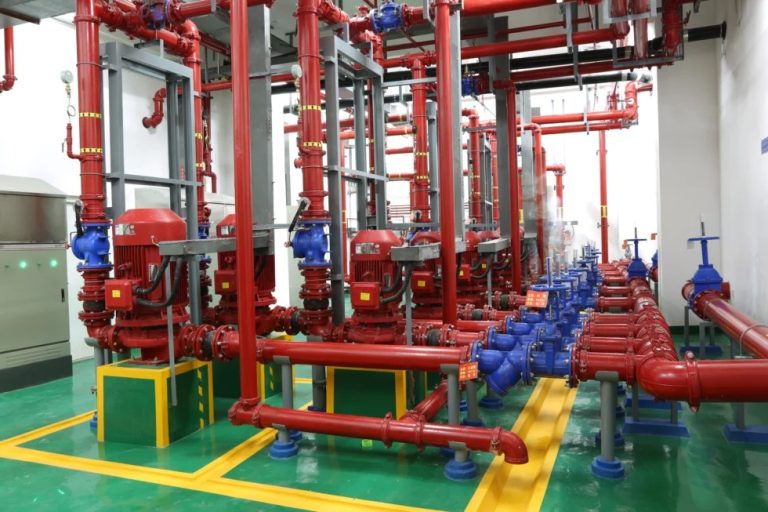
Fire protection piping systems are assemblies. They don’t fail like a single consumer product fails. They drift, loosen, and wear in small ways until maintenance becomes a routine cost.
Pipe Selection Isn’t Only About Pressure
Steel pipe is common for obvious reasons. What tends to get missed is how weight and surface condition ripple through the rest of the design.
Heavier pipe means more support work. More support work means more coordination. Coordination issues lead to field compromises. Those compromises usually show up as stress in the wrong place—at joints, at anchors, at the exact location someone can’t reach later.
The spec sheet won’t tell you where the stress goes. The building will.
Valves Behave Like Moving Parts, Even When They Rarely Move
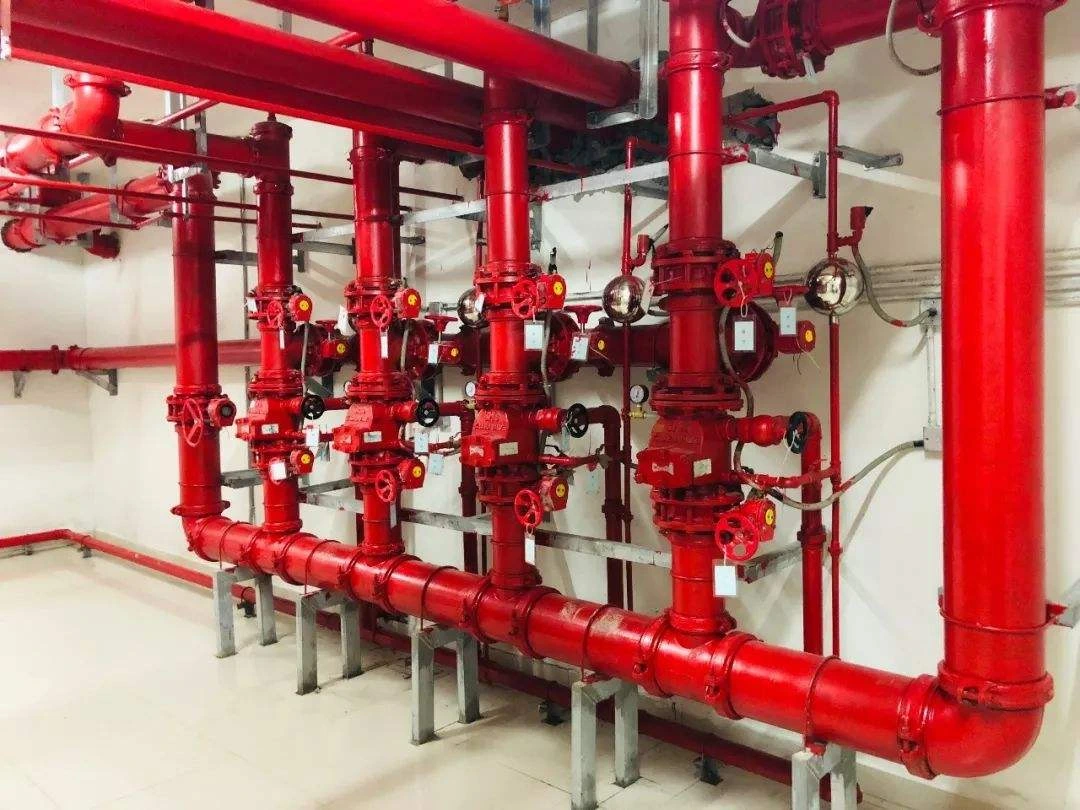
Valves are often written into plans like they’re passive. In practice, valve type and placement influence system stability.
A check valve prevents backflow, but it also affects how pressure disturbances travel. In tall risers, closure behavior matters. So does where the valve sits relative to pumps and zone boundaries. If a system has ever “barked” during testing, you already know this isn’t theoretical.
Control valves introduce a different risk: access. If a valve is hard to reach, it won’t get exercised. If it doesn’t get exercised, you find out at the worst time.
Connections and What They Allow
Connection methods change the personality of the installation.
Grooved mechanical connections are often used because they assemble faster and tolerate minor alignment issues. That’s the visible advantage. The less visible one is what they do under small movement and thermal change; they can reduce stress concentration that rigid joints would otherwise carry.
None of that reads like a dramatic win. It just keeps problems from piling up.
End Devices Only Look Like the Finish Line
Sprinkler heads and branch lines get most of the attention because they’re visible on plans and inspections. But distribution performance depends heavily on upstream decisions. If layout choices create unexpected losses, the end device is the first place the system shows it.
Most “fire piping problems” aren’t piping problems.
They’re coordination problems that turned into piping behavior.
Design Flow: The Order Matters, Even When Projects Refuse to Follow It
Effective design usually follows a sequence, even if the project timeline doesn’t.
Water Supply Is Not a Fixed Number
Every design starts with water supply. But treating supply as a static input is where many systems get overbuilt or underperform.
Municipal conditions fluctuate. Storage tanks behave differently from direct feeds. Fire pumps introduce their own dynamics, especially during start and stop events. If those realities aren’t treated seriously early, everything downstream becomes guesswork.
System Type Changes the Whole Conversation
Wet, dry, pre-action, and deluge systems don’t just change a symbol on a drawing. They change drainage decisions, valve choices, slope requirements, and how testing is handled.
Dry systems in particular are unforgiving if drainage and air management are treated as “details.” Those details become maintenance tickets later.
Hydraulic Work Is Only Useful if People Trust It
Hydraulic calculations turn design into performance. But many projects treat calculations as a box to check, then rely on “extra margin” to feel safe.
That margin often costs space, materials, and future access. Accurate modeling doesn’t eliminate risk, but it makes the system predictable enough that you can plan intelligently.
Best Practices That Actually Improve Reliability
“Best practices” can sound vague. In the field, a few practical habits make the difference.
Maintenance Access Is Not a Nice-to-Have
If valve access is poor, maintenance becomes inconsistent. If drains are hard to reach, they don’t get used. If clearances are ignored, future repairs take longer and disrupt more of the building.
Design teams don’t always own maintenance outcomes—but they do set the conditions.
Choose Components Based on Use, Not Only Specification
A valve that is rarely operated has different risks than a valve that cycles. A connection near a pump room experiences different forces than one in a quiet ceiling void.
When components are selected based only on ratings, the system may pass inspection but behave unpredictably later.
Accept That Installation Is a Variable
Space constraints, schedule pressure, and site coordination change how systems get assembled. Good designs anticipate that. They don’t assume perfection everywhere. They put tolerance and flexibility where the building needs it.
Where Real Projects Commonly Go Sideways
Certain patterns show up repeatedly.
Layouts become complex as more trades compete for space. Coordination changes force rerouting that was never fully rechecked. Component quality gets inconsistent across phases because procurement shifts suppliers or timeframes.
The system doesn’t “fail” on day one. It just starts requiring attention.
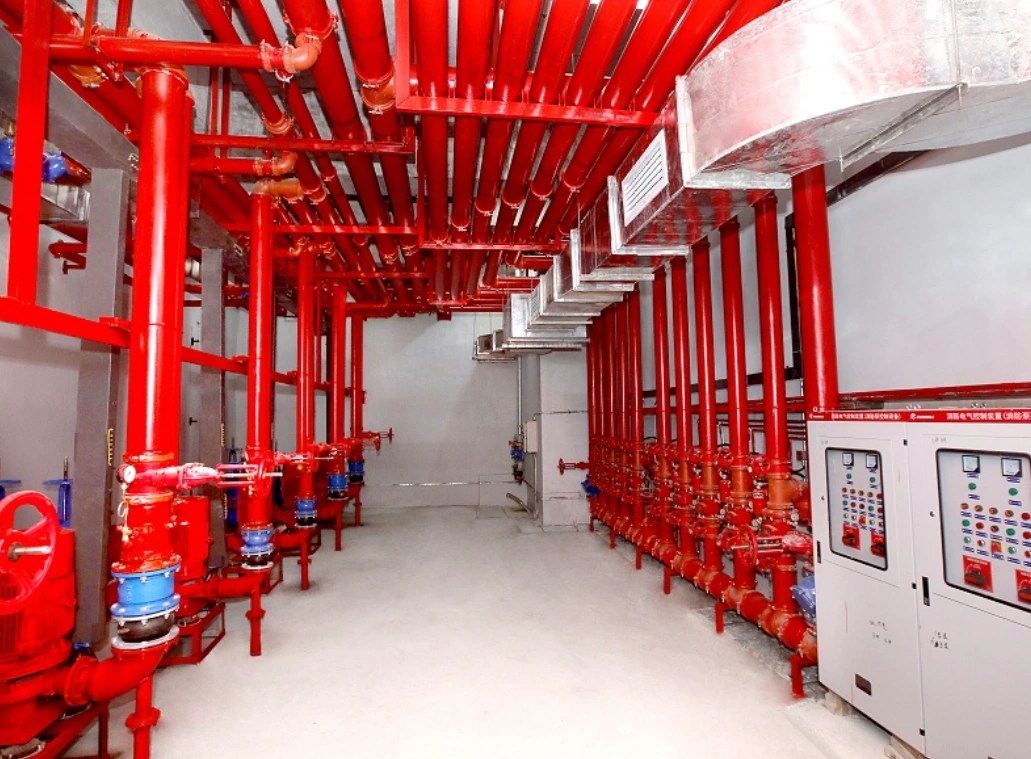
Supporting Reliability Through Integration, Not Product Lists
Reliable fire protection systems depend on how components work together. Compatibility is not only dimensional. It’s behavioral—how the system reacts when pressures shift, temperatures change, and maintenance happens under real constraints.
Fluid Tech Piping Systems (Tianjin) Co., Ltd. supplies piping components used in fire protection applications, including grooved fittings, valves, and related accessories. The practical goal in many projects is straightforward: reduce installation friction, improve consistency, and keep long-term service realistic for building operators.
When components are treated as part of one system rather than individual line items, the whole network tends to behave more predictably.
About Fluid Tech Piping Systems (Tianjin) Co., Ltd.
Fluid Tech Piping Systems (Tianjin) Co., Ltd. focuses on piping systems and components for fire protection and fluid conveyance. With a product range covering pipes, fittings, valves, and system accessories, the company supports projects that require consistent performance under demanding site conditions and common international requirements.
Across different building types and operating environments, the engineering team works with customers to align component selection with system intent, installation realities, and long-term maintenance considerations—because those are the factors that usually decide whether a system stays “quiet” after handover.
Conclusion
Fire protection piping systems rarely succeed because someone made one perfect choice. They succeed because early assumptions were questioned before they hardened into the design.
When systems are designed around real operating behavior—access, movement, pressure shifts, and imperfect installation—they become easier to live with. They don’t just pass inspection. They stay predictable.
FAQs
What matters most when planning a fire protection piping system?
How the network behaves under pressure changes and maintenance realities, not just whether it meets minimum requirements.
Do connection methods affect long-term performance?
Yes. They influence stress distribution, installation consistency, and how the system tolerates movement over time.
Why do some systems feel “noisy” or unstable during testing?
Small differences in layout, valve behavior, and flow dynamics can amplify in tall risers and long runs.
How should designers think about valves beyond sizing?
Consider placement, access, and how the valve behaves during flow changes and pump events.
When should suppliers be involved in design decisions?
Early—before routing, access constraints, and component assumptions become difficult to change.