
Grooved fire piping systems provide rapid assembly, dependable pressure handling, and inherent allowance for thermal expansion along with minor structural shifts in buildings. These characteristics position them as the preferred method in contemporary fire protection installations for office complexes, manufacturing plants, warehouses, and multi-story structures. Nevertheless, leaks frequently develop at grooved joints during system commissioning or in the initial operating period. Even a minor persistent weep at a coupling can result in significant water intrusion, inspection failures, substantial rework expenditures, and eventual doubts regarding overall system dependability under emergency conditions.
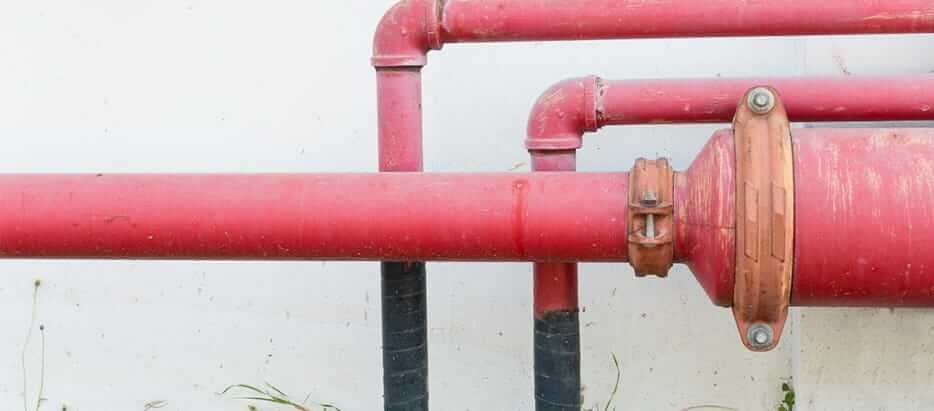
Observations from numerous field installations indicate that the vast majority of grooved fire piping leakage stems from execution details during preparation and assembly rather than fundamental material shortcomings. The following sections outline the dominant causes of leakage in grooved fire piping—particularly at couplings—and detail straightforward, implementable measures for prevention directly at the work site. These insights prove valuable for installation crews, field supervisors, and engineers charged with fire protection system oversight, helping to curtail follow-up visits and uphold regulatory compliance.
The Practical Impact of Leaks in Grooved Fire Piping Systems
Envision a standard project nearing completion: hydrostatic testing concludes successfully, the network registers no obvious faults, yet within days a gradual drip appears from a grooved joint along a vertical riser. Moisture spreads to finished surfaces, necessitates removal of ceiling panels or wall sections, and compels re-verification before authorities grant occupancy approval. Project timelines extend, budgets overrun, and the occurrence prompts additional review from jurisdictional officials.
Data from industry loss records demonstrate that seemingly insignificant leaks in fire protection infrastructure regularly generate property damage in the range of several thousand to tens of thousands of dollars per occurrence, apart from secondary impacts including delayed handover or escalated insurance premiums. Grooved connections incorporate axial restraint and permit controlled angular deflection, yet these benefits evaporate when joint preparation deviates from specification or tightening lacks precision. A gasket seal that achieves uneven compression undermines the integrity of the entire circuit, elevating risks far beyond the visible leakage.
Primary Causes of Leakage in Grooved Fire Piping Joints
Grooved joint leakage in fire protection piping rarely originates from isolated anomalies. It emerges from the cumulative effect of oversights in component preparation, assembly technique, or subsequent handling. The issues listed below appear consistently across diverse project sites.
Incorrect Bolt Torque Application
Inadequate torque prevents sufficient gasket compression, permitting fluid paths under normal system pressure. Over-application of torque distorts gasket sealing lips or crushes the material, forming vulnerable zones susceptible to weeping. Reliance on hand-tightening without torque verification produces inconsistent results, especially across varying crew experience levels. Prolonged exposure to pump-induced vibration or routine thermal cycling amplifies any initial unevenness.
Non-Compliant Pipe Groove Profiles
Groove geometry must correspond exactly to the coupling housing key configuration. Insufficient groove depth hinders effective key engagement; excessive depth leads to irregular gasket loading. Rolled groove methods typically deliver superior dimensional stability compared to cut grooves, although tool wear or calibration drift in field conditions introduces deviations. Subtle discrepancies permit incremental joint movement during pressure cycling, fostering gradual leakage development.
Gasket Handling and Placement Errors
Gaskets demand uniform positioning within the coupling housing, free from twisting, pinching, or localized stretching. Uneven distribution or failure to apply the designated lubricant heightens surface friction, resulting in material bunching as bolts are drawn tight. Gaskets subjected to adverse storage environments lose resilience prematurely, diminishing their capacity to maintain a reliable seal.
Inadequate Pipe End Conditioning
Pipe ends require precise square cuts, complete deburring, and elimination of residual oil, mill scale, or particulate matter. Lingering burrs abrade the gasket face during joint closure; surface contaminants inhibit consistent contact. Minor end flaring induced by cutting processes interferes with proper groove seating, establishing potential escape routes for fluid once pressurization occurs.
Pipe Misalignment and Induced Strain
Assembly under forced alignment imposes sustained mechanical stress on joints. Insufficient hanger support, gravitational loading, or unaccommodated thermal growth exacerbate the strain. Although couplings tolerate a measure of deflection, continuous misalignment produces asymmetric gasket deformation, culminating in leakage after extended operational exposure.
Incompatible Component Combinations
Disparities in groove profile standards or gasket compound properties undermine sealing consistency. Variations in groove depth tolerance or angular alignment reduce effective contact pressure. Gaskets mismatched to the conveyed fluid temperature or chemical composition experience accelerated degradation.
Operational Vibration and Thermal Cycling Effects
Vibration transmitted from mechanical equipment gradually relaxes joint integrity absent robust support systems. Cyclic temperature variations induce pipe length changes; inadequate provision for initial expansion gaps places additional load on seals throughout prolonged service periods.
These recurring factors link directly to on-site practices rather than manufacturing variances. Systematic attention during installation eliminates the majority before they manifest in testing or operation.
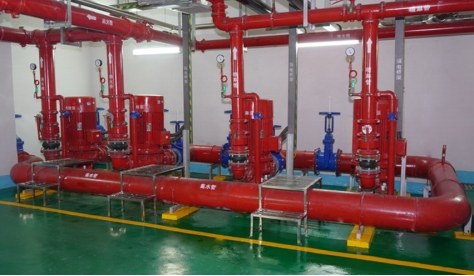
Field Checklist for Preventing Grooved Joint Leaks
A methodical, consistently applied procedure constitutes the strongest barrier against leakage. The checklist below organizes into distinct phases—preparation, assembly, and confirmation—for direct application in the field environment.
Pre-Assembly Verification
Validate groove dimensions across all pipes and fittings against required tolerances by measuring depth, width, and diameter at multiple locations. Examine pipe ends to confirm square cuts, burr-free surfaces, and complete cleanliness—deburr where indicated. Inspect gaskets for physical integrity, dimensional accuracy, and application of approved lubricant only. Confirm bolt and nut threads remain intact and components derive from uniform production lots. Verify pipe alignment remains within the deflection envelope specified for the coupling design.
Assembly Procedure
Position the gasket symmetrically across both pipe ends prior to engaging the coupling housing. Initiate hand-tightening of bolts in an alternating cross sequence to achieve initial snug contact without inducing skew. Advance to a calibrated torque wrench, progressing in increments—approximately 30 percent, followed by 60 percent, then full application—maintaining the alternating pattern. Monitor bolt pad gaps for uniformity; specified metal-to-metal contact or separation distance must present consistently. Refrain from depending exclusively on impact devices unless followed by torque confirmation.
Post-Assembly and Pressure Testing
Perform detailed visual examination for any gasket protrusion, housing misalignment, or bolt pad anomalies. Execute hydrostatic pressure testing at the mandated level—commonly 200 psi or as stipulated by governing code—for no less than two hours, documenting any evidence of leakage promptly. In instances of observed weeping, resist further tightening; instead, disassemble the joint, evaluate components, and reassemble utilizing replacement elements. Capture torque readings, installation dates, personnel identifiers, and test results for individual joints to facilitate subsequent auditing.
Strict observance of this protocol confines potential leakage to the earliest detection stages.
Torque Guidelines for Grooved Couplings in Fire Protection Applications
Appropriate torque secures gasket compression within design limits. Approximate ranges for ductile iron grooved couplings employed in fire protection follow these guidelines—specific coupling literature must always govern final values.
- 1-inch to 2-inch nominal diameter: 60 to 80 foot-pounds
- 2-1/2-inch to 4-inch nominal diameter: 100 to 140 foot-pounds
- 5-inch to 8-inch nominal diameter: 175 to 250 foot-pounds
- Larger nominal diameters: Consult precise manufacturer documentation, often surpassing 300 foot-pounds
Apply torque in graduated stages with even distribution, commencing at the lower boundary before final tightening. Surpassing upper limits jeopardizes gasket integrity or housing structure. Calibration of torque tools remains non-negotiable—no field expedients substitute adequately.
Handling Post-Commissioning Leaks in Grooved Joints
Occasional leakage surfaces following initial system activation, frequently attributable to vibration stabilization or incremental pipe displacement. Isolate the segment where practical. Thoroughly dry the affected joint area. Partially release bolt tension, confirm gasket seating and condition, then reapply specified torque. Any evident gasket compromise mandates complete coupling replacement—reinstallation of damaged elements courts repetition. Evaluate hanger and bracing adequacy; supplement reinforcement to counteract persistent loading. Record remedial actions and conduct re-verification testing. Enduring difficulties suggest potential groove tolerance inconsistencies warranting systematic re-inspection.
Timely corrective measures minimize consequences relative to wholesale joint renewal, although rigorous prevention surpasses remedial efforts.
About Fluid Tech Piping Systems (Tianjin) Co., Ltd.
Fluid Tech Piping Systems (Tianjin) Co., Ltd., formed in 2018 as an entity within the Fluid Tech Group—the inaugural specialized fire protection supplier in northern China—maintains operations from Tianjin, a key logistics node. The company delivers an extensive assortment of fire protection elements, encompassing ductile iron grooved pipe fittings including couplings, mechanical tees, crosses, elbows, reducers, and flanges, together with fire valves, sprinklers, flexible hoses, pipe hangers, and seismic sway bracing components.
Products designated for export bear FM, UL, CE, LPCB, and VDS certifications, supported by manufacturing facilities audited to ISO, SGS, and TUV protocols. Collaborations with established foundries and specialized processing operations uphold rigorous conformity to global standards, with particular focus on groove precision, gasket sealing consistency, and field assembly simplicity. This framework enables comprehensive one-stop sourcing for grooved fire piping configurations, accelerated delivery schedules, and dependable quality aligned with exacting project requirements.
Conclusion
Leakage within grooved fire piping arises predominantly from manageable aspects related to torque execution, groove conditioning, gasket oversight, and alignment control. Adoption of structured on-site disciplines markedly diminishes occurrence frequency, assuring joints endure hydrostatic validation, operational dynamics, and sustained service demands. Uniform application of checklists enhances crew proficiency, reduces corrective interventions, and strengthens assurance among project stakeholders, regulatory bodies, and facility operators. When grooved fire piping systems integrate seamlessly, priority correctly centers on providing steadfast fire protection capability.
FAQs
Why does a grooved coupling leak immediately after installation in fire piping?
Uneven torque patterns, gasket pinching amid bolt draw-up, or incomplete pipe end conditioning including residual burrs or surface impurities typically produce immediate leakage. Disassemble the assembly, assess gasket condition for distortion, restore surface cleanliness, and reapply torque uniformly with calibrated equipment.
What torque values apply to grooved couplings in fire sprinkler piping systems?
Torque requirements scale with nominal size—generally 60–80 ft-lbs for 1–2 inch diameters, 100–140 ft-lbs for 2-1/2–4 inch, and 175–250 ft-lbs for 5–8 inch. Implement tightening progressively across alternating bolts within the documented range, preventing excess that compromises gasket or housing performance.
Why might a grooved joint begin leaking weeks after system pressurization?
Equipment-generated vibration settlement, progressive pipe loading from support deficiencies, or subtle initial misalignment can erode seal effectiveness gradually. Isolate the joint, dry thoroughly, inspect, retorque, and confirm supplemental bracing to address continued displacement.
Is it acceptable to combine grooved fittings and couplings from different sources in fire protection piping?
Reliability hinges on exact correspondence of groove standards and tolerances. Minor deviations in groove depth or angular geometry diminish sealing efficacy and promote leakage. Uniform specification adherence across components delivers optimal outcomes.
How can installers confirm proper pipe groove preparation for leak-free grooved connections?
Conduct direct measurements of groove depth, width, and diameter relative to coupling specifications utilizing calipers or dedicated gauges. Verify pipe ends maintain square orientation, complete deburring, and absence of flares, scoring, or contaminants. Non-conforming profiles obstruct uniform gasket compression, elevating chronic leakage probability.


