In the midst of Saudi Arabia’s Vision 2030 execution during 2026, the sheer volume of ongoing work across NEOM, the Red Sea Project, and Qiddiya continues to generate substantial requirements for fire protection piping capable of performing reliably in demanding field environments. UL/FM certified grooved fire protection piping has established itself as a standard approach for these developments—mechanical connections that assemble rapidly, ductile iron construction that withstands desert extremes and coastal exposure, and certifications that satisfy Saudi Civil Defense directives along with NFPA guidelines without prolonged approval cycles. Teams handling MEP coordination and site installation on these scales recognize the pattern clearly: compressed delivery windows, supply constraints on certified stock, and specifications that permit few deviations. Grooved systems alleviate much of that pressure provided the ductile iron components hold valid UL/FM listings and arrive at Jeddah or Dammam ports within realistic transit periods.
Vision 2030 Mega-Projects Driving Fire Protection Piping Demand in 2026
Construction momentum persists across the portfolio. NEOM advances phases of Oxagon industrial clusters, initial linear segments, and ancillary infrastructure despite periodic scope recalibrations. Red Sea Global proceeds with additional resort pockets, coastal hospitality facilities, and airport expansions. Qiddiya progresses on core entertainment districts—performance venues, themed attractions, and supporting accommodations—where high-occupancy zones necessitate immediate sprinkler and standpipe readiness.
Market analyses underscore the sustained push. The Middle East fire protection system pipes sector registers steady expansion, with Saudi Arabia retaining the leading position driven by Vision 2030 allocations toward urban centers, tourism infrastructure, commercial complexes, and industrial zones. Ductile iron and steel grooved piping feature prominently in discussions for these uses: they provide the necessary pressure tolerances, hydraulic capacity, and UL/FM compliance essential for NFPA 13 sprinkler arrays, NFPA 14 standpipes, and hydrant supply mains serving expansive footprints.
Field experience highlights recurring obstacles. Extended material procurement cycles—frequently exceeding sixty days—disrupt sequential floor completions and module integrations. Regional suppliers occasionally face shortages of UL/FM-listed items in larger nominal sizes or specialized protective finishes. Grooved piping alters the dynamic through mechanical joining that eliminates field welding, minimizes hot-work constraints, and enables smaller crews to complete connections under aggressive schedules. Within the particulate-laden interiors of NEOM modules or the saline atmospheres bordering the Red Sea, gasketed joints preserve sealing integrity far longer than many conventional welded assemblies under similar exposure.
Specific Fire Protection Piping Needs Across NEOM, Red Sea, and Qiddiya
Each development imposes distinct conditions that narrow the range of viable piping selections.
NEOM’s Fire Protection Piping Requirements
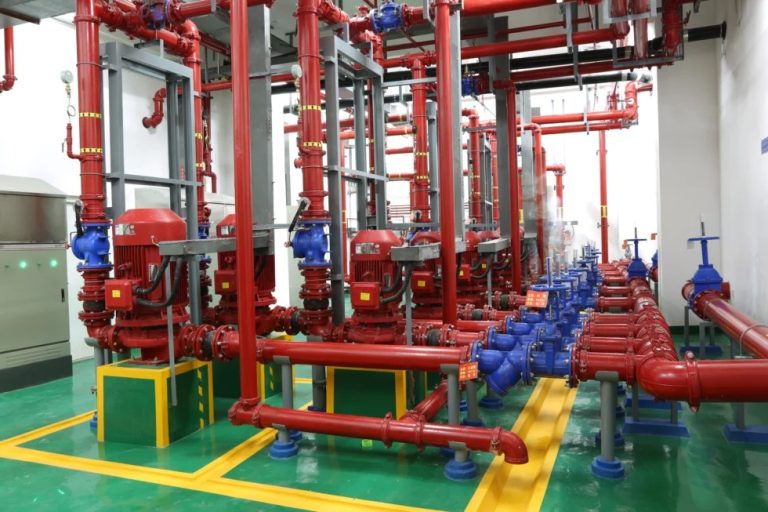
The ambitious linear-city framework, integrated data centers, and port-related industrial areas produce varied fire-hazard classifications across zones. Occupied modules require elevated sprinkler discharge densities, while the arid setting subjects all components to pronounced diurnal temperature fluctuations and persistent fine-dust abrasion. UL/FM listed ductile iron grooved pipes and fittings receive frequent specification because their assembly velocity complements phased modular erection sequences. Rigid couplings secure extended horizontal distribution runs against unintended displacement, flexible couplings accommodate axial movement from thermal differentials, and red-painted or epoxy-coated exteriors fulfill identification mandates while mitigating surface oxidation and particulate adhesion. Distribution mains commonly employ diameters from 2 inches to 10 inches, with branch laterals scaling down to 1–4 inches depending on hydraulic demand. In practice, the mechanical joint configuration reduces dependency on specialized labor pools during peak mobilization periods, allowing progress to continue even when environmental controls prove challenging. Dust ingress remains a persistent concern; grooved housings with properly seated gaskets limit internal contamination compared to open-joint alternatives during installation pauses. Long-term exposure testing data from similar arid deployments confirm that listed ductile iron maintains structural and hydraulic performance beyond initial commissioning, supporting the extended operational horizons envisioned for NEOM infrastructure.
Red Sea Project Fire Protection Demands
Marine proximity introduces accelerated corrosion kinetics from salt aerosols and elevated relative humidity. Luxury resort compounds, standalone villas, and the evolving international airport infrastructure mandate fire-water networks that resist degradation with limited routine intervention. Epoxy-lined grooved fittings and pipes afford internal barrier protection against water-side attack, while external coating systems counteract atmospheric influences. UL/FM certification validates applicability across wet, dry, and preaction configurations prevalent in guest-occupied spaces. Phased commissioning timelines compel rapid sectional assembly; the bolted grooved design permits staging of pipe runs in advance of weather-dependent activities, reducing exposure to coastal squalls. Larger mains—typically 6–12 inches—accommodate extensive sprinkler coverage over sprawling hospitality footprints, with grooved tees and crosses facilitating efficient branch transitions without field modifications. Corrosion monitoring in analogous coastal installations shows that properly finished ductile iron grooved components exhibit extended service intervals before any measurable wall thinning, aligning with the multi-decade asset life targets set for Red Sea developments.
Qiddiya’s Piping Needs for Entertainment and High-Occupancy Venues
Occupant density governs priorities here. Amusement districts, athletic facilities, and cultural venues necessitate NFPA 14 standpipe risers alongside wide-area sprinkler protection. Grooved ductile iron configurations manage incidental vibration and transient loading more effectively than rigid alternatives in dynamic environments. Bolted joints enable straightforward disassembly for periodic verification or reconfiguration as tenant layouts mature. Red-painted piping ensures immediate visual recognition within dense ceiling plenums, complying with Civil Defense visibility stipulations without supplementary tagging. High-flow demands in assembly spaces push toward robust pressure ratings; UL/FM listings confirm that grooved assemblies sustain performance under surge conditions typical of deluge or combined systems. Installation crews benefit from reduced setup time—no preheating or post-weld nondestructive examination—permitting faster handover of fit-out zones. Experience from comparable entertainment complexes indicates that grooved systems facilitate late-stage adjustments with minimal downtime, a critical advantage when entertainment programming evolves close to opening dates.
Across these projects, UL/FM certification constitutes a firm requirement. Saudi Building Code provisions and Civil Defense enforcement policies stipulate listed materials for commercial, high-rise, and assembly occupancies where occupant risk and asset value elevate scrutiny.
Saudi Regulations and Why UL/FM Certified Grooved Systems Matter
Regulatory expectations offer limited flexibility. Saudi Civil Defense maintains rigorous material vetting, aligning with UL 213 for grooved coupling performance and FM protocols for system-level endurance. NFPA 13, 14, and 24 form the foundational design references, and reliance on certified products accelerates inspection clearance.
Grooved piping aligns seamlessly within those constraints. Rigid couplings provide mechanical restraint along linear segments, flexible couplings absorb expansion without imposing undue stress. The UL and FM designations verify survival through hydrostatic qualification, prolonged heat exposure, and mechanical vibration protocols—conditions that replicate service realities in these developments.
Practically speaking, certifications streamline documentation during authority reviews and align with underwriter stipulations. Elimination of open-flame processes during joint assembly further reduces permit processing times in operational construction areas, a factor that compounds value on fast-track sites.
Practical Advantages of Grooved Piping in Saudi Mega-Project Conditions
Field performance advantages manifest consistently. Joint completion proceeds at a pace several times faster than welded counterparts—no requirement for preheat cycles, consumable electrodes, or radiographic verification. Crews groove pipe ends (or utilize factory-grooved stock), align housings, seat gaskets, and secure bolts in a matter of minutes per connection. On schedules compressed into months, cumulative time savings translate into measurable schedule compression.
Material resilience corresponds to site demands. Ductile iron tolerates broad thermal excursions and minor differential settlement inherent in expansive foundations. Gasket formulations engineered for fire-service pressures retain compression and sealing capability under continuous loading, including prolonged dry-standing in preaction or dry branches. Surface treatments—red alkyd coatings or fusion-bonded epoxy—extend durability in abrasive or corrosive atmospheres.
Operational continuity proves straightforward. Disassembly occurs without thermal cutting or grinding, enabling rapid access for internal inspection, addition of takeoffs, or replacement of segments. Developments progressing through staged openings—characteristic of Red Sea hospitality phases and Qiddiya district rollouts—leverage this adaptability to accommodate evolving requirements without halting adjacent work fronts.
Regional track records reinforce the trend: grooved systems appear routinely in Middle East airports, commercial towers, petrochemical facilities, and large hospitality schemes, balancing installation efficiency with sustained reliability and regulatory acceptance.
Introducing Fluid Tech Piping Systems (Tianjin) Co., Ltd.
Fluid Tech Piping Systems (Tianjin) Co., Ltd., established under the Fluid Tech Group in 2018, maintains a specialized focus on fire protection piping elements compliant with international benchmarks. Situated in Tianjin, the facility capitalizes on northern China’s port proximity to facilitate dependable export logistics.
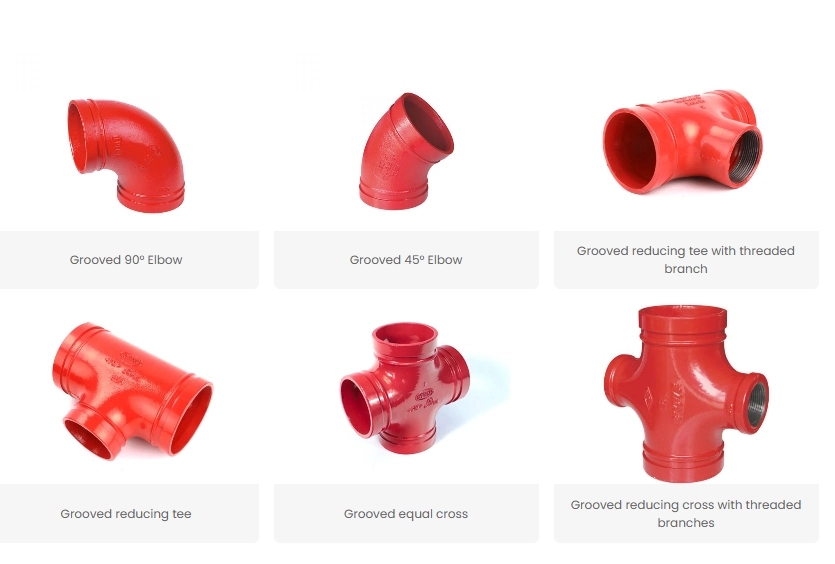
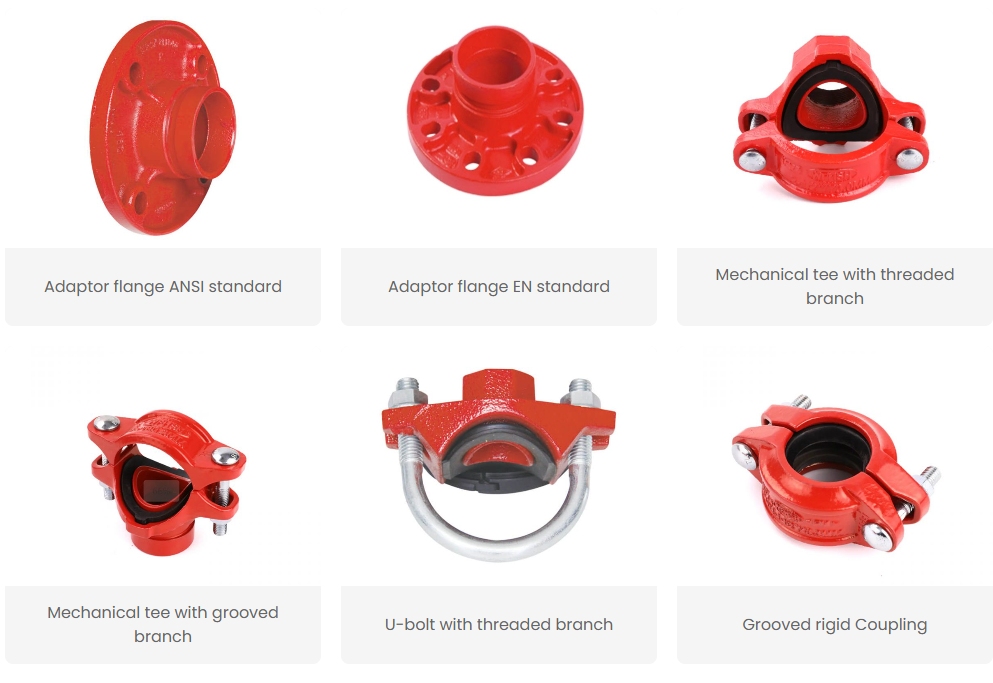
The core offering comprises UL/FM listed ductile iron grooved pipe fittings and couplings, encompassing rigid and flexible variants, together with elbows, tees, reducers, mechanical tees, and crosses spanning nominal diameters from 1 inch to 12 inches. Components secure supplementary listings including CE, LPCB, and VDS as applicable, utilizing premium ductile iron grades with conventional red finishes for fire-service designation. Epoxy coating variants support applications necessitating enhanced corrosion barriers.
Manufacturing occurs through vetted foundry collaborations emphasizing process controls and material traceability. Strategic warehousing within the northern logistics corridor sustains inventory on prevalent sizes, enabling lead times to ports such as Jeddah Islamic Port and King Abdullah Port in Dammam that commonly range 20–30 days post-order confirmation and clearance.
Conclusion
The continued advancement of NEOM, the Red Sea Project, and Qiddiya within Vision 2030 sustains strong demand for UL/FM certified grooved fire protection piping through 2026. These systems supply the assembly rapidity, environmental endurance, and code adherence that mega-scale endeavors require amid compressed timelines and adverse site factors. Procurement of ductile iron grooved components supported by appropriate listings and consistent delivery logistics simplifies sourcing while maintaining construction cadence. As these signature initiatives transition into subsequent stages, dependable material supply chains will persist as a pivotal element in achieving targeted milestones.
FAQs
What UL/FM certified grooved piping works best for NEOM desert conditions?
UL/FM listed ductile iron grooved pipes and fittings with red epoxy coating handle the heat, dust, and wide temperature swings well. Rigid couplings suit stable main runs while flexible couplings manage thermal movement. Diameters between 2 and 8 inches commonly cover sprinkler and standpipe feeds, delivering fast assembly and consistent pressure performance.
How quickly can UL/FM grooved fire protection fittings reach Saudi ports for Red Sea Project schedules?
From Tianjin origin points, sea transit to Jeddah or Dammam usually falls in the 20–30 day window when inventory is available. That timeframe often provides enough margin for clearance and site staging, helping avoid hold-ups during phased resort commissioning.
Why go with grooved piping instead of welded for Qiddiya high-occupancy venues?
Grooved joints assemble much faster—no welding means reduced hot-work permits and lower labor demand in dense areas. UL/FM certification verifies suitability for NFPA high-flow layouts, and the bolted design allows easy disassembly whenever zone modifications or expansions come up later.
Are special UL/FM listings required for grooved couplings in dry pipe systems on Saudi mega-projects?
Dry-pipe branches—frequent in unconditioned sections—require UL/FM listed grooved couplings to maintain integrity through temperature fluctuations and fire-exposure endurance. Listed products lower the chance of gasket degradation compared with non-approved alternatives.
How should grooved fitting sizes be selected for Vision 2030 commercial developments?
Base sizing on hydraulic calculations per NFPA 13 and 14—typically 1–4 inches for branch lines and 6–12 inches for distribution mains. Confirm working pressure ratings (commonly 300 PSI) against project demands, then verify UL/FM listings cover the intended service. Ductile iron with a mix of rigid and flexible couplings accommodates most hotel, arena, and data-center configurations.