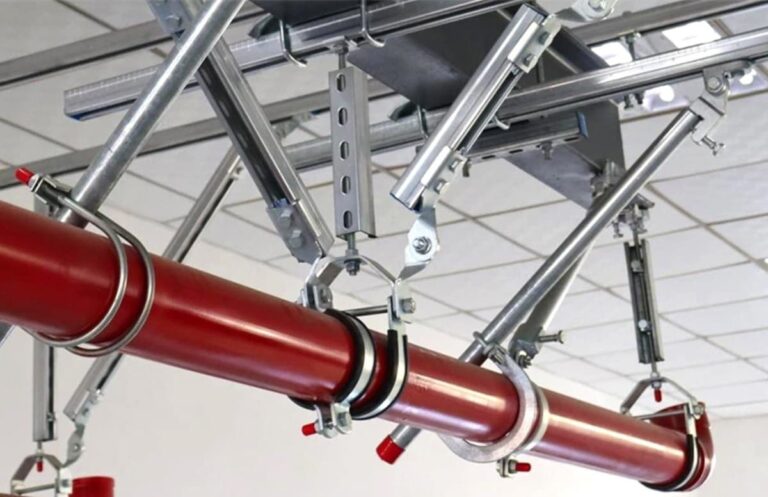
A fire sprinkler system is only as reliable as the piping that supplies the water to each sprinkler. However, perhaps one of the largest aspects of a fire protection system that is consistently overlooked by designers and planners are the hangers and sprinkler pipe supports that hold the pipe in place. Without adequate support of the piping, it can slump or move causing serious damage from simple items such as water weight, sudden increases in water pressure, or seismic activity. Even the best fire suppression system can fail if the piping that supplies the water fails.
Pipe hangers and building pipe supports have more functions than just holding pipes. They can transfer loads evenly on building structures. Pipe supports also can maintain critical slope to assure proper flow of water. In addition, hangers at joints of pipe and pipe fittings can reduce stress at these locations. Also, hangers for sprinkler systems can assure that sprinkler heads receive the same amount of water during system activation. The functions of hangers and building pipe supports are critical in high rise buildings, in industrial plants, and in seismic areas.
The function of hangers in fire protection sprinkler systems is discussed. Criteria for selecting hangers based on the type of pipe being supported and surrounding environment are provided. Common types of pipe supports used for fire protection wet and dry pipe systems such as clevis hangers and ring hangers are discussed. Information on the code requirements for hangers from NFPA 13 and FM Global are also provided. Information such as this is intended to benefit designers, contractors, and facility managers alike in their attempt to design and install fire protection systems that will provide long lasting protection to people and property.
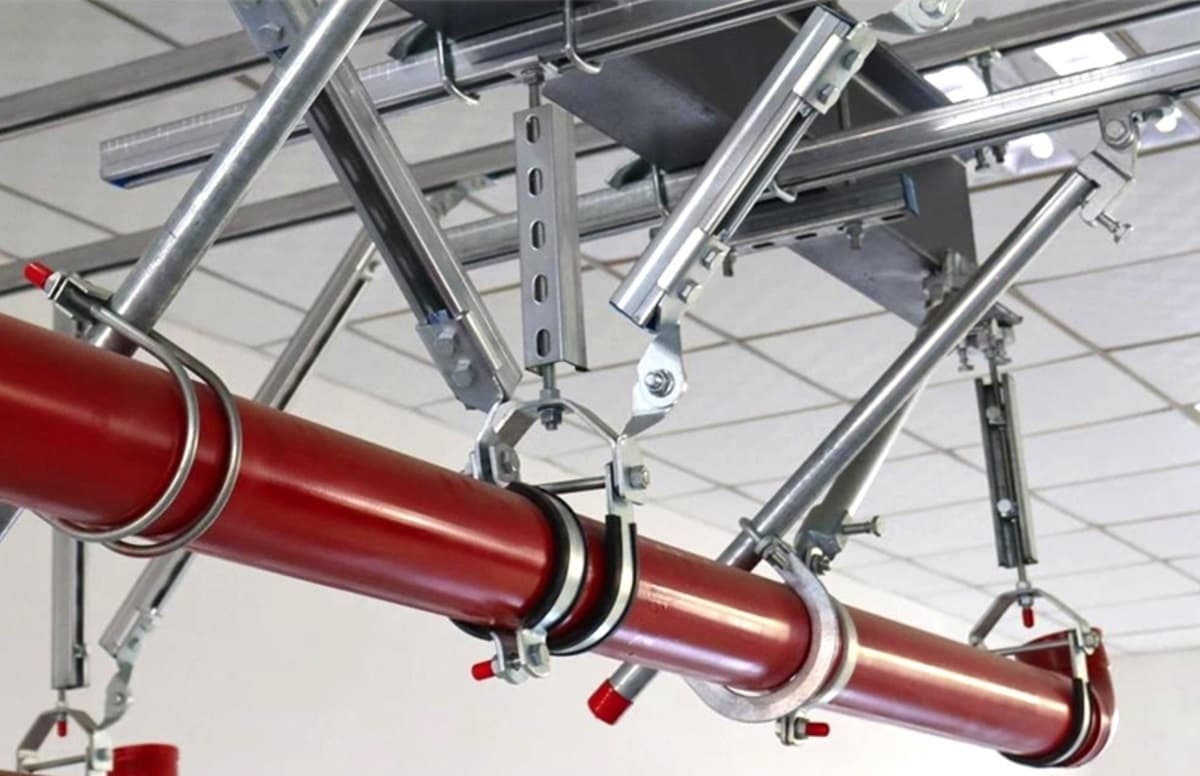
Why Are Hangers and Supports Critical in Sprinkler System Piping?
Properly designed hangers and fire protection supports are critical to ensuring the integrity and safety of fire protection systems. They prevent system components from sagging, vibrating or becoming misaligned which could adversely affect system performance.
Functional Role in Structural Stability
Piping hangers spread the load of the piping across the supporting members to ensure that the piping of the sprinkler system is adequate for the various operating conditions to which it will be subjected. The hangers also maintain the correct slope for drainage or dry system piping to preclude the possibility of water accumulating in low points or of air locking occurring in wet pipe systems. Additionally, hangers are spaced to prevent excessive stress concentrations at connections and in vicinity of fittings to preclude leakage or premature failure of the piping.
Influence on Fire Protection System Performance
Stable piping helps maintain a uniform flow of water to all sprinklers. Suspend pipe correctly using hangers and prevent piping from being dislodged during a hydraulic shock or by sudden movement of a valve. Correctly suspend pipe helps to extend the life of the piping by relieving fatigue caused by pipe movement or vibration. In a high-rise or industrial application, stable piping is critical to the proper operation of a fire suppression system.
How Are Pipe Hangers Selected for Sprinkler Systems?
The selection process for hose takes into account load requirements, operating environment, materials in contact with hose and compliance with NFPA requirements.
Criteria for Selection
Piping hangers can be selected based on the type of piping material used such as steel, CPVC or copper. Also, the coating used on hangers can be determined by environmental factors such as high humidity or corrosive atmosphere. In general indoor applications, an electro-galvanized finish is suitable. The total weight to be supported by hangers must include the weight of pipes filled with water as well as possible dynamic loads caused by water surges or earthquakes.
Common Types of Pipe Hangers Used in Fire Protection Systems
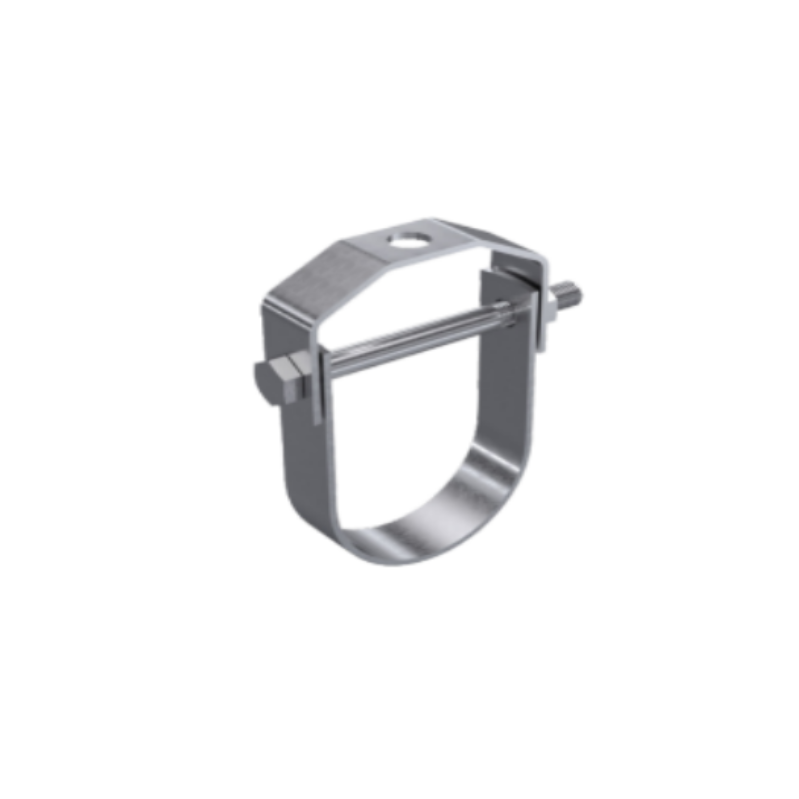
Clevis Hangers. The Clevis hanger is one of the strongest pipe hangers available and is widely used as a pipe support to hang pipes off of beams and ceilings. Clevis hangers are available in a number of sizes and are made from quality materials including carbon steel, stainless steel and galvanized steel to withstand the toughest of industrial and commercial applications and to provide long lasting corrosion resistance.
Ring Hangers – Ring hanger is a type of pipe hanger, used to fix pipes, tubes and other similar objects. Ring hangers are used in construction, industry for mounting of industrial equipment, and in general mechanical assembly.
Rod Hangers – These can be used to hang from overhead fixing points where space is limited. They are adjustable to aid in alignment during installation.
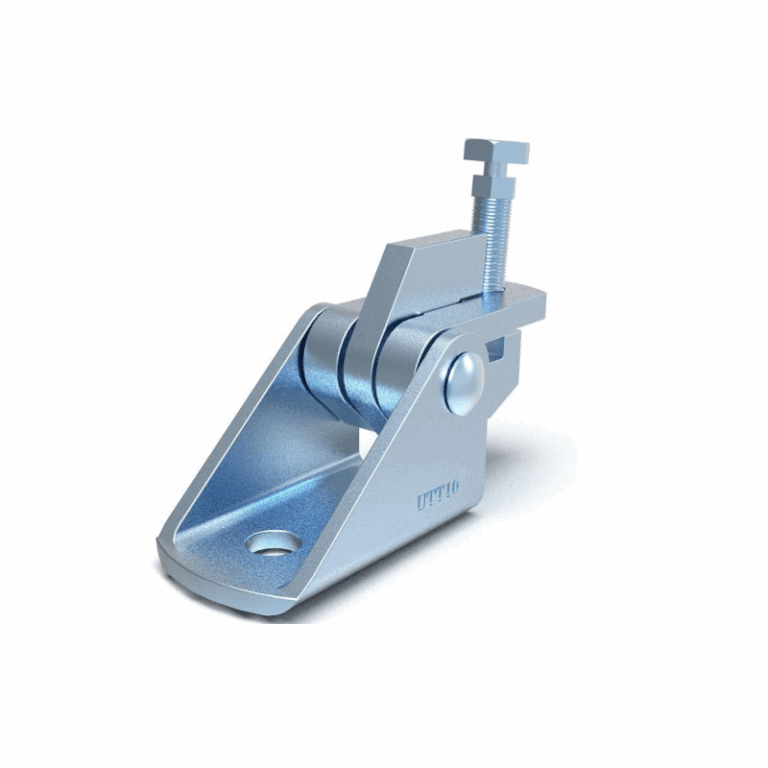
Seismic Braces. Seismic Braces are another type of structural component. They are designed to control the structure’s lateral movement due to earthquake forces or other sudden mechanical shocks. The primary goal of Seismic Braces is to maximize a building’s resistance to structural damage during an earthquake.
What Standards Govern the Installation of Sprinkler Pipe Supports?
Installation must comply with codes recognized in the industry, to guarantee safety, durability and inspection ease over time.
Key Regulatory References
NFPA 13 – Hanger spacing is defined for piping based on size and material to ensure correct spacing for support of the piping. FM Global Data Sheets – Additional information on how to use restraints in high-hazard uses. Local Building Codes – Info on seismic restraints and corrosion protection.
Installation Best Practices
Anchors are to be compatible with the structural materials of the slabs or beams etc. Care is to be taken during installation to avoid any bending stresses at the couplings or fittings. The hanger spacing are to be verified during the hydrostatic test and approved by the relevant inspectors after satisfactory completion.
How Do Environmental Conditions Affect Hanger Performance?
The environmental exposure that pipe supports experience over time can significantly affect their performance and durability.
Corrosion Resistance Considerations
For humid environments, galvanized steel or stainless-steel hangers are recommended. Protective coatings can also extend the service life of hangers stored in coastal or industrial locations where there are airborne salts. On-site inspection schedules should be set up and it should be possible to identify early corrosion or fatigue failure before it can cause any damage to the installed product.
Thermal Expansion and Contraction Effects
Additional support in the form of flexible piping supports or expansion joints are required for long pipe runs to allow for movement due to thermal change. It is also important to ensure that the piping is not over-restrained as this can cause cracking at piping connections or at anchors. Designers must also consider temperature changes when selecting pipe, fittings and materials as well as the design of the layout to accommodate in mechanical rooms, roof spaces or outside.
What Maintenance Practices Ensure Long-Term Reliability?
Regular maintenance ensures that the system maintains its integrity during the lifespan of the system.
Inspection Procedures for Pipe Supports
Periodic inspection should include checking tightness of nuts, bolts, and threaded rods. Observing any deformation or displacement after seismic events or renovations helps detect hidden weaknesses early. Documentation of inspection results per facility maintenance protocols ensures traceability for audits.
Replacement and Upgrading Strategies
Damaged parts must be immediately replaced in order to prevent failure from spreading to other connected components. Older systems with fixed hangers can be retrofitted with modern hangers of the adjustable type. Pumps which create excessive vibration in lines should be equipped with vibration isolators to reduce wear and tear on the pipe joints.
Who Is FLUID TECH PIPING SYSTEMS (TIANJIN) CO., LTD?
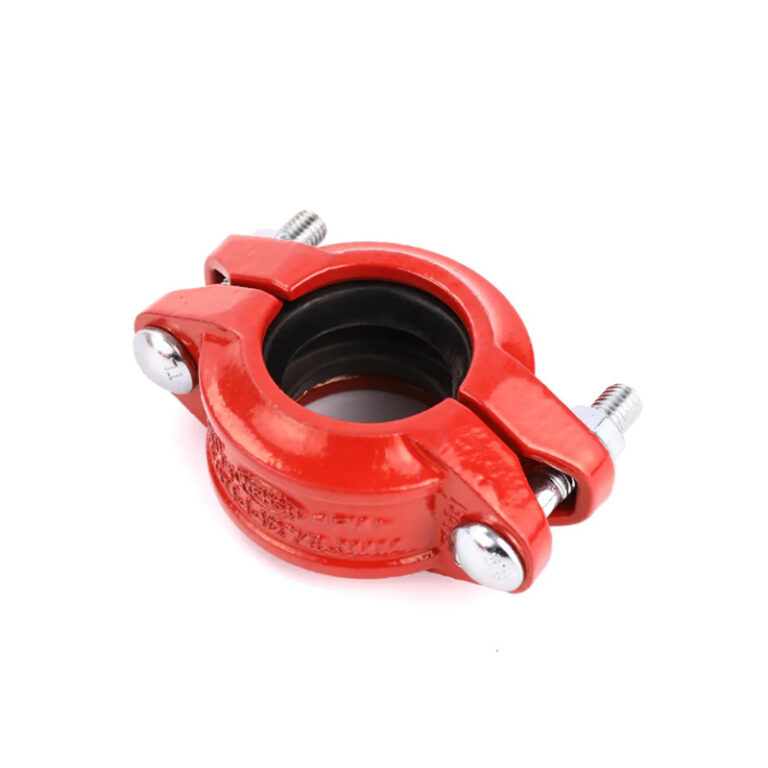
Fluid tech group is the first company in Northern China specialized in fire protection field under its own brand -IF grooved coupling and grooved fittings. In 2018 flutech piping systems was established in Tianjin, in cooperation with several foundries and pipe fittings processing plants. As a one-stop-shop supplier for construction companies from all over the world, the fire protection products exported by us have FM/UL/CE/LPCB/VDS approval, and the factories producing for Fluid tech group have ISO,SGS,TUV etc. approvals. Our mission is to provide high quality products to ensure the safety of the project, to provide professional knowledge to answer any questions from customers, to provide professional one-stop-shop services to reduce cost for customers. We will provide the most economical and safe project solutions to the world.
In supporting manufacturers that conform to international standards for their products, such as clevis hangers, ring hangers, riser clamps, U-bolts, washers, hex nuts, and bolts for use in NFPA 13-compliant installations around the world, we can ensure the proper performance of the fire suppression system.
How Can Proper Design Improve System Efficiency?
Careful consideration of hanger placement within the overall layout of sprinklers improves the hydraulic balance and reduces mechanical stress throughout the network.
Engineering Integration Principles
When specifying hanger positions and main branch routing during the design phase it is essential to coordinate these with other building services such as HVAC ductwork and electrical conduits. BIM modeling allows for clash detection prior to installation. Optimal spacing taking into account the flow characteristics of a sprinkler ensures minimal pressure loss whilst ensuring a consistent discharge from all heads. This allows for efficient and reliable operation of a large fire protection network.
Conclusion
Design, selection, installation and maintenance of hangers for sprinkler system components effectively contribute to the system’s operation under various conditions. In fire protection engineering, the most common standard for such system is NFPA 13, while pipes and fittings are made of high quality material and distributed by reputable suppliers such as FLUID TECH PIPING SYSTEMS (TIANJIN) CO., LTD. in order to achieve stiffness and durability of system components within a large fire protection system.
FAQs
Q1: What determines the spacing between pipe hangers in a sprinkler system?
A1: Spacing depends on pipe diameter, material type, weight when filled with water, and applicable standards such as NFPA 13 specifications.
Q2: Can standard plumbing hangers be used for fire protection piping?
A2: No. Fire protection systems typically require hangers that are rated for specific load conditions and are in compliance with the respective fire and life safety codes.
Q3: How often should sprinkler system hangers be inspected?
A3: Inspections should occur annually at minimum or after any event that may affect structural integrity—such as seismic activity or significant building modifications.