Practical Notes + Why More Projects Are Using It
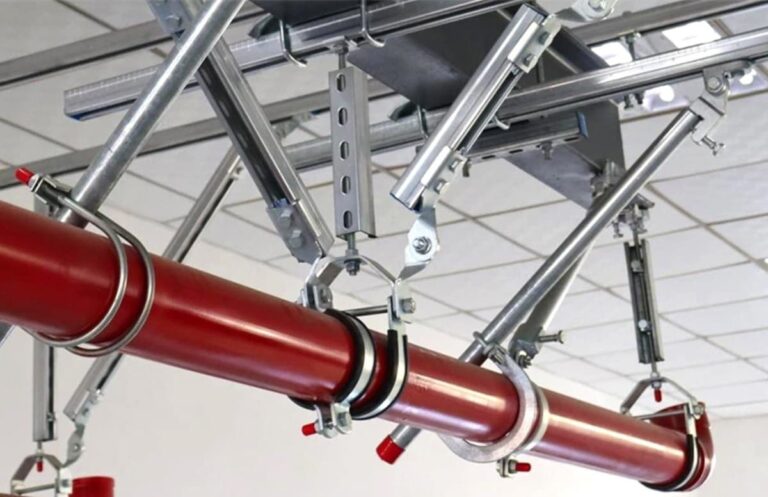
If you are doing fire protection piping, you’ve probably already seen grooved couplings on site.
A few years ago, many projects still used welding or flanges. Now, especially in South America and similar markets, grooved systems are becoming more common. The reason is simple — faster work, less trouble, and easier maintenance later.
At Fuid Tech Group, we supply these products to overseas customers, and we see this change very clearly. Many of our clients switched after just one or two projects.
Below is a simple installation guide, based on real use. Not theory — just what actually matters on site.
First, Know What You Are Installing
There are two basic types:
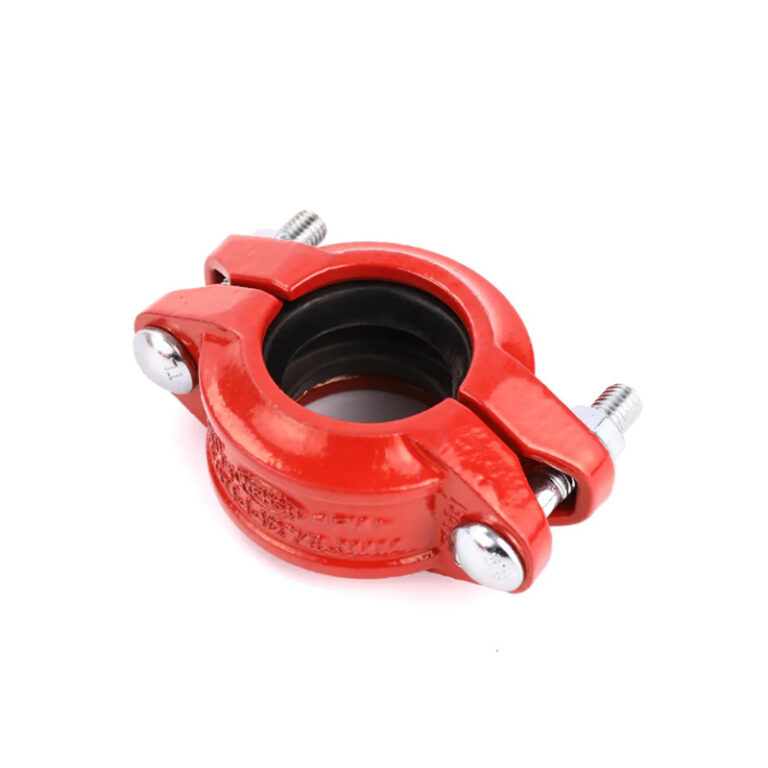
Rigid coupling
Used when the pipeline should not move. After installation, it acts almost like a fixed joint.
Flexible coupling
Allows a bit of movement. Not a lot, but enough to handle:
- small misalignment
- vibration
- thermal expansion
In real projects, flexible types are more forgiving.
One small reminder:
For large pipes (around 18” / 450mm and above), flexibility is already quite limited. So don’t rely on it too much when designing the system.
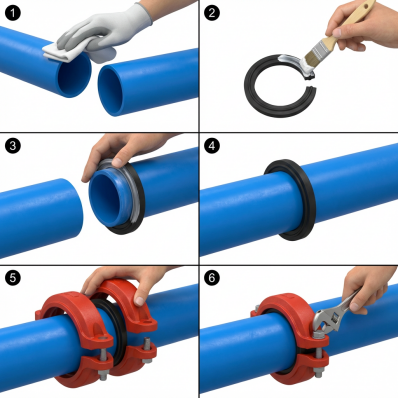
Installation – Step by Step
Step 1 – Check the Pipe
Before doing anything, check the groove.
Also clean the pipe end. This is often rushed, but it shouldn’t be.
Make sure there is no:
- rust
- oil
- dirt
- sharp edges
If the surface is not clean, the gasket won’t seal properly
Step 2 – Lubricate the Gasket
Use a proper lubricant (non-petroleum type).
Apply it:
- inside
- outside
Don’t skip this. Dry installation can damage the gasket.
Step 3 – Put on the Gasket
Slide the gasket onto one pipe.
Keep it straight.
Do not let it extend beyond the pipe edge
Step 4 – Bring Pipes Together
Align both pipes.
Check that:
- the gasket sits in the middle
- it is not twisted
This step looks easy, but many leaks come from here.
Step 5 – Install the Housing
Put the coupling housing around the joint.
Make sure:
- it fits into the grooves
- both sides sit evenly
Step 6 – Tighten the Bolts
Tighten both sides step by step.
Don’t fully tighten one side first.
For reference:
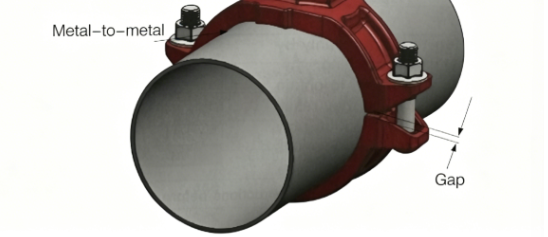
- rigid type → gaps should look even
- flexible type → metal-to-metal contact is normal
Use the correct torque. This is important.
Torque Reference (Keep It Handy)
| Bolt Size | N·m | Lbs-Ft |
| 3/8 | 40–60 | 30–45 |
| 1/2 | 110–135 | 80–100 |
| 5/8 | 135–175 | 100–130 |
| 3/4 | 175–245 | 130–180 |
| 7/8 | 245–325 | 180–240 |
From experience, many problems come from torque issues.
Too loose → leakage
Too tight → bolt or housing damage
A Few Things Worth Paying Attention To
These are small things, but they make a difference:
- Always tighten evenly
- Don’t twist the gasket
- Don’t reuse damaged parts
- Make sure the system is depressurized before installation
Also, basic safety — gloves, glasses, etc.
Why More Clients Are Choosing Grooved Systems
From what we see in the market, the demand is growing steadily.
Not because it’s “new”, but because it solves real problems.
- Faster installation
No welding. No waiting. This saves a lot of time on big projects. - Labor is easier to manage
You don’t always need highly skilled welders. - Maintenance is simpler
If something needs to be changed, it’s much easier to open and fix. - Project requirements are getting stricter
Fire protection standards are not getting lower. If anything, they are getting tighter.
About Fuid Tech Group
We are Fuid Tech Group, focusing on fire protection piping products for overseas markets.
Our customers are mostly:
- contractors
- distributors
- project buyers
What they usually care about is quite direct:
- stable quality
- no installation issues
- reliable delivery
We understand this because we deal with real projects, not just product specs.
Final Note
Grooved coupling is not complicated, but details matter.
If installation is done properly, the system works well and saves time. That’s why more projects are moving in this direction.
If you are planning new projects or looking for a stable supplier, feel free to contact us.
We’re always open to discuss practical solutions.