Automatic fire sprinkler systems are designed and selected based on a number of key factors including building type, building occupancy and fire risk. Warehouses, hospitals, hotels and offices for example all present a number of different challenges when designing an effective fire protection system. This article sets out to enable the choice of the most appropriate fire sprinkler system for different types of buildings, and discusses the key technical considerations and performance factors associated with each.
How Do Fire Sprinkler Systems Differ Across Building Types?
Fire sprinkler systems are designed and engineered to manage the specific risks within individual building types. During design, consideration is given to the intended occupancy of the building, the potential fire load and the internal layout in order to ensure effective fire suppression.
Key Factors That Influence System Design
Building height and compartmentation influence hydraulic zoning and pressure requirements. Taller structures require multi-zone networks with pressure-regulating valves to maintain balanced flow across floors. Fire load density determines the discharge density, measured in liters per minute per square meter (L/min/m²), ensuring adequate coverage for combustible materials present. Occupancy classification affects sprinkler spacing and selection of response time index (RTI), distinguishing between quick-response heads used in life-safety occupancies and standard-response heads for property protection. Integration with alarm systems, smoke control, and emergency power ensures unified operation during a fire event.
Comparing System Types by Application
Office spaces like Hotels/Bars etc. that are temperature controlled are best protected with a Wet Pipe system as these systems remain charged with water at all times and provide an immediate discharge when activated. Unheated areas like parking garages etc. are best protected with a Dry Pipe system as these systems are pressurized with air or nitrogen and do not allow water to freeze in the pipes. High hazard areas that require immediate flood of water such as chemical processing areas are best protected with a Deluge system which has open nozzles and discharge water simultaneously when activated. Areas that have high value equipment such as data centers/hospitals etc. are best protected with a Pre-action system which combines detection with control logic to ensure that there is no accidental discharge of water.
What Are the Critical Considerations When Selecting a System for Warehouses?
Warehouses present a number of design challenges due to the typically large volume, high storage racks and variable environmental conditions.
Fire Risk Characteristics in Warehouse Environments
Using high-rack storage increases the vertical spread of flame. Also the packaging material is most likely to be combustible thereby increasing the hazard classification. Cold storage areas are typically dry or pre-action as water filled piping will freeze in such areas.
Recommended Sprinkler Configurations for Warehouses
Early Suppression Fast Response (ESFR) sprinklers can effectively protect high-piled storage by providing prompt fire suppression prior to the occurrence of a flashover. Protection of cross-aisle spaces between shelves where vertical obstructions could preclude adequate ceiling-level sprinkler coverage may be enhanced by installation of in-rack sprinklers. Ample water supply must be made available for such protection through dedicated pumps and fill water tanks, and the same shall be designed to meet NFPA 13 requirements.
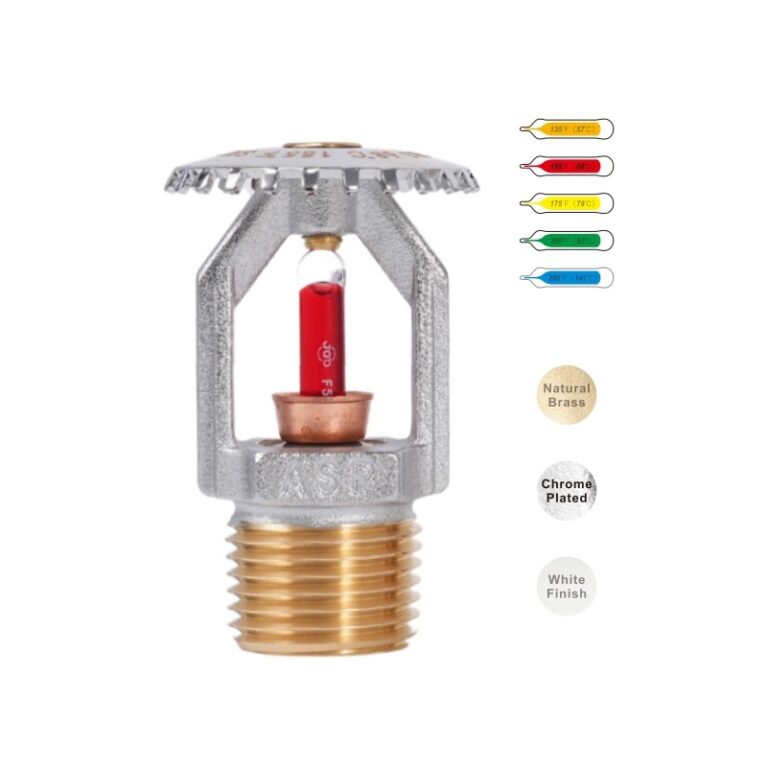
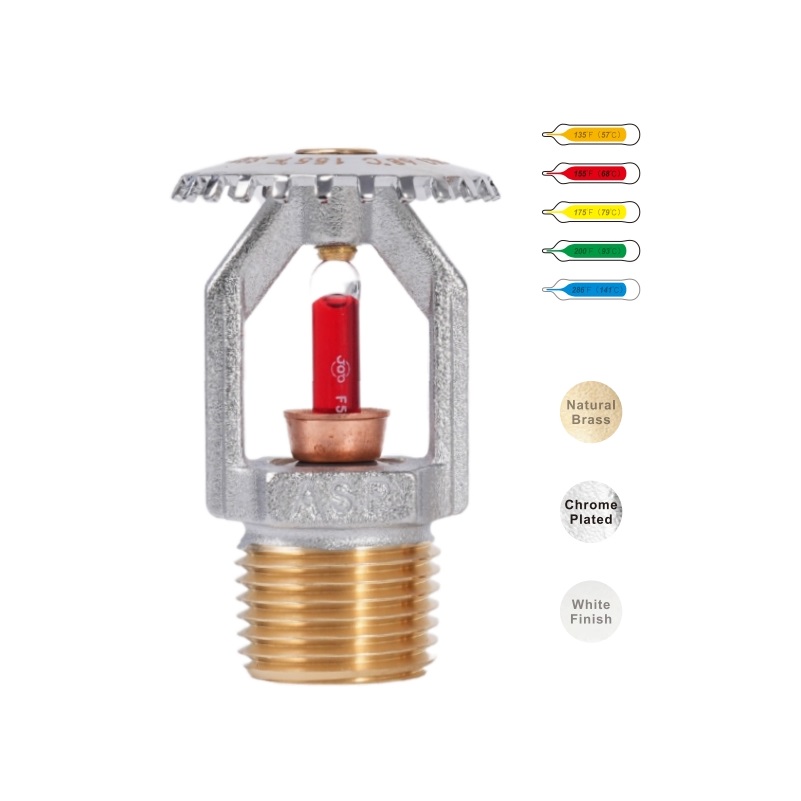
The K5.6 Upright sprinkler standard response and the K5.6 Upright sprinkler quick response offered by FLUID TECH are FM Approved / UL Listed products. They have a maximum pressure rating of 175 psi (1.2 MPa) and are tested at the factory at 435 psi (3.0 MPa). In addition to having a wide range of throw and coverage options, the upward spray from these types of sprinklers make them ideal for warehouse type facilities that require an inverted distribution pattern.
Which Fire Sprinkler Solutions Are Most Effective for Hospitals?
The Hospital requires an Automatic Fire Sprinkler System of the highest reliability, with minimal disruption to patient care whilst ensuring Life Safety.
Unique Requirements in Healthcare Facilities
Redundancy and low down time are critical when continuous operation is required. Areas with very sensitive medical equipment or electrical panels could be protected with pre-action or double interlock detection methods which would only allow water discharge after a correct detection event has occurred. In addition, by dividing the system into various zones which correspond with individual hospital departments, the need to evacuate the entire area as a result of a localized incident is minimized.
Technical Recommendations for Hospital Applications
The use of corrosion-resistant piping materials such as stainless steel or CPVC in critical areas of healthcare facilities, including sterile areas, enables the facilities to maintain the highest standards of hygiene. In addition to piping materials, the use of medical gas shutoff valves and emergency power supply systems enable continuous operation of medical gas systems in case of failures. In addition to the piping system, intelligent monitoring of the piping system by using addressable panels which are integrated into Building Management Systems (BMS) enables on-line monitoring of flow switches and positions of valve actuators etc. in real time.
How Should Fire Sprinkler Systems Be Designed for Hotels?
Many Hotels consist of guest rooms that are used in isolation and public assembly areas that are used by many people. The best fire protection solution for such establishments is one that is flexible and is aesthetically integrated within the buildings overall design.
Fire Protection Priorities in Hospitality Settings
Fast response dry chemical or clean agent sprinklers in rooms and corridors are critical to guest safety as they provide the ability to attack a fire prior to flashover. Additionally, areas of elevated ignition such as commercial kitchens, laundry rooms and mechanical rooms require higher discharge densities and/or specific nozzle types designed to resist oil and grease buildup. Concealed sprinklers are available to preserve interior design while meeting all code requirements.
Optimal System Configurations for Hotels
Due to the relatively stable indoor temperatures in this facility, a wet pipe network solution is preferred. The use of zonal isolation valves on individual floors enables effective maintenance without affecting other floors of the facility. Integration of the fire alarm voice evacuation system to the sprinkler system enhances emergency communication.
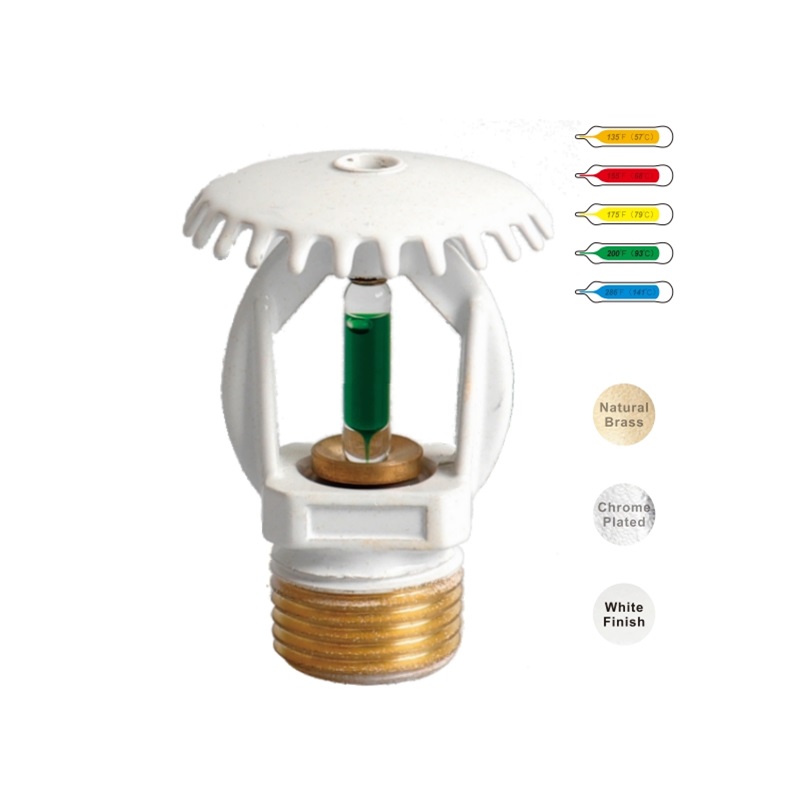
The K5.6 Pendent sprinkler quick response by FLUID TECH is a fire protection sprinkler designed to activate during a fire and release water in a downward direction in a circular fashion to extinguish the fire in the protected area below the sprinkler. This model is FM Approved / UL Listed for operation up to 175 psi (1.2 MPa) and is available in natural brass, chrome-plated or white finish making it an ideal sprinkler for use in hotel interior applications where high performance and aesthetic appeal is required.
What Are the Key Design Principles for Office Buildings?
Designing office spaces with safety of the occupants as topmost priority, these plans allow for flexibility of open-plans and integration with energy efficient mechanical systems.
Operational Characteristics of Office Spaces
The open plan necessitates a uniform spacing pattern to ensure same thermal activation in all zones. Specialized heads rated for protection of equipment in accordance with FM Approval requirements are typically required for electrical rooms. In addition, the typical ceiling plenum used for HVAC ducts can alter the heat release pattern, thus affecting the sprinkler designer’s hydraulic calculations to determine the proper activation time.
Recommended Approaches for Office Installations
To help prevent local fires from causing too much damage Quick-response sprinklers are activated by heat detection. Adding automatic sprinklers to a system of smoke detectors offers early warning in case of a fire and is particularly vital in very crowded rooms. The required installation, the required hydraulic demand and the required tests are stipulated in the NFPA 13 standard or the EN 12845 standard and must be observed in line with the relevant jurisdictional regulations.
The K5.6 Pendent sprinkler standard response offers dependable downward coverage for office type occupancies where controlled discharge patterns are critical to minimize damage to sensitive electronic equipment.
Why Partner with FLUID TECH PIPING SYSTEMS (TIANJIN) CO., LTD?
Fluid tech group is the first fire protection specialized company in northern China that operates under its own brand, IF grooved coupling and grooved fittings. Fluid tech group’s partner company flutech piping systems was established in Tianjin in 2018. Fluid tech group’s partner company flutech piping systems is a one-stop fluid tech group piping systems supplier for construction companies all over the world. Fluid tech group’s fire protection products are exported and are approved by FM/UL/CE/LPCB/VDS approvals. The factories that produce Fluid tech group fire protection products are approved by ISO/SGS/TUV etc. approvals. Fluid tech group fire protection products complete solutions including fire protection pipes, fire protection valves, fire protection couplings, fire protection hangers, fire protection seismic bracing, sprinklers approved by FM/UL/CE/LPCB/VDS approvals, approved sprinklers including upright sprinklers and pendent fire sprinklers for various kinds of buildings.
FLUID TECH PIPING SYSTEMS (TIANJIN) CO., LTD. provides globally compliant products for all types of buildings, such as industrial warehouses, hospitals, hotels and offices, together with design assistance and commissioning support.
What Are the Emerging Trends in Fire Sprinkler Technology?
Technology is constantly evolving to improve how Automatic Fire Sprinkler Systems function, including new smarter fire detection sensors, and more sustainable design approaches.
Innovations Shaping the Future of Fire Protection Systems
Predictive maintenance of pumps and other equipment is achieved by IoT-based monitoring of flow rates, valve positions, and temperatures. This data is read out and analyzed by supervisory networks with connected sensors. Water mist offers the same fire suppressing effect by means of much less water, thus preventing large amount of water running out and being able to save resources in a sustainable way. The digital twin enables engineers to test hydraulic boundary conditions in virtual space before the real object is put into operation. Also materials which are environmentally friendly, such as low-lead alloys or recyclable plastics, are used in order to increase sustainability of the fire protection system without losing durability and integrity of compliance.
Conclusion
Choosing the correct fire protection system for a particular building requires matching up the automatic fire sprinkler system with the building’s occupancy type, hazard, environmental conditions and program/integration requirements. Most warehouses use ESFR systems while hospitals require pre-action protection, hotels require visible pendent style sprinklers that are unobtrusive yet respond quickly and offices can be designed for virtually any purpose and will integrate with the latest building management systems. We have worked with suppliers such as FLUID TECH PIPING SYSTEMS (TIANJIN) CO., LTD who can provide all necessary approved equipment, including FM/UL-listed upright and pendent style sprinklers, along with engineering expertise to ensure a long lasting effective fire protection system.
FAQs
Q1: How often should automatic fire sprinkler systems be inspected?
The NFPA 25 Guidelines recommend annual inspections for fire suppression systems; however, high-risk occupancies may require more frequent, such as quarterly, inspections depending on the local code requirements.
Q2: Can one type of sprinkler system serve multiple building zones with different hazards?
Yes – by making each zone hydraulically balanced using suitable control valves, it is possible to implement hybrid configurations that keep different hazard classifications separated.
Q3: What factors influence the cost of installing a new fire sprinkler system?
Installation cost varies based on total floor area, ceiling height, hazard level designation, available water supply capacity, material selection between steel or CPVC piping options, as well as integration complexity within existing mechanical-electrical infrastructures.