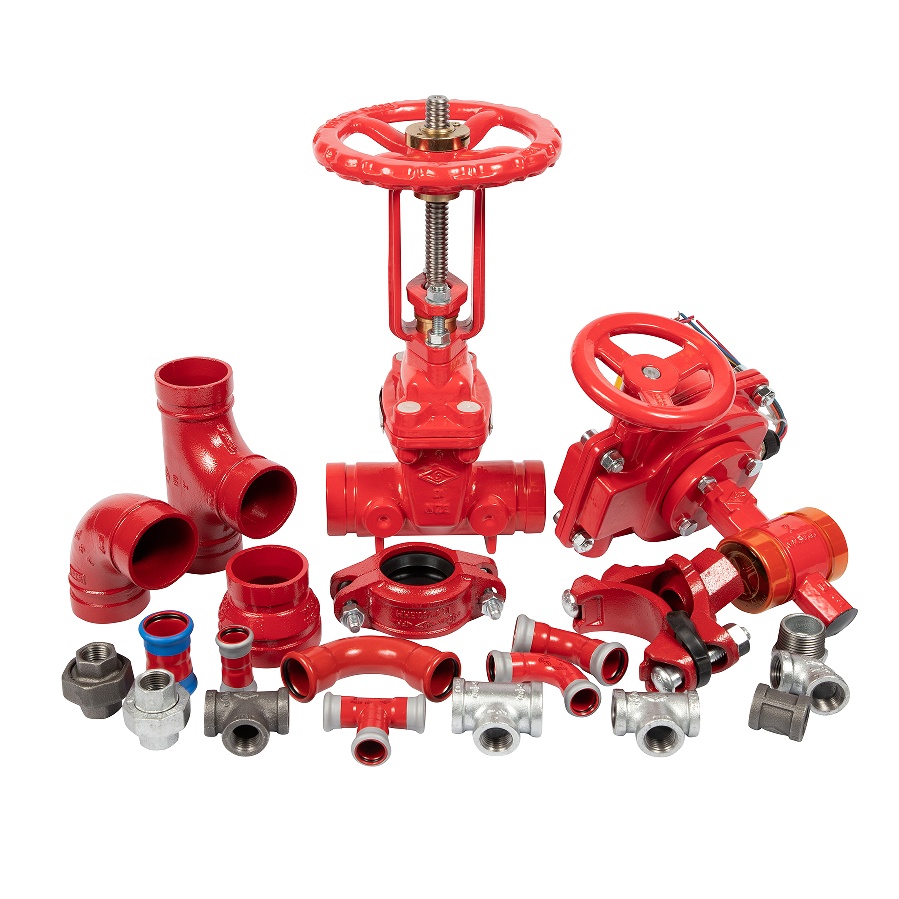
Grooved piping systems speed up installation. They also make future maintenance much easier. However, replacement jobs and multi-supplier projects often raise a major question. Can builders use grooved couplings, fittings, valves, and pipes from different brands together? The real-world answer is sometimes. Still, you can never base this choice on nominal pipe size alone. A safe cross-brand connection demands several matching details. These include groove geometry, pipe outside diameter, and coupling design. You must also check the pressure rating, gasket service, product approvals, and installation rules. AWWA C606 offers a highly useful dimensional reference. However, buyers should treat it as the starting point of a compatibility check. It is not an automatic green light to mix every product that carries this same standard.
Does AWWA C606 Make Different Brands Automatically Compatible?
Industry experts widely reference AWWA C606 for grooved and shouldered joints. Even so, users must understand its role clearly before they combine products from various manufacturers.
What Does AWWA C606 Cover?
The current AWWA standards list highlights C606-22, Grooved and Shouldered Joints. Its scope covers joints for ductile iron pipe. It also covers metallic pressure pipe in iron pipe size, fittings, and other parts. Workers use these components in water, wastewater, reclaimed-water, and similar services.
This standard helps outline the rules for pipe-end preparation and joint geometry. A pipe, fitting, and coupling might be made for the same applicable groove specification. When this happens, they often share the basic dimensions needed for proper assembly.
Still, AWWA C606 compliance does not mean every part is interchangeable. This applies to any housing, gasket, bolt set, or coupling component. Individual manufacturers might use totally different housing profiles and gasket geometries. They also have unique installation torques, pressure limits, and approval conditions.
Why Is Nominal Pipe Size Not Enough?
Two products marked “4-inch” or “DN100” might lack the exact same actual outside diameter. For instance, different piping markets might use outside diameters like 108 mm or 114.3 mm. They do this even for products described with the very same nominal size.
The coupling key needs to engage perfectly with the prepared groove. Furthermore, the gasket must seal securely against the correct pipe outside diameter. A person might select a coupling based only on nominal size. Because of this, the part could be too loose or impossible to install. It might also fail to form a reliable seal.
You must take care before mixing brands. Always compare the actual pipe outside diameter shown in millimeters or inches. Do not rely solely on the DN or NPS designation.
Which Components Must Match Before Brands Are Mixed?
Users should check cross-brand compatibility as a complete joint assembly. A fitting might feature the correct groove. At the same time, the selected coupling or gasket could remain totally unsuitable.
Do the Groove Dimensions Match?
You need to confirm whether the pipe and fitting share the same groove profile. They must also use the same preparation method. Some highly important dimensions include:
- Pipe outside diameter
- Groove diameter
- Groove width
- Distance from the pipe end to the groove
- Minimum remaining wall thickness
- Allowable flare at the pipe end
Builders can use both roll grooves and cut grooves in grooved systems. However, their suitability depends heavily on pipe material and wall thickness. It also relies on the coupling type and the manufacturer’s published data. A groove might look perfectly fine during a quick visual check. Even so, it could still fall outside the strict dimensional tolerance.
Are the Coupling Types Equivalent?
Rigid and flexible couplings handle very different functions. A rigid coupling is built to stop angular and linear movement. Meanwhile, a flexible coupling allows controlled movement within its specific design limits. FLUID TECH offers both rigid and flexible ductile iron couplings. These are manufactured specifically for grooved piping applications. Its published products reference ASTM A536 ductile iron and AWWA C606 groove requirements.
You should never substitute a rigid coupling from one manufacturer for a flexible model. This rule applies even if both parts fit the groove perfectly. The system design might depend strongly on flexibility. This flexibility helps with thermal movement, vibration control, or pipe deflection. On the other hand, installing a flexible coupling where rigidity is needed can cause serious problems. It might introduce unwanted movement into the piping system.
Can Gaskets and Hardware Be Interchanged?
Workers should never move gaskets between different brands or models. The only exception is when the manufacturer clearly confirms interchangeability. The gasket shape and sealing-lip geometry can vary. The compound, color code, and temperature range might also differ. This happens even when the nominal size is completely identical.
Manufacturer instructions show exactly why this check matters so much. Some product families state clearly that gaskets or coupling components from closely related models are not interchangeable. Other manufacturers permit cross-brand assemblies under strict conditions. The products must meet the very same groove specifications. They must also correspond to verified equivalent models.
Bolts and nuts must also stay with their original coupling assembly. You can only change them if an approved replacement specification is available. Substituting hardware can alter the bolt strength and thread engagement. It also affects the tightening behavior and housing contact.
What Should an AWWA C606 Compatibility Checklist Include?
A well-documented review greatly lowers the risk of leakage and joint separation. It also prevents rejected inspections and messy warranty disputes. Workers should complete the following checks before they begin installation.
Have You Verified the Product Data?
First, collect the technical data sheets for the pipe, fitting, coupling, and gasket. Then, firmly confirm the following items:
- Actual pipe and fitting outside diameter
- Applicable groove specification
- Roll-groove or cut-groove requirements
- Coupling size and model
- Rigid or flexible function
- Maximum working pressure
- Permitted temperature range
- Gasket material and fluid compatibility
- Required lubricant
- Bolt-tightening instructions
The working pressure of the completed joint needs careful calculation. It must be based on the lowest-rated component in the assembly. You must never base it on the highest pressure shown on just one product.
Are the Listings and Project Requirements Still Valid?
Fire protection projects often require products with specific UL, FM, LPCB, VdS, or local approvals. A manufacturer might offer a general certification statement. However, this document does not prove everything. It does not mean that every size, model, coating, and mixed-brand combination falls under the approval.
Always check the exact product model and size against the applicable approval documentation. You should also review the project specification and the authority having jurisdiction requirements. Look over consultant submittals and the supplier’s written conditions carefully. Do all of this before you approve any mixed assembly.
Has the Trial Assembly Been Inspected and Tested?
Do not install a large quantity right away. Instead, assemble a representative joint first. Use the intended pipe, fitting, coupling, gasket, and hardware for this test. The coupling keys need to engage the grooves correctly. The gasket must remain perfectly centered. Finally, the housing should close exactly according to the installation instructions.
Installers must tighten the bolts evenly and symmetrically. Uneven tightening can easily pinch the gasket. This mistake often leads to immediate or delayed leakage. After the installation, you must conduct the required hydrostatic or system acceptance test. Make sure to inspect every single mixed-brand joint closely.
Why Choose FLUID TECH as a Grooved Fitting Supplier?
A truly reliable supplier must provide much more than just individual components. It should actively help customers confirm dimensions, standards, and pressure classes. The supplier must also verify certifications and installation requirements well before shipment.
What Does FLUID TECH Provide?
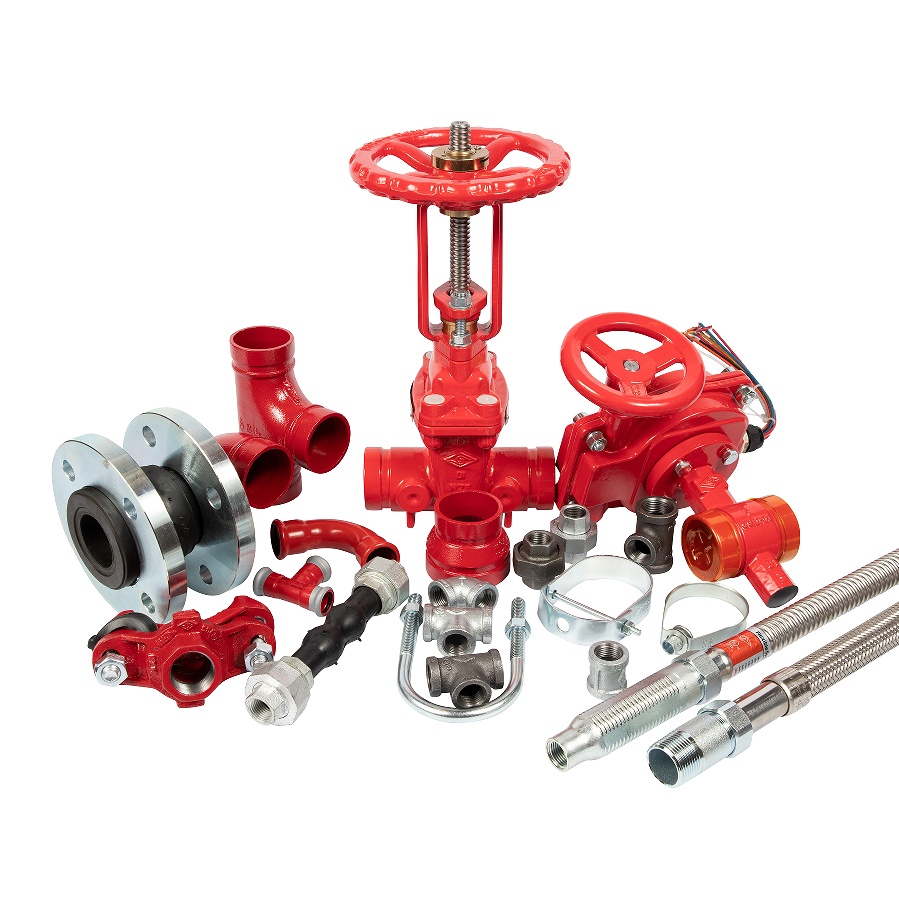
FLUID TECH PIPING SYSTEMS (TIANJIN) CO., LTD supplies many vital components. These include ductile iron grooved couplings, elbows, tees, reducers, caps, mechanical outlets, and grooved flange adapters. Buyers use them for fire protection and other piping systems. Its wide product range features rigid, flexible, reducing, and quick couplings. The company also offers grooved fittings in multiple outside-diameter options.
The company states that its order inspections are highly thorough. They often include hydrostatic testing, dimensional measurement, and surface inspection. The team also performs packaging checks and provides third-party inspection reports. These strict controls pair well with technical product selection support. Because of this, FLUID TECH serves as a highly practical supplier. It is an excellent choice for distributors, contractors, and international project buyers who need ductile iron grooved pipe fittings.
Conclusion
Builders can sometimes combine grooved products from different brands. Even so, strong technical evidence must support this decision. AWWA C606 conformity is simply not enough on its own. A matching outside diameter and a similar appearance are also insufficient guarantees.
The absolute safest approach involves verifying the complete assembly. You must check the pipe, groove, fitting, coupling, gasket, and bolts. You also need to confirm the pressure rating, approval status, and installation method. Sometimes, the documentation is incomplete. In those cases, use components from one verified product system. Alternatively, request written confirmation from the manufacturers and the project engineer. A short compatibility review before installation saves a lot of money. It is far less costly than repairing leaks or replacing rejected materials. It also helps you avoid resolving tricky responsibility disputes after a major system failure.
FAQs
Can I Use One Brand’s Coupling on Another Brand’s Grooved Elbow?
You possibly can do this. However, both products must be designed for the very same pipe outside diameter and groove specification. Their pressure, gasket, approval, and installation requirements must also be fully compatible. Experts highly recommend getting written technical confirmation. This step is crucial for fire protection and other safety-critical systems.
Can I Put a Different Brand’s Gasket Inside an Existing Coupling?
You cannot do this unless the coupling manufacturer gives clear permission. They must confirm that the gasket is approved for that exact model and size. A similar diameter simply does not prove anything. It does not guarantee that the sealing lips, width, compound, or housing fit are actually correct.
Will a Mixed-Brand Joint Pass a Hydrostatic Test?
It might pass the test when all components are compatible and correctly installed. However, a successful pressure test does not automatically confirm long-term approval. It also does not guarantee warranty coverage or suitability for the conveyed fluid. You must always check the official documentation and the project acceptance requirements.