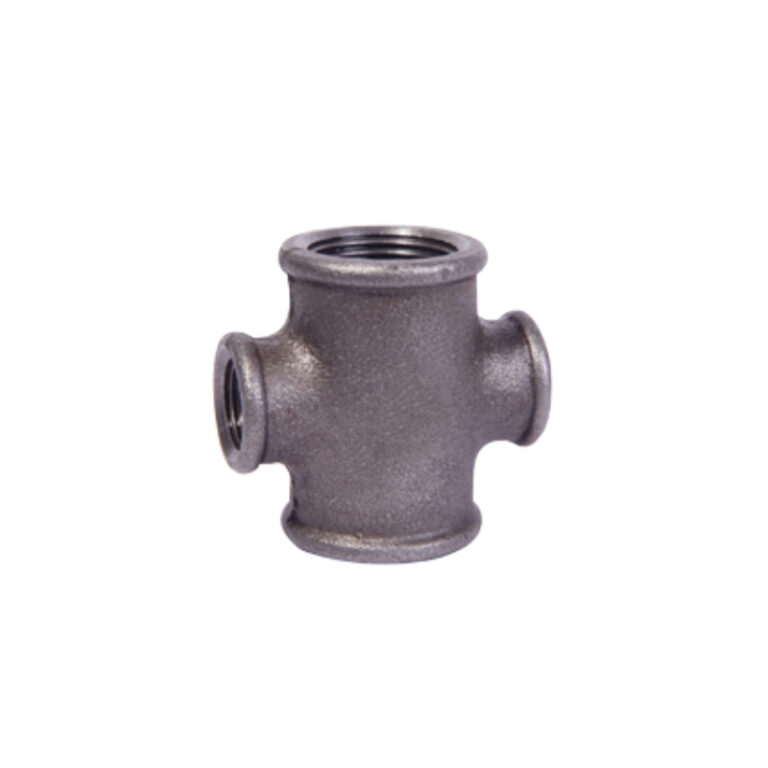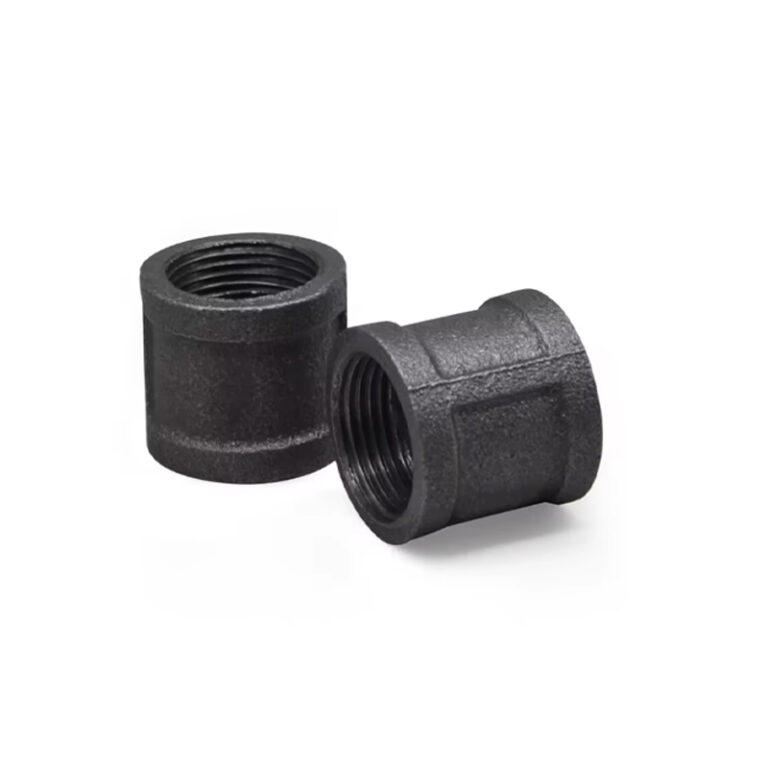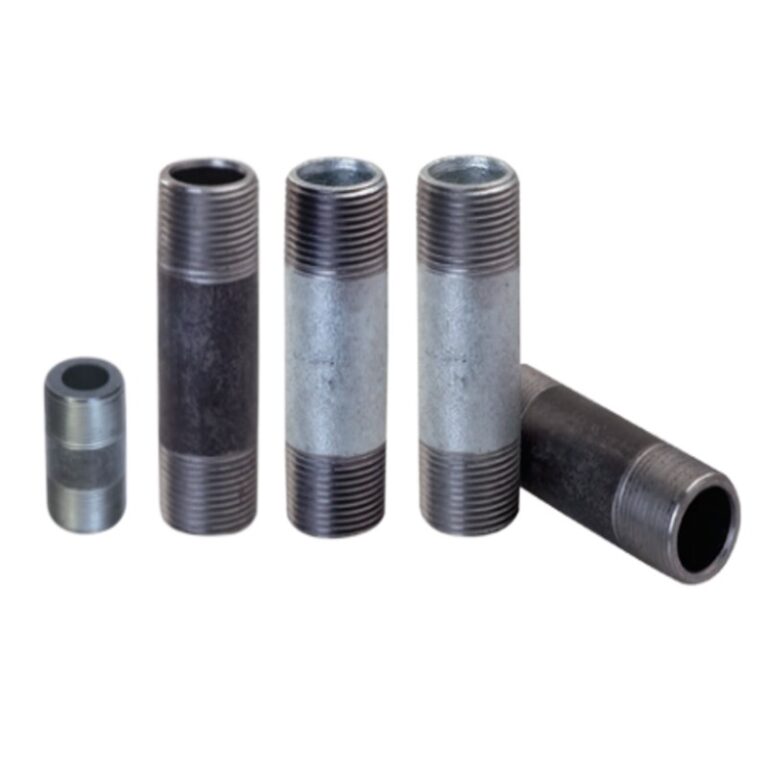
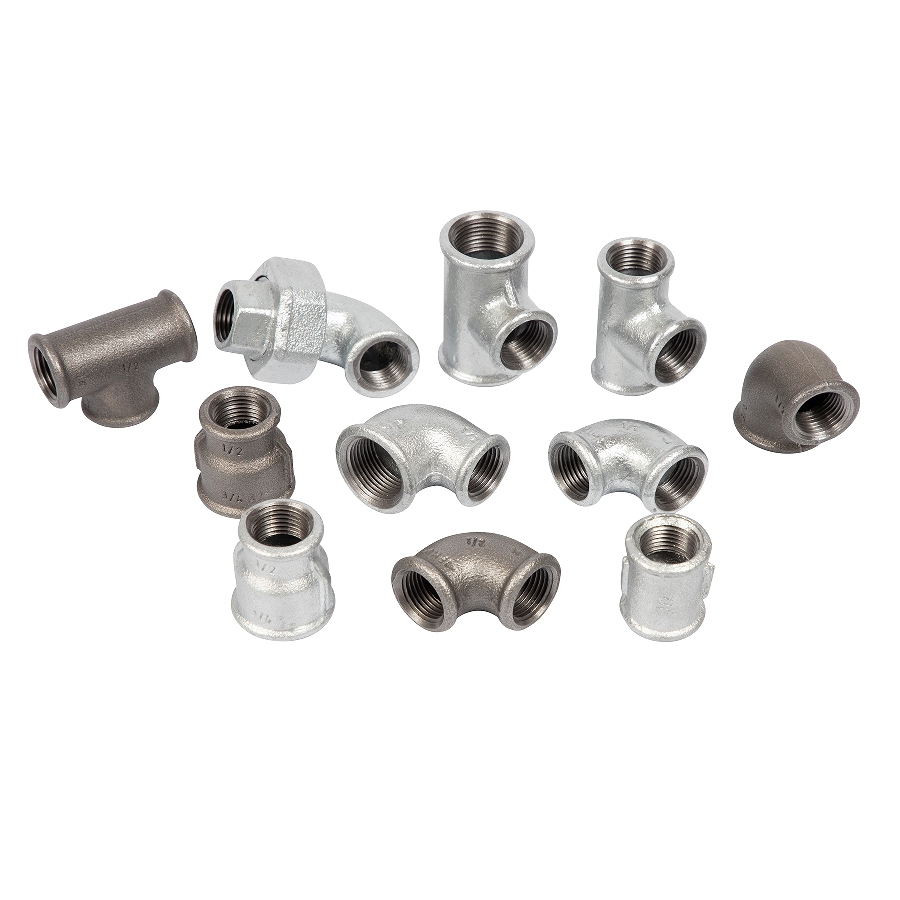
A malleable iron pipe fittings size chart helps engineers, contractors, distributors, and maintenance teams select compatible products and calculate pipe cut lengths. NPS and DN identify the nominal connection size, while center-to-end dimensions describe the space occupied by elbows, tees, and other directional fittings. Fitting take-off adjusts that dimension according to the approved thread makeup. Checking all these values before ordering or fabrication can reduce cutting errors, installation delays, and material waste.
What Do NPS and DN Mean in a Fitting Size Chart?
NPS and DN are nominal sizing systems rather than direct physical measurements. They help match pipes, fittings, valves, and other threaded components within the same specified piping system.
How Does NPS Identify a Pipe Fitting?
NPS stands for Nominal Pipe Size. It is commonly used in American piping specifications and is normally expressed in inches, such as 1/2″, 3/4″, 1″, 1 1/2″, and 2″.
An NPS 1 fitting is intended to connect with nominal 1-inch threaded pipe. However, this designation does not mean that the fitting bore, thread diameter, or body diameter measures exactly one inch.
How Does DN Correspond to NPS?
DN stands for Diameter Nominal and is widely used in metric project documentation. Like NPS, DN is a nominal reference rather than an exact measured diameter.
The following conversion table covers several common fitting sizes:
| NPS | DN |
| 1/8″ | DN6 |
| 1/4″ | DN8 |
| 3/8″ | DN10 |
| 1/2″ | DN15 |
| 3/4″ | DN20 |
| 1″ | DN25 |
| 1 1/4″ | DN32 |
| 1 1/2″ | DN40 |
| 2″ | DN50 |
| 2 1/2″ | DN65 |
| 3″ | DN80 |
| 4″ | DN100 |
| 5″ | DN125 |
| 6″ | DN150 |
For example, DN50 generally corresponds to NPS 2. This conversion confirms the nominal size only. Buyers must still verify the design standard, thread type, pressure class, and product drawing.
Which Dimensions Should Buyers Check?
A useful malleable iron fittings chart should include a dimensional drawing as well as a table. The drawing identifies the exact reference points used for each measurement.
What Is the Center-to-End Dimension?
Center-to-end is the distance from the theoretical intersection of the fitting centerlines to the fitting end face. It is often identified as dimension A on drawings of elbows, tees, crosses, and reducing fittings.
For a 90-degree elbow, the measurement runs from the centerline intersection to the end face of one threaded opening. For an equal tee, the center-to-end dimensions may be identical on all three outlets. A reducing tee or reducing elbow may have different values for the larger and smaller connections.
Center-to-end dimensions influence:
- Pipe routing
- Equipment clearance
- Branch-line spacing
- Prefabricated spool dimensions
- Valve positioning
- Sprinkler placement
- Pipe cut-length calculations
What Other Measurements May Appear?
Depending on the fitting type, a dimensional table may also show:
- End-to-end length
- Center-to-center distance
- Overall height
- Branch center-to-end distance
- Thread length
- Body diameter
- Width across flats
- Unit weight
Users should always read the drawing legend because manufacturers may use the same letter to identify different dimensions.
How Do Selected 90° Elbow Dimensions Compare?
The table below uses selected values published for FLUID TECH malleable iron 90-degree elbow product series. It demonstrates why dimensions should be checked against the exact standard and product configuration.
What Are the Published Center-to-End Values?
| Nominal Size | DN | ASME B16.3 Class 150, NPT A | BS/EN Series, BSPT A |
| 1/2″ | DN15 | 28.5 mm | 27 mm |
| 3/4″ | DN20 | 33.3 mm | 32 mm |
| 1″ | DN25 | 38.1 mm | 37 mm |
| 1 1/4″ | DN32 | 44.5 mm | 44.5 mm |
| 1 1/2″ | DN40 | 49.3 mm | 48.5 mm |
| 2″ | DN50 | 57.2 mm | 57 mm |
| 2 1/2″ | DN65 | 68.6 mm | 68.5 mm |
| 3″ | DN80 | 78.2 mm | 77.5 mm |
| 4″ | DN100 | 96.3 mm | 96.5 mm |
These values are product-specific examples rather than universal dimensions for every malleable iron elbow. Dimensions may change with the fitting standard, pressure class, pattern, thread type, and manufacturer.
Buyers should request the latest approved technical drawing before preparing fabrication dimensions or replacing an existing fitting.
Which Standards Control Materials, Dimensions, and Threads?
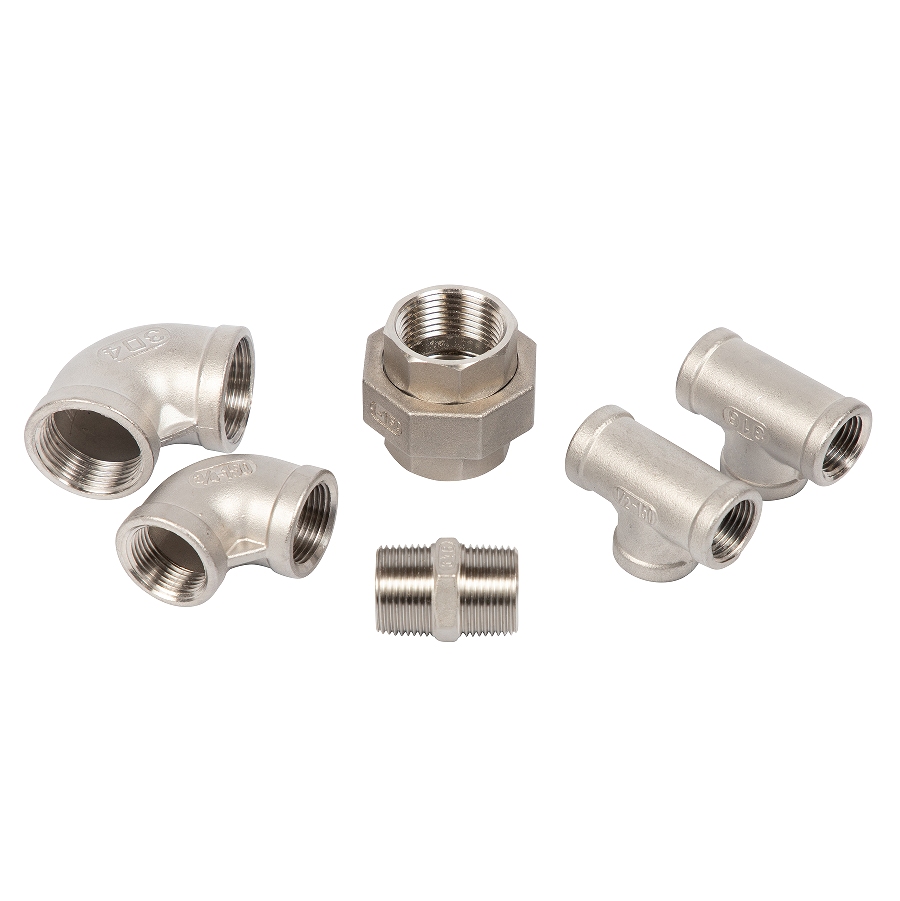
A fitting specification often refers to several standards because material quality, fitting dimensions, and thread geometry are separate technical requirements.
How Should American-Standard Fittings Be Specified?
For many American-series products, the specification may distinguish among:
- ASTM A197 for malleable iron material
- ASME B16.3 for Class 150 and Class 300 fitting dimensions and related requirements
- ASME B1.20.1 for NPT pipe threads
Buyers should avoid describing ASTM A197 as a dimensional standard. A clearer purchase specification lists the material, fitting standard, thread standard, pressure class, and finish separately.
How Should BS/EN Fittings Be Specified?
European-series malleable iron fittings may be produced according to EN 10242 or an applicable national adoption. The order should also identify the required thread form, such as BSPT, and the relevant project specification.
A buyer should not assume that an ASME fitting and a BS/EN fitting have identical body dimensions simply because both are marked 1 inch or DN25.
How Is Threaded Fitting Take-Off Calculated?
Take-off is used to convert a piping layout dimension into a pipe cut length. However, workshops do not always use the term in exactly the same way.
Is Take-Off the Same as Center-to-End?
Some fabricators call the entire center-to-end dimension the fitting take-off. Others define take-off as the installed fitting allowance after deducting the actual thread makeup.
For threaded pipe fabrication, the installed allowance can be expressed as:
Installed fitting take-off = Center-to-end dimension − Approved thread makeup
The thread makeup is the distance the pipe enters the female fitting in the approved assembled condition. It should not automatically be treated as equal to the full thread length shown in a product catalogue.
How Can the Formula Be Applied?
Assume a pipe is installed between two identical 1-inch Class 150 NPT elbows:
- Center-to-center distance: 600 mm
- Center-to-end dimension A: 38.1 mm
- Approved thread makeup per joint: M
The pipe cut length is:
Pipe cut length = 600 − 2 × (38.1 − M)
The value of M should come from a project-approved fabrication table, a controlled trial assembly, or a verified installation procedure. It should not be copied from an unrelated online chart.
Thread makeup can vary due to thread tolerances, pipe preparation, sealant, tightening practice, and fitting manufacture. For repeated fabrication, contractors should create a project-specific take-off table using the actual pipe and fittings.
Why Can Fittings with the Same NPS Have Different Dimensions?
Nominal connection compatibility does not guarantee identical external dimensions. This becomes especially important in replacement work and confined installation spaces.
Which Product Features Affect Fitting Dimensions?
Center-to-end and overall dimensions may vary according to:
- ASME, EN, DIN, or another product standard
- NPT, BSPT, or BSPP threads
- Class 150 or Class 300 construction
- Standard or heavy-pattern body design
- Beaded, banded, or plain configuration
- Equal or reducing outlets
- Female-female or male-female ends
- Manufacturer tolerances
A fitting should not be substituted solely because its NPS or DN designation matches the original component.
What Information Should Buyers Include in an Order?
A complete purchase description helps suppliers confirm product compatibility and provide the correct dimensional documents.
Which Details Should Appear in the Specification?
Buyers should provide:
- Fitting type and figure number
- NPS or DN size
- Equal or reducing configuration
- Material specification
- Dimensional standard
- Thread type and thread standard
- Pressure class or PN rating
- Black or galvanized finish
- Required approvals and certificates
- Quantity, packaging, and marking requirements
For reducing tees and similar products, the order should clearly define the size sequence for the run and branch connections.
Why Choose FLUID TECH as a Malleable Iron Pipe Fittings Supplier?
A supplier with several standard series can help international buyers match products to different regional specifications and project requirements.
What Products Does FLUID TECH Offer?
FLUID TECH PIPING SYSTEMS (TIANJIN) CO.,LTD supplies BS/EN, American, and DIN series malleable iron pipe fittings. Its product range includes elbows, street elbows, tees, reducing fittings, sockets, bushings, caps, plugs, nipples, and other threaded components.
The company provides product specifications and dimensional information for project selection. Buyers can submit their required standard, thread type, pressure class, finish, size list, and quantity when requesting a quotation.
Conclusion
A malleable iron pipe fittings size chart should be used as part of a complete technical specification. NPS and DN confirm nominal connection size, while center-to-end dimensions show the space occupied by the fitting. Take-off calculations must also account for the approved thread makeup.
Before releasing a bill of materials or pipe cutting schedule, buyers should confirm the product standard, figure number, thread type, pressure class, center-to-end value, drawing revision, and installation method. Supplier drawings and controlled trial assemblies provide a more reliable basis than generic online dimension tables.
FAQs
Is DN25 Exactly 25 mm in Diameter?
No. DN25 is a nominal size corresponding to NPS 1. It does not mean that the bore, thread, or fitting body measures exactly 25 mm.
Can the Same Take-Off Chart Be Used for NPT and BSPT Fittings?
No. NPT and BSPT fittings may follow different thread and dimensional standards. Use a chart prepared for the exact fitting series being installed.
Are Fittings from Different Manufacturers Dimensionally Interchangeable?
Not automatically. Products with the same nominal size may have different center-to-end dimensions, body profiles, thread tolerances, or pressure classes. Check the approved drawing before making a substitution.