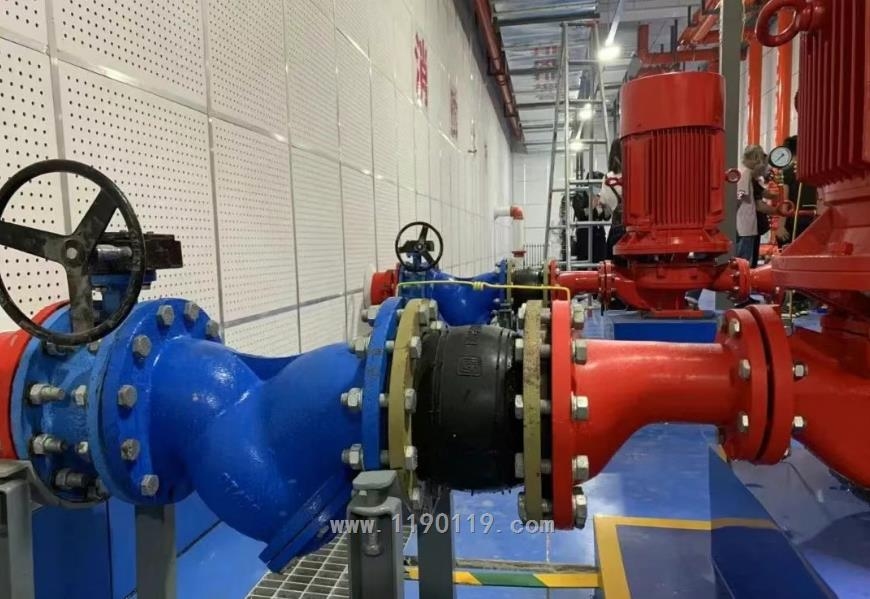
An eccentric reducer is a small piping component that can have a significant impact on pump performance. When a larger suction pipe must connect to a smaller pump inlet, the reducer changes the pipe diameter while keeping one side of the flow path relatively straight. However, one installation question frequently causes confusion: should an eccentric reducer be installed flat side up or flat side down? For most horizontal pump suction piping systems carrying clean liquids, installing the eccentric reducer with the flat side up helps prevent air pockets and supports stable flow into the pump. The correct arrangement, however, should always consider pipe routing, pump position, fluid characteristics, and the pump manufacturer’s installation requirements.
Why Is an Eccentric Reducer Used in Pump Suction Piping?
Pump suction piping often has a larger diameter than the pump suction nozzle. A reducer is therefore required to make the transition between the two sizes. On horizontal suction lines, an eccentric reducer is commonly preferred because its offset geometry can help eliminate an unwanted high point where air may collect. Pump manufacturers and engineering references commonly recommend eccentric reducers in horizontal suction piping for this reason.
The design becomes particularly valuable when stable suction conditions are important.
Preventing Air Pockets Near the Pump
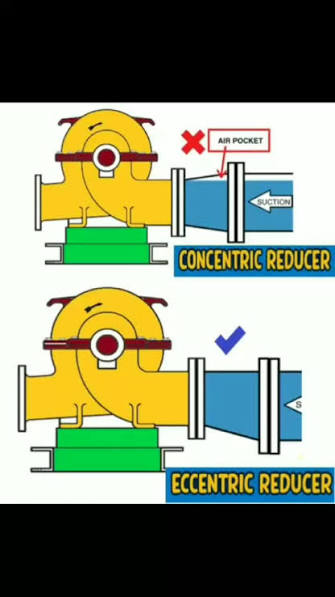
A concentric reducer narrows equally from every direction. When installed horizontally, its geometry can create a space at the top of the pipe where air or gas may accumulate.
An eccentric reducer has one straight side and one tapered side. When positioned correctly, the upper surface of the suction piping can remain relatively continuous toward the pump inlet.
Reducing trapped air is important because air entering or collecting in pump suction piping can contribute to unstable operation, loss of prime, vibration, noise, and reduced pumping performance.
Creating a Better Diameter Transition
The reducer also allows a larger suction line to transition into a smaller pump connection without an abrupt step.
The fitting itself is only one part of good suction piping design. Pipe diameter, straight-pipe length, elbows, valves, suction lift, flow velocity, and overall routing can also affect the quality of flow entering the pump.
Should an Eccentric Reducer Be Flat Side Up?
For most horizontal centrifugal pump suction lines handling clean liquids, the flat side should normally face upward. This is also described in some technical documents as placing the taper or eccentric side downward.
Xylem Goulds Water Technology specifies an eccentric pipe reducer with the straight side up when larger suction piping is connected to the pump. Pentair Berkeley pump installation guidance likewise illustrates an eccentric reducer installed flat side up in centrifugal pump suction arrangements.
There is a practical hydraulic reason for this orientation.
Flat Side Up Helps Avoid a High Point
Air naturally tends to move toward the highest point of a liquid-filled horizontal pipe.
If the reducer creates a raised pocket before the pump suction nozzle, air can remain trapped in this area instead of being carried through the system. A flat-top arrangement creates a smoother upper path toward the pump and reduces the opportunity for such a pocket to form.
This is particularly important in suction-lift applications, where maintaining a properly filled suction line can be critical to reliable pump operation.
Suction Piping Should Work With the Reducer
Simply rotating the reducer correctly does not compensate for poor piping layout.
For suction-lift systems, piping should generally avoid unnecessary high points where gas can accumulate. KSB notes that suction lift lines should be routed with a rising slope toward the pump and recommends eccentric reducers in horizontal suction lines to reduce air-pocket formation.
The final installation should always follow the applicable pump manufacturer’s instructions, project drawings, and engineering specifications.
When Could Reducer Orientation Require Special Attention?
“Flat side up” is a useful rule for conventional horizontal water-pump suction piping, but it should not be treated as a universal instruction for every fluid system.
Before installing the fitting, engineers and contractors should examine the actual operating conditions.
Vertical Piping Is a Different Situation
The flat-side-up question mainly applies to horizontal pipe runs.
In a vertical pipeline, the reducer is not creating the same horizontal upper surface where air could become trapped. Selection is therefore more dependent on piping geometry, flow direction, available space, and system design.
Solids-Laden Fluids May Need Different Design Decisions
Wastewater, slurry, and other fluids containing solids can introduce another concern: sediment accumulation.
A piping arrangement that helps control air in a clean-water system may not automatically be ideal for a service where solids can settle. For these applications, the engineer should consider both gas accumulation and solids deposition rather than applying a general orientation rule without checking the process requirements.
Manufacturer Requirements Come First
Pump manufacturers may specify reducer orientation, minimum straight-pipe lengths, suction pipe sizing, allowable fittings near the inlet, and other installation details for a particular pump.
Those instructions should take priority over a general piping guideline.
What Installation Mistakes Should You Avoid?
Correct reducer orientation is important, but many pump suction problems result from several installation issues occurring together.
Checking the complete suction arrangement can help prevent avoidable commissioning and maintenance problems.
Installing a Concentric Reducer on a Horizontal Suction Line
Using a concentric reducer where an eccentric design is required can introduce an upper pocket capable of collecting air.
Where the pump manufacturer’s instructions call for an eccentric reducer, contractors should avoid substituting a concentric fitting simply because the nominal inlet and outlet sizes are correct.
Creating High Points Before the Pump
Even with a flat-side-up eccentric reducer, poor pipe routing can still trap air.
Unnecessary rises and drops in suction piping should be avoided. In suction-lift arrangements, the line should be routed according to the pump manufacturer’s specified slope toward the pump.
Placing Disturbing Fittings Too Close to the Suction Nozzle
Elbows, tees, partially closed valves, and other fittings can disturb the velocity profile entering a centrifugal pump.
The required straight-pipe arrangement varies according to pump design and manufacturer recommendations. Installers should therefore verify the pump IOM manual instead of relying on a single spacing rule for every system.
Ignoring Joint and Groove Condition
For grooved piping systems, the fitting orientation is only part of the installation process.
Grooves should be clean and properly formed, gaskets should be correctly seated, couplings should be assembled according to their installation instructions, and the completed system should be inspected and pressure tested where required.
How Do You Select the Right Grooved Eccentric Reducer?
Once the required orientation has been determined, the reducer must still match the mechanical and operating requirements of the pipeline.
Several specifications should be checked before purchasing.
Check Pipe Size and Outside Diameter
Nominal pipe size alone may not provide enough information for product selection.
FLUID TECH offers grooved eccentric reducers in multiple transitions, including sizes such as 3″ × 2″, 4″ × 3″, 6″ × 4″, and 8″ × 6″. Its published dimensional table also identifies corresponding DN sizes, outside diameters, and fitting lengths.
Checking the actual pipe OD is especially important when products are being sourced for international projects using different piping systems.
Verify Material, Pressure, and Service Conditions
FLUID TECH’s grooved eccentric reducer is manufactured from ductile iron and is designed for grooved piping applications. The published product specifications list pressure classes of 1.6 MPa and 2.5 MPa, a stated operating temperature range of -20°C to 120°C, and red-painted or epoxy-coated surface options. Applications listed include fire protection, water supply, HVAC, and industrial fluid piping.
Actual project suitability should always be verified against the required design pressure, temperature, medium, standards, approvals, and system specifications.
Why Choose FLUID TECH as an Eccentric Reducer Supplier?
For contractors, distributors, and project buyers sourcing grooved piping components, consistent dimensions and compatible connection systems are as important as the fitting itself. FLUID TECH PIPING SYSTEMS (TIANJIN) CO., LTD supplies ductile iron grooved fittings for fire protection, water supply, HVAC, and industrial piping applications. Its grooved eccentric reducer range includes multiple DN/NPS transitions and is manufactured for grooved connection systems, giving buyers access to eccentric reducers alongside related grooved couplings, elbows, tees, and other piping components.
This makes FLUID TECH a practical sourcing option for customers looking to purchase eccentric reducers as part of a broader grooved piping package.
What Is the Key Point About Eccentric Reducer Orientation?
For a conventional horizontal centrifugal pump suction line carrying clean liquid, an eccentric reducer is generally installed flat side up, with the tapered portion downward. This arrangement helps prevent an upper air pocket from forming before the pump inlet and is consistent with installation guidance published by major pump manufacturers.
However, reducer orientation should never be considered separately from the rest of the suction system. Pipe slope, suction conditions, pump location, fluid properties, fittings, pipe diameter, and manufacturer requirements all matter.
Selecting the correct reducer and installing it as part of a well-designed suction line can help promote more stable pump operation and reduce avoidable installation problems.
FAQs
1. Why is an eccentric reducer preferred on a pump suction line?
An eccentric reducer can maintain a relatively level upper surface in horizontal suction piping. When installed flat side up in the appropriate application, this helps reduce areas where air may collect before entering the pump. A concentric reducer can create an upper pocket in a horizontal transition, making it less suitable for many centrifugal pump suction arrangements.
2. Can I install an eccentric reducer flat side down?
It depends on the application. For typical horizontal centrifugal pump suction piping carrying clean liquid, flat side up is commonly specified to reduce the risk of trapped air. Systems carrying solids, unusual process fluids, or using different pipe orientations may require another arrangement. Always check the pump manufacturer’s instructions and project specification before installation.
3. What should I check when ordering a grooved eccentric reducer?
Confirm the large-end and small-end pipe sizes, actual outside diameters, groove standard, fitting dimensions, material, pressure rating, temperature range, coating, required approvals, and application medium. For international projects, checking both NPS/DN designations and pipe OD can help prevent compatibility problems when the fittings arrive on site.