Selection of appropriate fire sprinkler heads is critical to effective protection using fire protection systems. There are a variety of fire sprinkler heads used in different types of buildings. Here are the key factors that need to be taken into account by design professionals when selecting fire sprinkler heads for a variety of applications. The design professionals also need to consider the performance standards of fire sprinkler heads as well as the reliability of their suppliers.
What Factors Influence the Selection of a Fire Sprinkler Head?
Selecting the correct type of fire sprinkler head requires an in-depth look at the key technical and environmental factors which affect fire protection systems from being effective, reliable and compliant. The correct fire sprinkler head is crucial to any fire protection system in order to activate rapidly and evenly distribute water to extinguish a fire.
Key Performance Criteria for Fire Sprinkler Heads
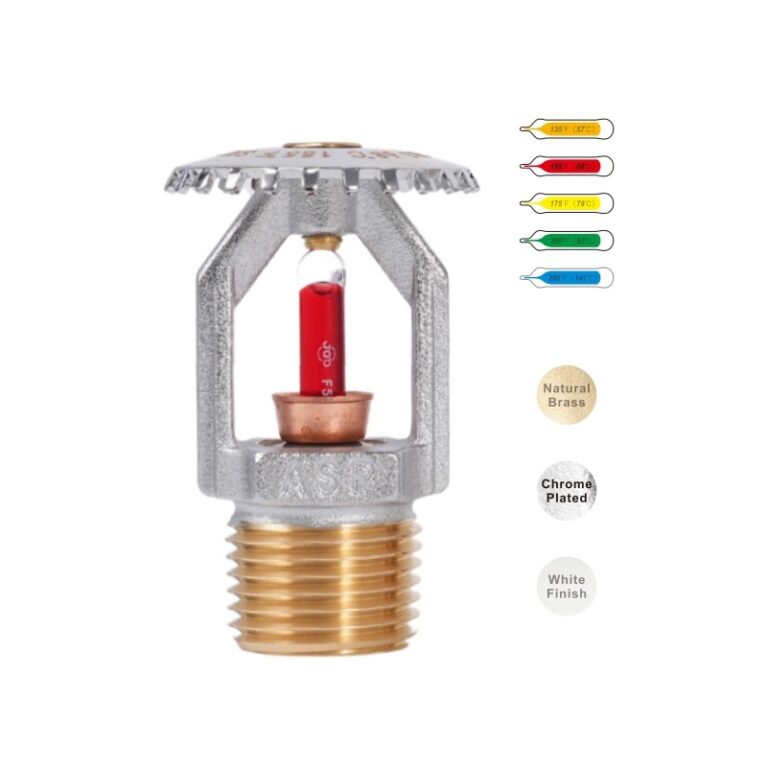
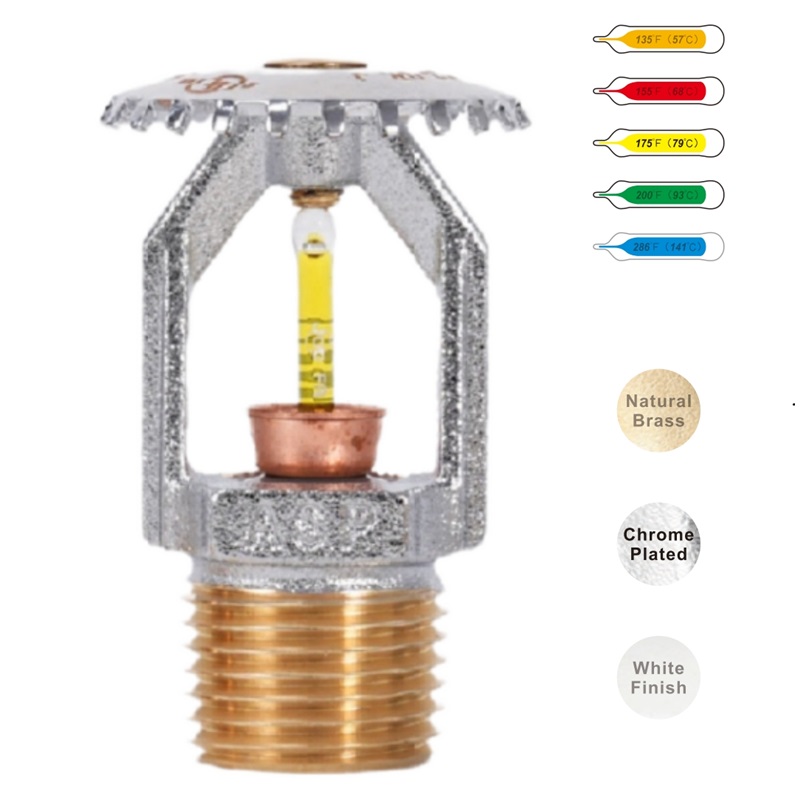
Sprinkler heads are rated for temperature to match the surrounding environment. In example, a mechanical room might require sprinkler heads rated for higher temperature to prevent early activation. Also, sprinkler response type must match the hazard of occupancy as per NFPA 13. A quick response sprinkler is typically used for life safety such as office and residential type occupancies because of the quicker activation time.
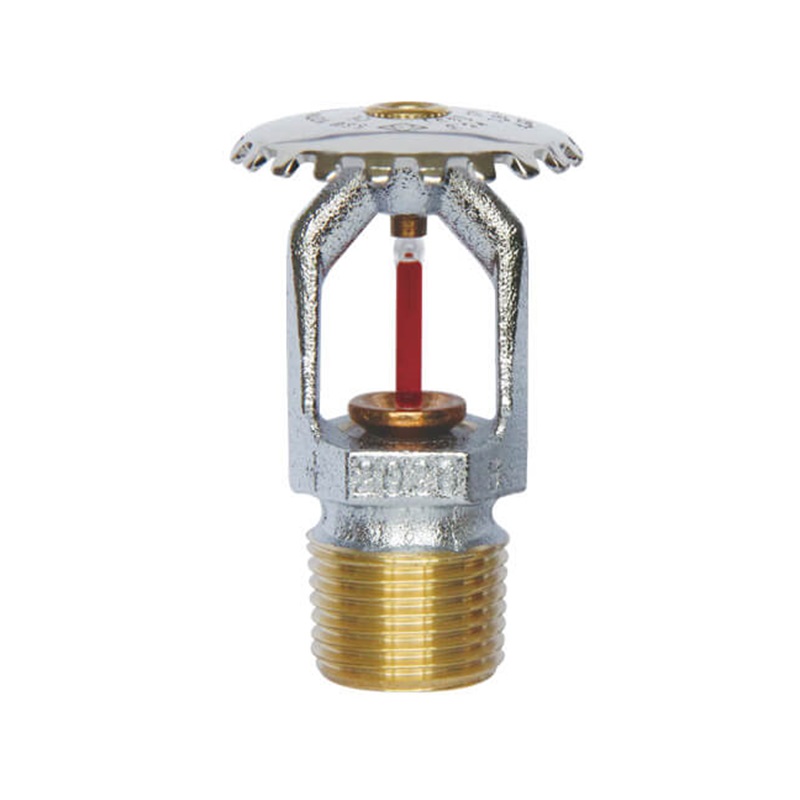
Another key factor in determining the discharge density of a fire suppression system, as well as the coverage area, is the K-factor. The K-factor determines the water flow required at a specific pressure. Higher K-factors are generally used for large open areas, warehouses, etc. This type of sprinkler is most commonly used in commercial applications, because of its very balanced performance criteria. Fluid Tech carries the K5.6 series of sprinklers as Uprights and as Pendents for the Quick Response and Standard Response models.
Environmental and Structural Considerations
The design of water mist deflectors can be greatly influenced by the ceiling height and the airflow pattern within a facility. If a facility has high ceilings and or strong air movement then the design of the deflector and the pattern that which the water is sprang could be a major consideration. Also in corrosive or humid environments the water mist nozzy or heads may require to be coated or even made of stainless-steel to resist deterioration over time. There are also many aesthetic reasons for using water mist within commercial and even hospitality facilities, often the main reason for using water mist is that it can be concealed within the facility and often recessed into the ceiling, thus allowing for excellent design and finishing within facilities.
How Do Building Occupancy Types Affect Sprinkler Head Choice?
The building occupancy will determine some of the design parameters for the protection of that building under NFPA 13 and other similar standards. Some of the aspects that will be influenced by building occupancy are the type of head to be used, the spacing of such heads, the pattern of water discharge from sprinkler outlets, and the required hydraulic calculations to size the piping and determine the required flow.
Residential Buildings
In residential buildings low-pressure sprinklers are generally the most common type of fire protection system. This type of system is typically designed for small rooms in order to activate as quickly as possible in the early stages of a fire, prior to the onset of flashover. As these systems use water as quickly as possible in order to control a fire, the sprayers are of a ‘quick response’ design in order to make best use of the available water, while still being able to effectively cover the required area. A concealed pendent sprinkler is often found in modern residential homes, as they offer an effective fire protection solution that also provides an attractive finish, as the sprinkler is hidden from view, behind a neat and stylish decorative cover.
Commercial and Office Buildings
Standard response upright or pendent sprinklers are the most typical solution to offer property protection in commercial premises such as shops or offices. The figure reports on offices with suspended ceiling. These types of premises are typically equipped with recessed pendent sprinkler heads to offer a good appearance and full efficiency of coverage. A good water supply is very important in such premises, especially those with several floors, in order to guarantee a good pressure in all the zones of the fire sprinkler system.
Industrial Facilities and Warehouses
Industrial facilities typically present designers with special considerations related to the high storage racks found in these facilities, the heat generated by equipment, and potential obstructions. In high-piled storage facilities, Early Suppression Fast Response (ESFR) sprinklers are typically specified in order to ensure that a fire is suppressed quickly enough to prevent structural loss. Use of upright heads is typical in facilities with ESFR sprinklers, as the sprinkler’s water discharge is typically directed above the piping network. The designer must also select a sprinkler with a temperature rating that is appropriate for the localized hot spots that can exist near equipment in active production areas of industrial facilities. Upright sprinkler heads are typically best suited for use in applications where the sprinkler is mounted above piping, as straight down discharge is not obstructed by piping in such mounting configurations.
Which Sprinkler Head Types Are Commonly Used in Modern Fire Protection Systems?
Sprinkler head classification describes the characteristics of sprinklers such as discharge, orientation and application within integrated fire protection systems.
Pendent Sprinklers
Pendent sprinklers are fitted below the pipe work network to discharge in a downward spray. They are suited for use on finished ceilings in offices, retail outlets and residential houses. The sprinkler deflector is designed to give an even distribution of water over a specific floor area. The sprinkler is also designed to be as unobtrusive as possible.
Upright Sprinklers
Upright sprinklers are installed above piping where there is restricted ceiling space due to beams or ductwork. These types of fire protection systems are typical of applications such as factories, warehouses and parking garages that feature exposed piping that allows for ease of maintenance while not compromising on safety.
Sidewall Sprinklers
Sidewall sprinklers are used in locations where it is not practicable to carry ceiling piping, whether due to architectural features or for aesthetic reasons. They are particularly suited for applications such as hotel rooms, corridors and small offices, where a localized protection area can be created without the need for extensive ceiling pipework.
How Do Codes and Standards Guide Sprinkler Head Specification?
Adherence to International Codes provides consistent safety performance for different types of buildings. It provides insurance underwriters and regulatory bodies with comfort of compliance for purposes of approvals and audits.
Relevant Standards Governing Fire Sprinkler Systems
NFPA 13 details design criteria for a variety of hazard classes ranging from light hazard commercial occupancies to extra hazard industrial applications. Automatic sprinkler systems are also governed by European guidelines outlined in EN 12845 detailing design as well as maintenance practices for such systems. The local building code will, however, contain more detail including increased spacings and hydraulic demand for automatic sprinkler systems based on the local fire and life safety risk assessment.
Importance of Certification and Testing Compliance
UL/FM certification ensures that products have been tested to fail in realistic fire scenarios and have been found to meet requirements. Schedule of Inspections to ensure long term reliability and verification of compliance for insurance purposes.
Why Is Supplier Selection Critical When Procuring Fire Sprinkler Components?
In addition to correct design, reliable fire protection systems depend on correct supplier’s quality assurance in all manufacturing stages.
Evaluating Supplier Capabilities in Fire Protection Manufacturing
Procurement professionals should evaluate suppliers based on certifications such as ISO 9001 or UL/FM approval status to ensure consistent quality control standards. Reviewing traceability documentation helps confirm compliance history across production batches while assessing supply chain resilience reduces project delays caused by material shortages or logistical interruptions.
FLUID TECH PIPING SYSTEMS (TIANJIN) CO., LTD – A Reliable Partner in Fire Protection Solutions
fluid tech group Fluid tech group. Fluid tech group is the first company in northern China that specializes in the field of fire protection with his own brand -IF grooved coupling and grooved fittings. In 2018, flutech piping systems was established in tianjin in cooperation with several foundries and pipe fittings processing plants. The company provides one-stop procurement services for construction companies around the world. The fire protection products exported by us have passed FM/UL/CE/LPCB/VDS certifications, and the factories involved in the production have passed iso, sgs, and tuv certifications. Our aim is to use high-quality products to ensure the safety of the project, use professional knowledge to solve customer questions, and use professional one-stop services to reduce customer costs. Fluid tech group is the first company in northern China that specializes in the field of fire protection. Through its advanced manufacturing technology combined with rigorous quality control protocols, FLUID TECH delivers durable components designed for global compliance within commercial, industrial, and residential projects.
What Are Common Installation Challenges When Deploying Fire Sprinkler Heads?
Even properly specified fire sprinkler heads have the potential to underperform where installation is not in line with stated guidelines or there are misunderstandings as to the site specific circumstances. Inadequate spacing of sprinkler heads can lead to a reduction in the degree of overlap of the spray from individual sprinklers. Consequently, there will be areas of the protected zone that are not adequately protected in the event of a fire. Inadequate hydraulic calculation of the required pressure at remote sprinkler heads can result in an insufficiency of pressure at such sprinkler heads. The orientation of sprinkler heads can also affect the performance of the deflector. For example, the spray from upright sprinklers is designed to fall in a vertical plane. Any angle from vertical will result in the spray being directed in a variety of different directions. During activation of the sprinkler, the pattern of the spray will fluctuate. When designing the layout of fire sprinkler system, due consideration must be given to maintenance access to all components in order to facilitate periodic inspections of the installed system without disruption to operations.
How Can Professionals Optimize System Performance Through Maintenance Practices?
Routine maintenance allows for continued operation of protective measures under changing environmental or occupancy conditions.
Routine Maintenance Strategies
Corrosion buildup or physical obstructions to activation mechanisms can be identified by quarterly visual inspections of the fire suppression system. Annual flow tests of all system zones verify that all zones are maintaining required pressure to ensure proper hydraulic demand during an emergency. In addition, damaged escutcheons or deflectors must be replaced as soon as detected and service records must be maintained and updated in accordance with NFPA 25 documentation requirements for fire sprinkler system inspection frequencies.
Conclusion
Selecting an appropriate fire sprinkler head involves balancing technical specifications such as temperature rating and K-factor against environmental factors like humidity levels or ceiling configurations while ensuring adherence to global standards such as NFPA 13 or EN 12845. Supplier reliability remains equally critical—partners like FLUID TECH PIPING SYSTEMS (TIANJIN) CO., LTD demonstrate how certified manufacturing excellence contributes directly to safer built environments worldwide through integrated fire protection systems supported by ongoing inspection programs ensuring sustained operational integrity.
FAQs
What is the difference between a quick response sprinkler head and a standard response sprinkler head?
Both types of sprinkler heads release water when the glass bulb bursts. The main difference is that a quick response sprinkler head uses thinner glass in the bulb which breaks more quickly to provide time sensitive life safety protection in places like offices, homes, hotels and museums. A standard response sprinkler head is utilized for property protection in areas such as industrial buildings where there is less concern for life safety and more of an emphasis on protecting inventory and equipment from fire damage.
Is there a type of sprinkler head that can be used for all types of buildings?
No, because of the different risks for different types of buildings and the specific design based on the hazard classification and the ceiling height and for different types of occupancy, as defined by the NFPA standards.
How Frequently to Inspect Fire Sprinkler System?
NFPA 25 states that a quarterly fire sprinkler inspection shall consist of a visual inspection combined with an annual inspection that includes test of all zones within the active portion of the fire sprinkler system to assure fire sprinkler system’s integrity.
What materials are suitable for use in a corrosive environment?
We supply stainless steel models or brass models coated with a variety of materials to give resistance to corrosion in humid environments such as found on the coast and in many industrial locations where chemicals are used.
Why choose FLUID TECH PIPING SYSTEMS (TIANJIN) CO., LTD as a supplier?
Because it offers globally certified products backed by advanced manufacturing capabilities consistent quality assurance processes and responsive technical support tailored specifically toward professional project needs across diverse sectors utilizing comprehensive fire protection systems solutions worldwide.