The K-factor is a crucial selection parameter in the design of a fire protection system. The sprinkler’s K-factor determines the fire sprinkler’s maximum allowed flow, required pressure and the overall system design’s efficiency to protect a fire. Here we look at how to pick a number of different K-factors to protect a variety of fire scenarios while adhering to governing regulations.
What Is the Role of the K-Factor in Fire Sprinkler Performance?
The K-factor of a fire protection sprinkler determines the ratio of water flow delivered by the sprinkler to the pressure supplied to the sprinkler by the fire suppression system. The K-factor of a sprinkler has significant effects on the fire suppression activities as well as the pressure and hydraulic performance of a fire protection system. Modern fire fighting systems are now designed by engineers based on the K-factor of a sprinkler head in order to obtain the best area coverage, size of the water droplets, and system pressure.
The Formula Behind the K-Factor
The mathematical relationship of discharge Q, pressure P and K-factor K is Q = K × √P. From this equation it is possible for designers to predict the required discharge of a spray nozzle at different operating pressures. High hazard areas require a very dense water application and this is best achieved with a larger K-factor which provides higher flow rates at lower pressures. Smaller K-factor nozzles require higher pressure to achieve the same volume of discharge but in light hazard areas operate more efficiently.
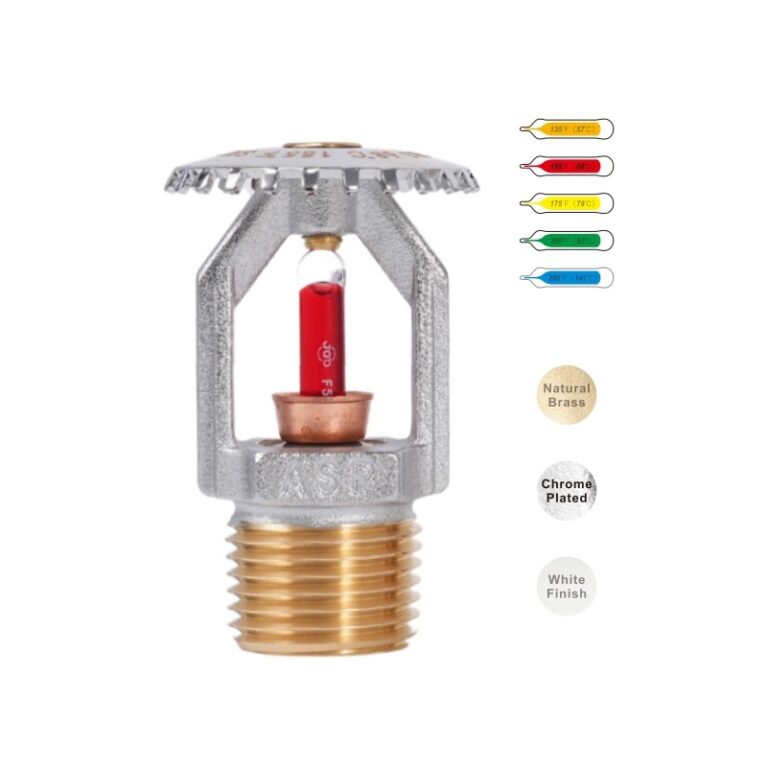
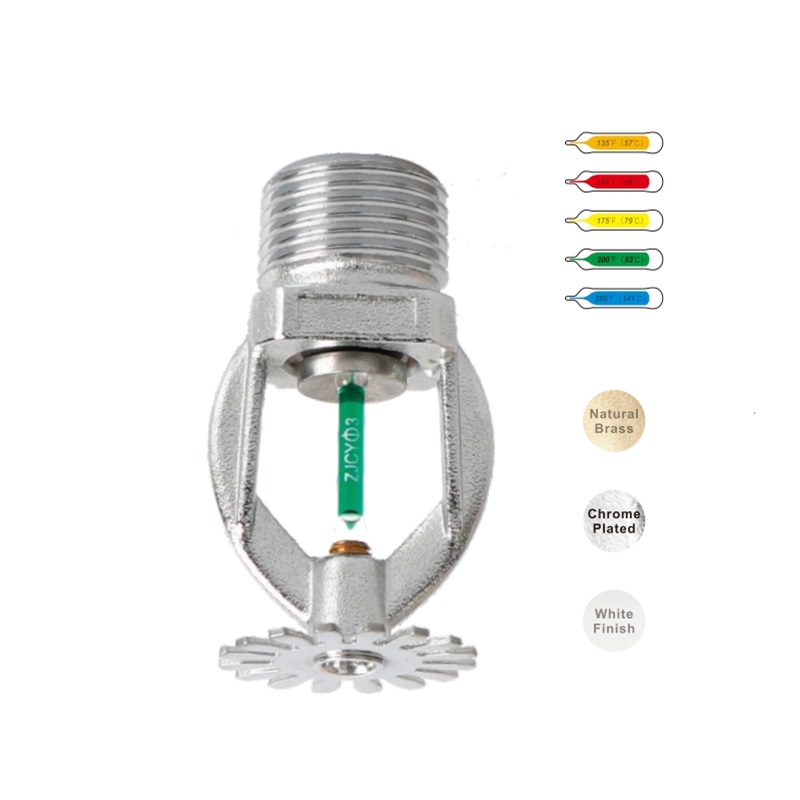
The K5.6 Pendent sprinkler quick response, available from Fluid Tech, offers a moderate discharge coefficient making this model ideal for commercial and residential fire protection applications. The K5.6 Pendent sprinkler quick response model is FM Approved / UL Listed and has a maximum pressure of 175 psi (1.2 MPa) with a 435 psi (3.0 MPa) factory test pressure. The model’s hydraulic performance will be reliable and consistent during activation.
How Orifice Size Affects Water Distribution
The orifice size of a fire sprinkler determines the drop size and the pattern of the water spray. The size of the orifice governs the flow of water through the sprinkler. A larger orifice allows for a greater flow of water, but it does not guarantee a precise distribution of that water. A smaller orifice creates smaller water drops, which are more efficient at cooling down a space that is already smaller. Choosing the proper orifice size for a fire sprinkler is based on the amount of water required to meet the density for a specific area, and the square footage of the area that the sprinkler is designed to protect.
How Does Hazard Classification Influence K-Factor Selection?
When designing a fire sprinkler system, the system must be designed based upon the various hazard classification categories found in codes such as NFPA 13. These classes are light, ordinary hazard, and extra hazard. These classifications are based on the amount of combustible material, the rate of heat release and the rate of fire growth.
Light Hazard Occupancies
Light hazard occupancies are typically offices, schools, etc. containing limited amounts of combustible material. Occupancies of this nature can usually be protected utilizing smaller K-factors, 5.6 and 8.0, for example, as the amount of water required to deliver adequate sprinkler protection is less. The K5.6 Pendent sprinkler, quick response type, provides excellent coverage and meets the standard density requirements for light hazard occupancies.
Ordinary Hazard Occupancies
In ordinary hazard occupancies, such as warehouses and retail stores containing moderate amounts of fuel, medium K-factors (8.0–11.2) are required to provide uniform coverage over large areas without overloading the main water supply.
Extra Hazard Occupancies
Industrial plants or storage facilities with flammable liquids are classified as an extra hazard and require large-orifice sprinklers, such as K14 through K25. These large sprinklers deliver a high-density water discharge to extinguish extremely large and intense fires prior to flashover.
What Hydraulic Factors Should Be Considered During Selection?
The hydraulic calculations for the piping network have been done to ensure that each sprinkler gets the required amount of water at the correct pressure.
System Pressure Limitations
The available supply pressure fixes the amount of water that can be delivered through a sprinkler to a particular amount. Although higher K-factors for individual sprinklers may reduce required operating pressure for that sprinkler, it can increase the total flow required from the system. This can impact pump sizing as well as tank and reservoir capacity for all zones of a protected facility. A balance must be sought for all factors associated with sprinkler selection.
Piping Network Design Implications
The residual pressure at each sprinkler location is affected by the pipe diameter, length and the friction losses. By using hydraulic modeling it is possible to find the best combination of pipe diameter and sprinkler to keep the energy losses as low as possible while still reaching the desired densities.
How Do Codes and Standards Affect the Choice of K-Factor?
NFPA 13 remains the primary regulatory framework guiding designers in selecting appropriate sprinklers based on occupancy type and ceiling height constraints.
NFPA Requirements for Various Applications
NFPA 13 states minimum density and design area for various hazard categories and gives a range of K-factors for different applications. The Fire Suppression System must meet these criteria for it to be safe and checked during its inspection and test.
Regional Adaptations and Local Regulations
Some local jurisdictions may modify the NFPA standard to take into consideration environmental issues, such as temperature, etc. It is very important for the designer to verify that the installed product complies with the manufacturer’s submittal data as well as with local government mandates. The designer must obtain approval from the authorities having jurisdiction for the installed product prior to final acceptance.
Why Is Manufacturer Selection Important When Choosing Sprinklers?
While theoretical design is an important step to be taken into account, a number of aspects in relation to product quality and the possible combination of different system components influence the real application in a large measure.
Material Quality and Certification Standards
Fire sprinkler heads must be qualified and proven in simulated fire scenarios. To meet these demands, sprinkler heads must be compliant to recognized international test-standards such as UL, FM or LPCB. Fluid tech group is the first specialist in the field of fire protection from northern China. As a leading company in its sector, the company offers a broad range of fire protection products under its own brand name IF grooved coupling and grooved fittings. In export business, these products have approval by FM/UL/CE/LPCB/VDS and approval of the factories by iso/sgs/tuv etc. approvals ensure that used materials are resistant to corrosion and mechanical stresses in the long-term service life.
Product Range and Technical Support
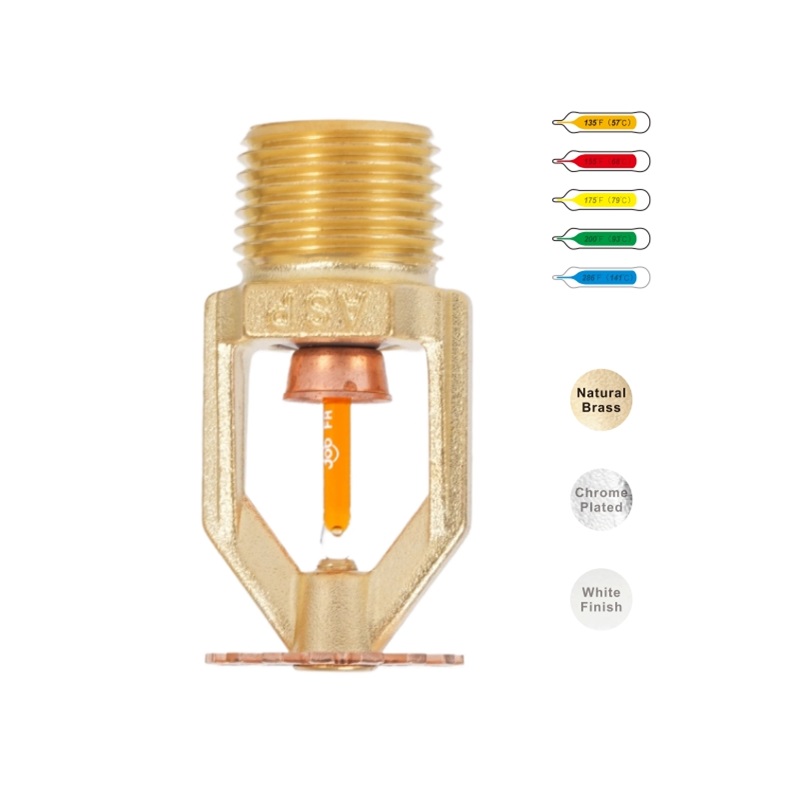
A diverse range of products enables the engineer to choose from a variety of styles to fit ceiling recesses, such as pendent, upright or recessed variants. A Quick response pendent sprinkler is a fire protection sprinkler that is designed to operate within a short time after fire initiation. The sprinkler is a fixed installation, which is supplied with a fluid, such as water, from a piped system and releases drop nozzles that discharge a wide spray of small water droplets downwards in a circular fashion to fight fire in a defined area below the sprinkler. Good manufacturers of fire protection sprinklers supply a lot of detailed technical information which can assist with hydraulic calculations for installing sprinkler systems. After sales service and assistance with maintenance are also very important and can cover multiple buildings.
Who Is FLUID TECH PIPING SYSTEMS (TIANJIN) CO., LTD?
Fluid tech group is the first company in northern China that specializes in the field of fire protection. In 2018, Fluid tech group joined hands with a number of senior foundries and pipe fittings processing plants to establish Fluid Tech Piping Systems (Tianjin) Co., Ltd. for global one-stop procurement of construction companies requiring integrated solutions for a wide selection of valves, fittings, pipes and sprinklers. By utilizing the highest quality products, answering customer questions utilizing expert knowledge, and utilizing expert one-stop services to minimize customer costs, Fluid Tech is able to provide construction companies with the highest level of fire protection. Fluid Tech holds certifications of FM/UL/CE/LPCB/VDS etc. and has ISO-based production management systems verified by SGS and TUV audits. Therefore, FLUID TECH is the best choice for global customers seeking fire protection solutions and the best partner for global customers to deliver safe and reliable fire protection systems.
Key Considerations When Finalizing Your Selection Criteria
Selecting the optimal sprinkler includes performing hydraulic calculations and trying to meet several different goals. The chosen sprinkler must also remain cost effective throughout its life.
Integrating Design Objectives with System Efficiency
Engineers must evaluate available water supply limitations alongside required discharge densities dictated by hazard classification. Future scalability should also be considered if building functions may evolve over time; compatibility between selected sprinklers like K5.6 Pendent sprinkler quick response models and existing infrastructure ensures adaptability without major redesigns.
Balancing Cost with Performance
Higher K-factors will reduce energy costs by reducing the required pressure for pumping but may necessitate larger pipe sizes which could have higher initial costs. The ability to strike a balance between capital expenditures and long-term operating efficiency to create optimal lifecycle value while meeting performance expectations for safety as outlined by NFPA is critical.
Conclusion
Selecting an appropriate K-factor demands comprehensive evaluation encompassing hazard classification parameters, hydraulic constraints, applicable codes such as NFPA 13, and manufacturer reliability metrics like certification status or material durability benchmarks. By integrating these interrelated aspects early during system planning stages—supported by certified equipment from reputable suppliers like FLUID TECH PIPING SYSTEMS (TIANJIN) CO., LTD—engineers can ensure that their fire protection systems deliver both operational efficiency and regulatory compliance across diverse building types globally.
FAQs
Q1: Can different K-factors be used within the same sprinkler system?
Mixed configurations are permitted as long as they are supported by hydraulic calculations that confirm adequate coverage to all areas.
Q2: Is increasing the K-factor always better for performance.
No, higher K-factors allow for more flow at lower pressure but could also increase the total amount of water required to function and exceed the supply capacity.
Q3: How often should installed sprinklers be inspected or serviced/ replaced.
Installed sprinklers should receive a visual inspection annually and functional test every few years depending upon the sprinkler’s environmental exposure.