A procurement manager sent us a valve inquiry last week. He wrote: “Sealing requirement: Class C.” We replied: “Which Class C? Seat leakage or fugitive emission?” He did not know there were two.
That happens all the time. Engineers, buyers, even some experienced contractors mix up these two standards. They look similar on paper. But they measure completely different things. One tests leakage through the closed valve seat. The other tests leakage from the valve stem to the atmosphere.
At Fluid Tech Group, we see this confusion weekly. It leads to wrong orders, failed inspections, and project delays. This article explains both sealing classes clearly – so you never make that mistake.
What is valve seat sealing leakage?
Valve seat sealing leakage measures how much fluid passes through the valve when it is fully closed. Water, gas, or other media flows from the inlet side to the outlet side through the sealing surfaces. It is an internal leakage test.
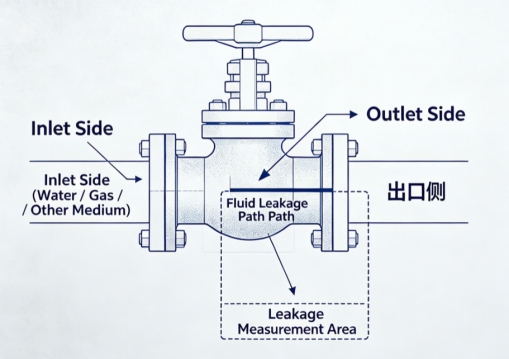
The standard for this test is ISO 5208 (China uses GB/T 13927, which is identical). For metal hard-seated valves, this standard defines four leakage classes: A, B, C, and D.
Important rule: Class B, C, and D only apply to metal hard-seated valves – gate valves, globe valves, metal-seated butterfly valves, and metal ball valves. Soft-seal valves (rubber, EPDM, or PTFE seats) are all Class A – zero visible leakage.
Here is a quick comparison table.
| Test medium | Class C limit | Class B (tighter) | Class D (looser) |
| Liquid (water) | ≤ 0.03 × DN (mm³/s) | ≤ 0.01 × DN | ≤ 0.1 × DN |
| Gas (air) | ≤ 3 × DN (mm³/s) | ≤ 0.3 × DN | ≤ 30 × DN |
Let me give you a real example. A DN100 metal-seated gate valve with Class C:
Liquid leakage allowed: 0.03 × 100 = 3 mm³ per second
Gas leakage allowed: 3 × 100 = 300 mm³ per second
That is a small amount. Not zero. For applications that need zero leakage, you need soft-seal Class A or bellows seal valves.
Test conditions for Class C:
Liquid test pressure: valve rated pressure (PN)
Gas test pressure: 0.6 MPa
Hold time depends on valve size (15 to 60 seconds)
Leakage must stay below the limit through the entire hold time
When do you use Class C? High-temperature steam, thermal oil, hot flue gas, general oil and gas applications. It is the class for industrial metal-seated valves that need better sealing than ordinary D grade.
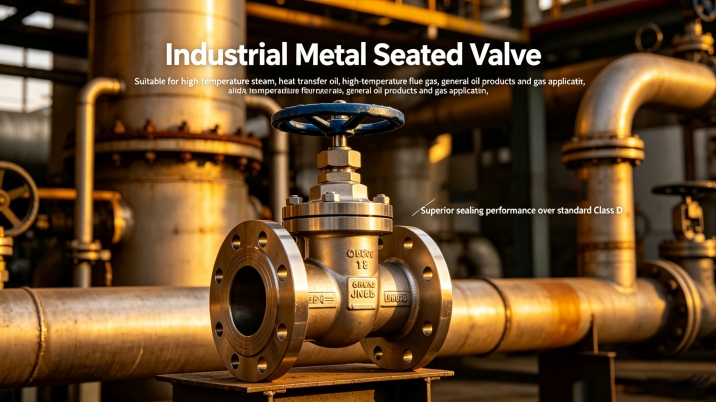
One more thing: standard cast steel gate valves usually come as Class D by default. If you want C or B, you must specify it. And the price goes up – tighter sealing requires better machining and surface finishing.
What is fugitive emission sealing leakage?
This is the other “Class C”. It measures something completely different.
Fugitive emissions are tiny amounts of gas that leak out through the valve stem packing, gaskets, or body seals. Not through the valve seat – to the outside atmosphere. This is important for VOC (volatile organic compounds), toxic gases, and greenhouse gases.
The standard for this test is ISO 15848. It defines three classes: Class A, Class B, and Class C. Class C is the lowest level – the entry-level requirement for low-emission valves.
Leakage limit for ISO 15848 Class C (helium test): 10⁻² mg/(s·m)
In practical numbers:
Stem leakage: ≤ 500 ppmv
Body seal leakage: ≤ 10 ppmv
What packing do you need? Standard flexible graphite packing usually meets Class C. For Class A or B, you need bellows seals, high-purity PTFE packing, or advanced low-emission packing systems.
When do you use ISO 15848 Class C? Ordinary steam lines, cooling water systems, non-toxic media, industrial pipelines with basic environmental control. For petrochemical plants or toxic gas systems, specifications usually ask for Class A or B.
Two Class C standards – side by side
| Feature | Seat leakage Class C | Fugitive emission Class C |
| What it measures | Leakage through closed seat (internal) | Leakage from stem packing to atmosphere (external) |
| Test medium | Water (liquid) or air (gas) | Helium gas |
| Leakage limit | 0.03 × DN (liquid), 3 × DN (gas) | 10⁻² mg/(s·m) |
| Applicable valves | Metal hard-seated valves only | All valves with stem packing |
| Soft-seal valves | Not applicable – they are Class A | Applicable – packing matters |
| Common use | High-temperature steam, thermal oil | VOC control, environmental compliance |
| Standard | ISO 5208 / GB/T 13927 | ISO 15848 |
What Fluid Tech Group does for you
We know these standards. We use them every day.
When you send us a spec with “Class C,” we confirm which one you mean.
We supply soft-seal valves with ISO 5208 Class A – zero leakage through the seat.
We supply metal-seated valves with Class B, C, or D based on your requirements.
We provide fugitive emission testing (ISO 15848) on request – with test reports.
We match packing materials to your environmental needs.
Your next step
Send us your valve specification. Include the standard number if you have it. If you are not sure, send us your project details – media, temperature, pressure, and environmental requirements. We will recommend the right sealing class.
Fluid Tech Group
Valve sealing – know the difference, specify correctly