
Picture a submittal with two proposed items, a sprinkler head and a flexible hose assembly. The first attachment is a page displaying certification marks. It belongs in the working file, but which item does each mark describe? The answer has to come from product records and declarations tied to the purchase lines. UL, FM, C-UL, CE, VdS and LPCB each call for a different check. FLUID TECH’s sprinkler and flexible hose catalogue helps name the products; it cannot replace those records.
The submittal schedule should tell you which scheme matters at the job location. Add the full model from the quotation next to that requirement. This small preparation prevents an easy mistake: finding a real directory entry for a nearby product and attaching it to the wrong line.
UL and C-UL
Product iQ is UL Solutions’ search point. A useful search starts with the file or certification identifier supplied for the quoted model. The returned category may be “sprinkler” when the buyer is checking a hose, or it may cover a different variant. That difference matters more than the similarity of the product names. The legacy cUL Listed mark is UL’s Canadian scheme, with C denoting Canada; it is distinct from ULC and should not be treated as a general North American label. The actual record should settle the country scope.
FM
FM Approvals uses its Approval Guide to list approved products and services. Here the buyer can compare the description in the Guide with the proposed assembly. A catalogue might place straight and elbow configurations together, while the purchase order names only one. If the connection on the order is absent from the record being offered, the document question remains open. The supplier needs to identify the variant that will actually be shipped.
CE, VdS and LPCB
CE follows the applicable EU construction-product route. Under the European Commission’s guidance, marking depends on a harmonised technical specification or European Technical Assessment cited in the Official Journal, together with the required declaration and documentation. Which route applies to the purchased item is therefore the question to put to the supplier. An FM Approval Guide entry and a CE declaration serve different review needs; one cannot be filed in place of the other.
VdS has a certification route for water extinguishing products and systems. LPCB makes certified products and services searchable in RedBook Live. Both searches become useful only once the buyer has a product reference. The directory description and its conditions are what should accompany the submittal, especially where a brochure shows the mark without identifying a model.
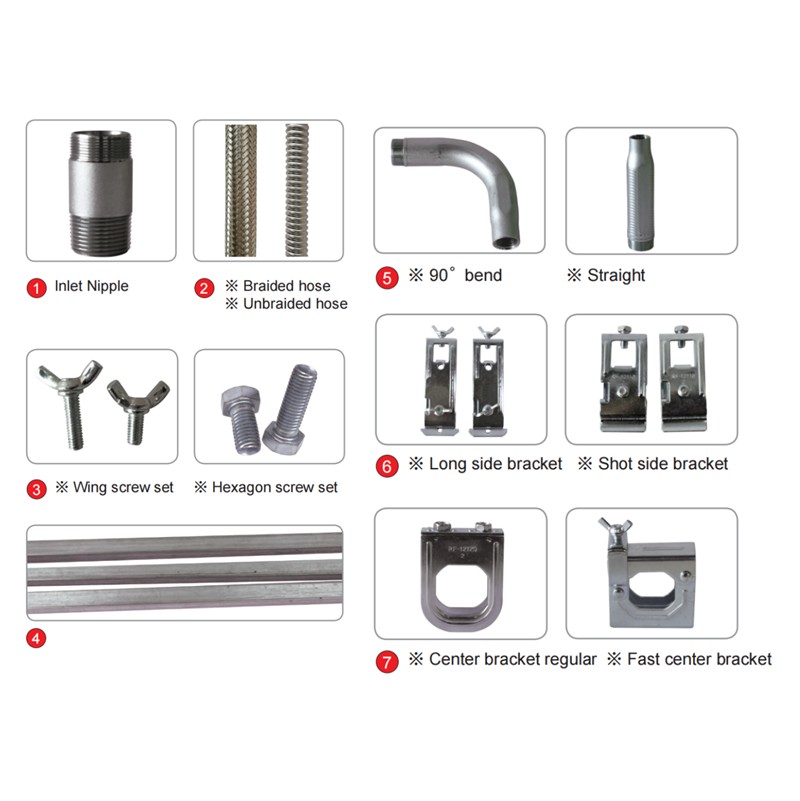
The flexible hose line deserves more than a family name. Write it as the installer would identify the assembly: model, length, both connection sizes, end forms and the parts supplied with it. Where support components are part of the proposal, list them too. FLUID TECH presents braided and unbraided hoses separately. The product page may guide the enquiry, while the record must correspond to the exact quoted arrangement.
On the drawing, the branch connection is at one location and the head at another. The hose has to be routed between them. A document for a straight end says little about a proposed elbow end, even if the hose family is the same. Record the difference while the quote can still be corrected. The installation instructions also belong with the model: minimum bend radius and equivalent length may be stated for particular configurations or columns. Copying a number without its heading removes the condition that made it useful.
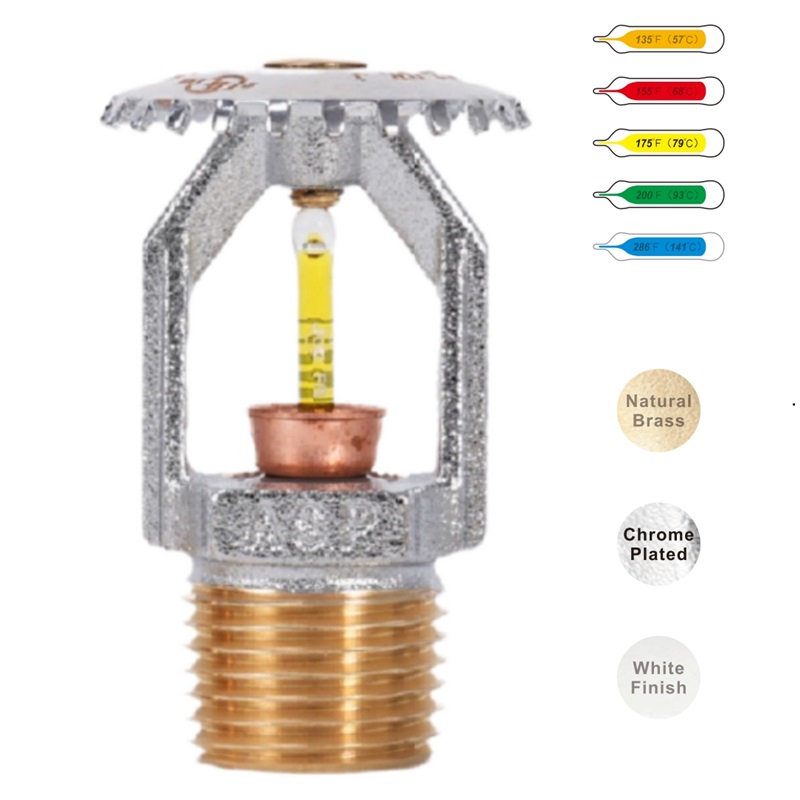
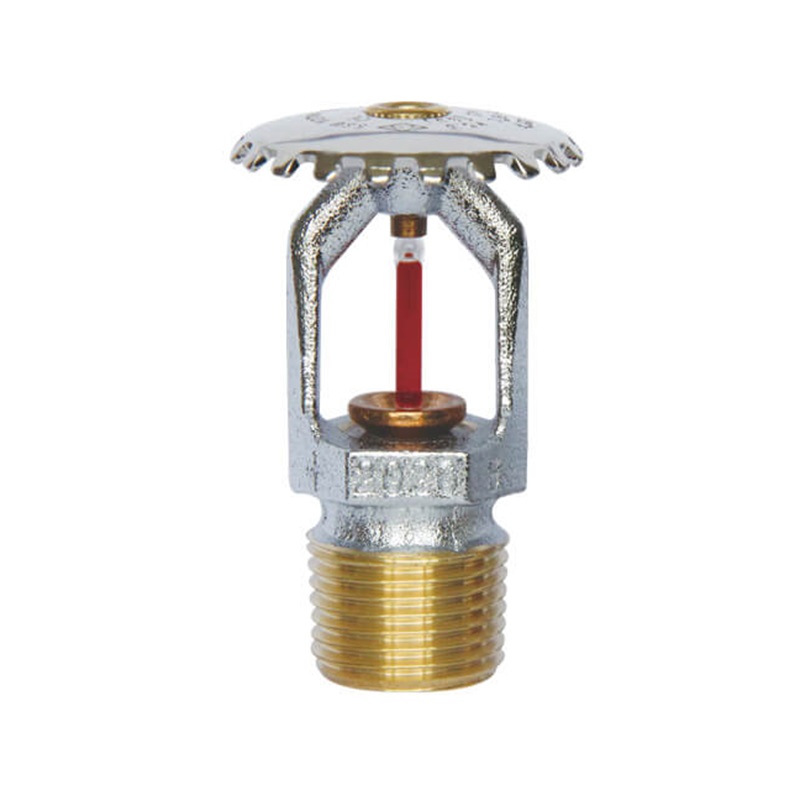
The head is not a footnote to the hose order. A head schedule can identify orientation, response type, K-factor, temperature rating, finish and connection size. FLUID TECH’s K5.6 upright quick response sprinkler page gives a model-specific starting point. From there, the buyer needs the record or declaration for the variant selected by the project.
The hose and head meet in the installed system, but their records remain separate. Put both sheets and the installation instructions in the designer’s review set. If a quote changes the head response type, the earlier head search no longer covers that purchase line. The same applies if the hose connection changes. The project reviewer needs documents for what will be installed, not merely for an earlier option.
A useful document set has an issuing body, file or certificate number, product description, applicable standard or technical specification and current literature. The buyer can search Product iQ, the FM Approval Guide, VdS or RedBook Live as required; CE calls for the applicable declaration. In each case, the holder, model, configuration and stated limits must be readable beside the quote. If a field differs, send the two descriptions back to the supplier for resolution before the submittal is issued.
Keep a copy of that comparison with the purchase order. A later change in hose length, end fitting or head variant changes the question being checked. The old record may still be authentic, but it might no longer describe the item about to arrive.
With FLUID TECH PIPING SYSTEMS, a buyer can put the destination market, document requirement and connection schedule in the first enquiry. The About us page identifies the supplier. What the technical review needs next is a matched set of model sheets and document identifiers for the proposed hose and head, one purchase line at a time.
Start with the scheme named by the project, then work down to the exact hose or head on the order. Keep those two products distinct. A current, matching record or declaration is more useful than a list of six logos.
Does a head listing also cover the flexible hose?
No. Check the head and the hose assembly as separate products, then review how they are proposed to be installed together.
Is CE interchangeable with FM Approved?
No. They follow different routes and answer different document requirements. Check the scheme specified for the project.
What if a supplier only sends a logo?
Ask for the model and the matching file, certificate or declaration. Compare its scope with the quoted item before it is used in the submittal.


