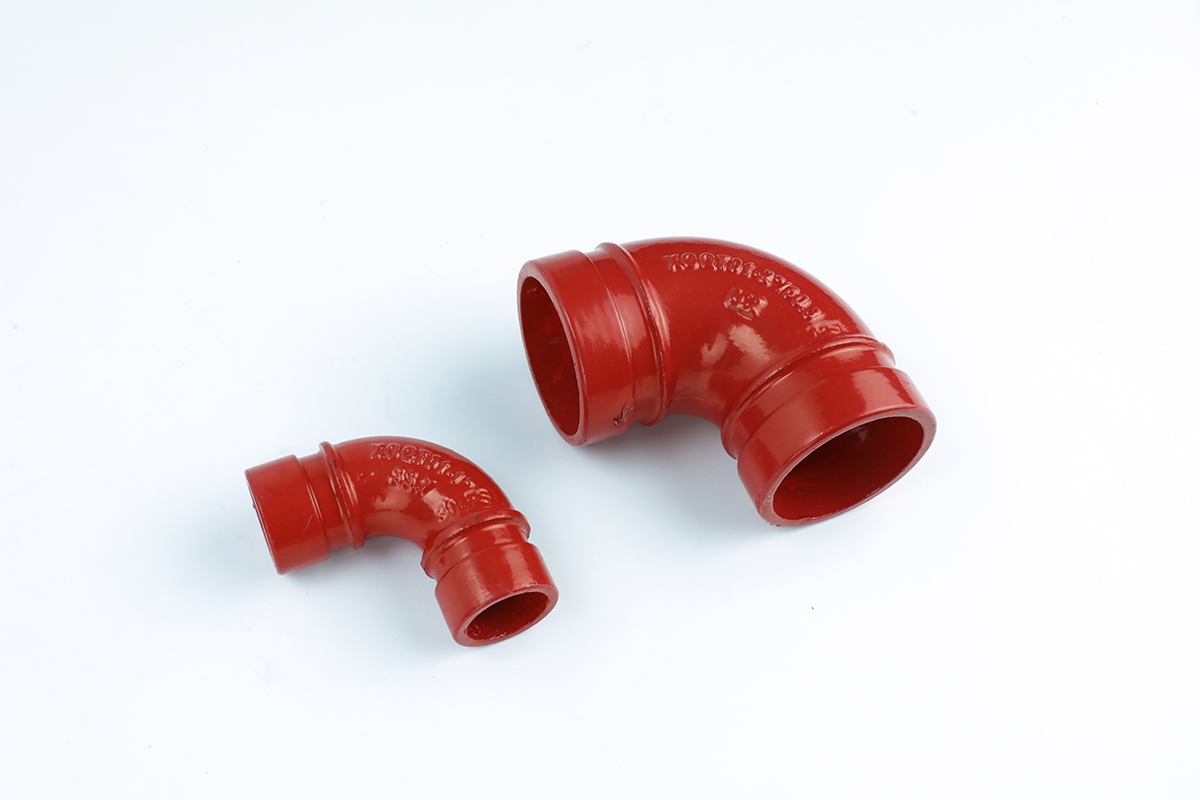
Picking between a 45° and 90° grooved elbow affects more than just pipe direction. This fitting also impacts routing space and hydraulic losses. It changes the joint count, setup time, and future upkeep. A 90° grooved elbow makes a sharp right-angle turn. In contrast, a 45° grooved elbow offers a softer shift in direction. Neither option is always perfect for every single fire sprinkler project. The best pick relies on the needed pipe path and open space. It also depends on hydraulic calculations and job site conditions.
What Is the Main Difference Between a 45° and 90° Grooved Elbow?
Both fittings steer grooved piping in new paths. However, they form unique turning angles. A 45° grooved elbow shifts the flow by 45 degrees. Meanwhile, a 90° grooved elbow makes a strict right-angle turn. Inside sprinkler systems, this angle matters a lot. It determines how smoothly pipes can navigate past beams and ducts. It also helps clear columns, ceilings, and various building services.
Fluid Tech supplies both grooved 45° and 90° ductile iron elbows. These parts belong to their grooved pipe fitting lineup. They work well for fire protection and similar piping tasks.
When Is a 45° Grooved Elbow More Suitable?
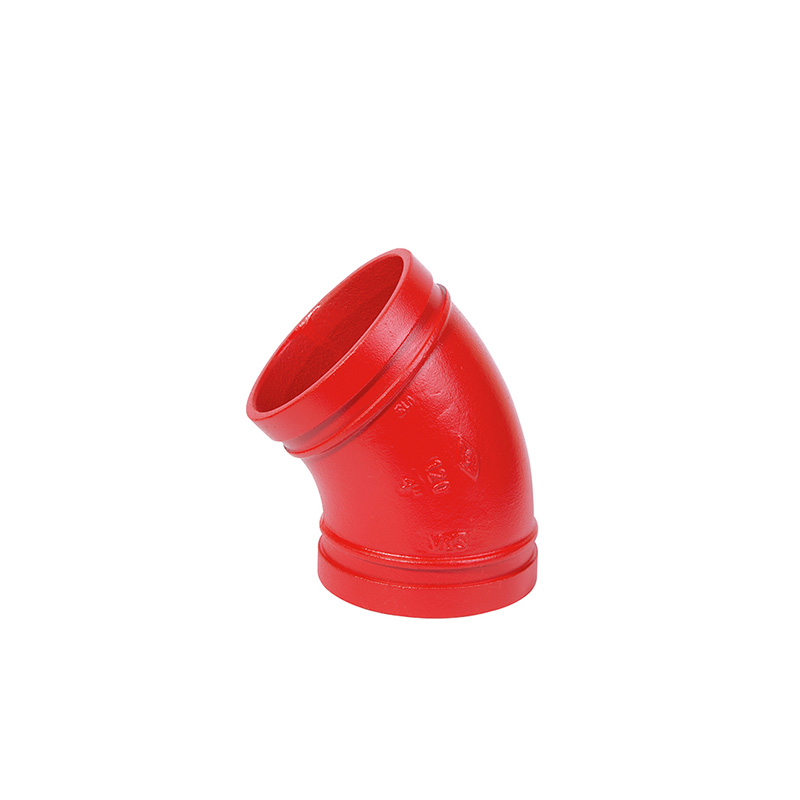
A 45° elbow comes in handy for mild directional shifts. It is also great when designers want a smooth offset. Using two 45° elbows can form a clear offset. They can even combine for a full 90° turn. This setup gives workers extra freedom to bypass structural blocks or mechanical hurdles.
Still, pairing two fittings creates an extra joint. This layout normally takes up more physical space. Therefore, this setup must fix an actual routing issue or meet a hydraulic demand. It should never be picked without careful thought.
When Is a 90° Grooved Elbow More Suitable?
A 90° grooved elbow usually offers a straightforward fix for right-angle turns. It works very well in small mechanical rooms. You will also find it helpful for riser transitions, narrow shafts, and busy ceiling grids.
One single fitting completes the entire turn. As a result, it can lower the total number of fittings and couplings. This beats using a dual-45° setup. It ultimately makes material counting and on-site assembly much easier.
Does a 45° Grooved Elbow Create Less Pressure Loss?
Any fitting that shifts water flow builds up resistance. This is always higher than a plain straight pipe. Normal fire sprinkler hydraulic guides treat these parts differently. They usually give a shorter equivalent pipe length to a lone 45° elbow. A standard 90° elbow of the exact same size gets a higher value.
However, this fact can be tricky. Using two 45° elbows does not always yield a massive hydraulic edge over a single 90° elbow.
Why Does Equivalent Length Matter?
Hydraulic calculations handle fitting losses in a specific way. They change each fitting into an equivalent length of straight pipe. Two 45° elbows double the impact of just one 45° fitting. Their total loss might be just a bit lower than a single 90° elbow. Sometimes, the numbers are almost identical. It all relies on the pipe size and the specific reference data.
Designers must look at exact manufacturer data. They need to review the pipe size and the system shape. Project calculations are also vital. They should never alter the whole layout just because of an elbow angle.
Should Hydraulic Efficiency Always Decide the Layout?
No, it should not. A softer path might call for extra pipe and more couplings. It could demand added supports and take up more ceiling room. These extra items can cancel out the expected hydraulic gains.
The finest fire sprinkler piping layout balances multiple needs. It must hit the required hydraulic targets. At the same time, it keeps the pipe network basic and easy to reach. It must remain highly practical for workers to install.
Which Elbow Is Better When Installation Space Is Limited?
Open room often drives this final choice. A 90° elbow delivers a very tight direction shift. On the flip side, two 45° elbows form a much longer transition stretch.
This gap matters deeply inside commercial buildings. Here, sprinkler piping fights for room against HVAC ducts and cable trays. It also competes with drainage lines, lighting rigs, and heavy structural beams.
Why Can a 90° Elbow Simplify Tight Layouts?
Sometimes a pipe must turn right away. In these cases, a 90° grooved elbow shrinks the travel distance. It also cuts down the total parts count. This trait proves highly valuable near risers and valve assemblies. It helps inside shafts and deeply packed ceiling zones.
Workers still need decent clearance for the grooved coupling setup. They require room for bolt access and visual checks. Future maintenance space is also a must. A tight fitting must never sit in a spot that makes coupling work hard to do.
Why Can 45° Elbows Help Around Obstacles?
A 45° elbow brings excellent freedom for angled paths. For instance, two 45° elbows can slide a pipe to the side. They do this while keeping the front and back pipe sections totally parallel.
This setup lets sprinkler piping dodge a heavy beam or a wide duct. It easily clears cable trays and other hard blocks. It avoids making a harsh, boxy detour. It also helps designers keep a neat pipe track. A straight 90° turn might clash badly with other building services.
What Specifications Should Buyers Check Before Choosing an Elbow?
The turning angle is just one tiny piece of the puzzle. Contractors and buying teams must look at the base material and groove sizes. They need to check the pressure rating and surface finish. The safe temperature range and official approvals are vital too. Finally, they must confirm a perfect match with the chosen pipe and grooved coupling.
Fluid Tech builds its grooved 45° elbow out of solid ductile iron. It features standard grooved ends. This part targets fire fighting sprinkler setups and plain water lines. It also suits HVAC and industrial fluid networks. The official spec sheet shows pressure classes of 1.6 MPa and 2.5 MPa. It handles a temperature range of -20°C to 120°C. Buyers can pick between red-painted or epoxy-coated finishes.
What Should Be Confirmed Before Ordering?
Buyers must check the exact nominal pipe size. They need the true pipe outside diameter as well. Relying purely on a basic size label is risky. They must also double-check the needed elbow angle and pressure class. The coating style and related safety standards demand attention. Any special project approvals must be sorted out early.
Groove matching holds huge importance. The pipe end, elbow, gasket, and coupling must act as one solid joint. Wrong sizes will ruin the fit. Mismatched parts cause severe setup headaches. They also raise the danger of leaks during standard pressure testing.
Is Fluid Tech a Reliable Grooved Fittings Supplier?
Fluid Tech Piping Systems (Tianjin) Co., Ltd. delivers grooved fittings for global jobs. They also ship many other fire protection piping parts. Their broad catalog covers grooved elbows, tees, crosses, and reducers. They sell couplings, valves, and fire protection pipes. You can also find various pipe support items.
The firm states it started in Tianjin back in 2018. It partnered with local foundries and pipe-fitting workshops. Today, it offers simple one-stop buying services for builders worldwide. Its exported fire protection goods carry strong marks. These include certifications like FM, UL, CE, LPCB, and VDS. The exact marks depend on the specific item and project needs.
Contractors and distributors often buy many fire protection parts at once. Grouping these orders together makes product matching much simpler. It also smooths out the paperwork and packing steps. Overall buying coordination becomes far less stressful.
Which Grooved Elbow Should You Choose for a Fire Sprinkler Project?
Pick a 90° grooved elbow for a tight right-angle turn. It shines when you want to keep the fitting count low. This remains the most sensible route for quick turns. It works best inside a cramped setup zone.
Go with a 45° grooved elbow for a softer path shift. It handles angled routes and smooth offsets around blocks perfectly. Two 45° elbows grant amazing routing freedom. However, they do add an extra fitting and coupling connection. They also demand a bit more pipe length.
Never assume two 45° elbows will automatically win the hydraulic race. You must review the whole route. Look closely at the equivalent length and extra pipe. Check the couplings, supports, and working clearance. Do not forget the total project cost. The final layout must obey the project hydraulic calculations. It must follow the approved drawings and strict fire protection rules.
Conclusion
There is no single winner in the 45° versus 90° grooved elbow debate. A 90° elbow normally feels easier for tight right-angle corners. Meanwhile, a 45° elbow hands designers way more freedom. It works wonders for slow directional shifts and smooth offsets.
For fire sprinkler piping plans, the top choice balances several things. It weighs hydraulic performance against open space and setup difficulty. It also looks at joint count and future maintenance access. Total project demands matter deeply. Buyers must always verify exact dimensions and pressure ratings. They need to check finishes, approvals, and grooved-system matches before buying. Picking a part based solely on its angle is a bad idea.
FAQs
Can Two 45° Grooved Elbows Replace One 90° Elbow?
Yes, they certainly can. Two 45° elbows can form a full 90° directional shift. They also work nicely to build a clean offset. However, this pairing demands more parts and extra room. You must weigh its hydraulic and setup perks for your specific project.
Does a 45° Elbow Always Have Lower Pressure Loss Than a 90° Elbow?
A lone 45° elbow normally shows a lower fitting loss than a standard 90° elbow of the same size. However, two 45° elbows act differently together. Their combined equivalent length might sit very close to a single 90° elbow. This outcome depends heavily on the pipe size and exact fitting data.
What Information Should I Provide When Ordering Grooved Elbows?
You must share the nominal pipe size and the true pipe outside diameter. State the needed angle, pressure class, and surface finish clearly. List any required approvals or standards, along with the order quantity. Verifying the pipe and grooved coupling details at the same time is very smart. It helps prevent nasty matching issues down the road.