Understanding grooved pipe fitting dimensions is vital. You need this knowledge to pick the right fittings, draw shop plans, estimate materials, or cut pipes. Words like NPS, DN, OD, and center-to-end often show up on the same product drawing. However, they mean very different things. Mixing up a nominal pipe size with the real outside diameter leads to bad fitting choices. Also, skipping center-to-end details causes major alignment issues. This guide breaks down the main measurements for grooved elbows, tees, reducers, crosses, and similar parts. It also shows how these numbers affect your final pipe cut length.
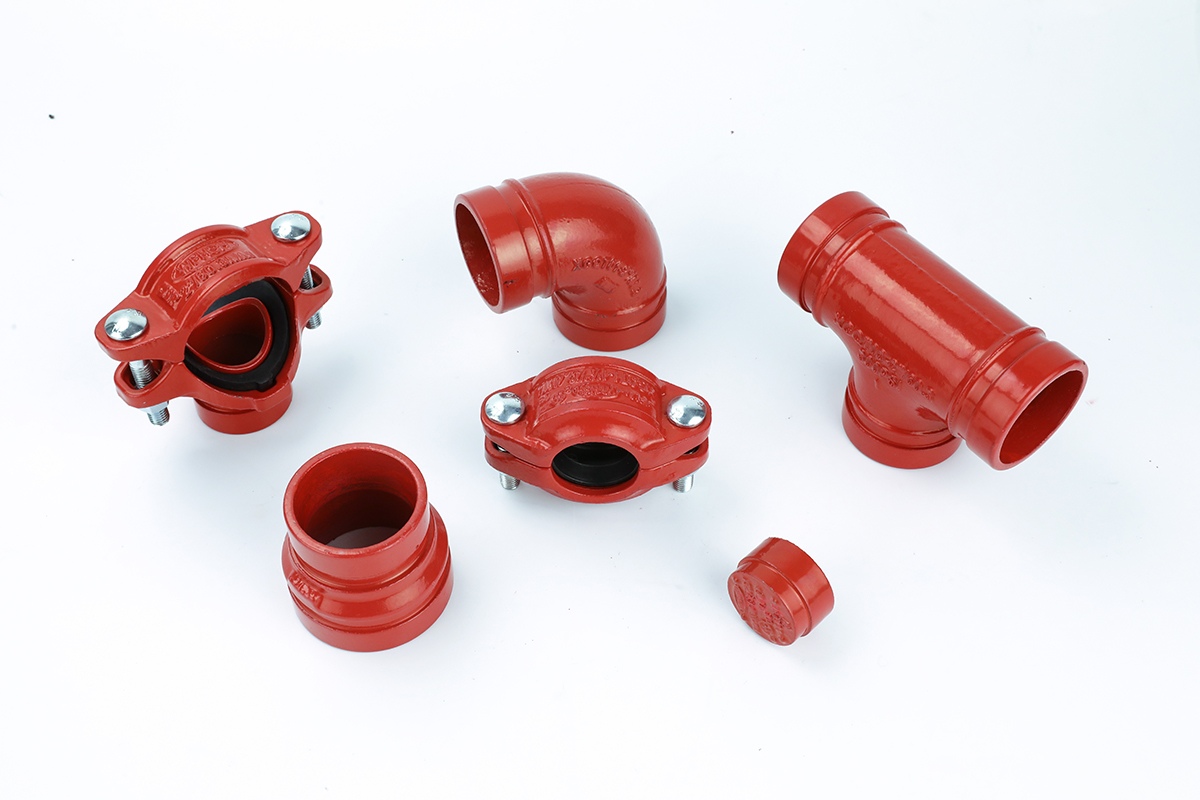
What Do NPS and DN Mean on a Grooved Fitting Size Chart?
People mostly use NPS and DN to name nominal pipe sizes. These labels help contractors, engineers, and buyers talk about pipe dimensions easily. Still, you must never treat them as exact measured diameters.
What Is NPS?
NPS, or Nominal Pipe Size, is an inch-based label. It is very popular in North American piping networks. A fitting stamped with 2″, 4″, or 6″ shows its nominal size. You cannot just measure that exact number across the pipe’s outer shell.
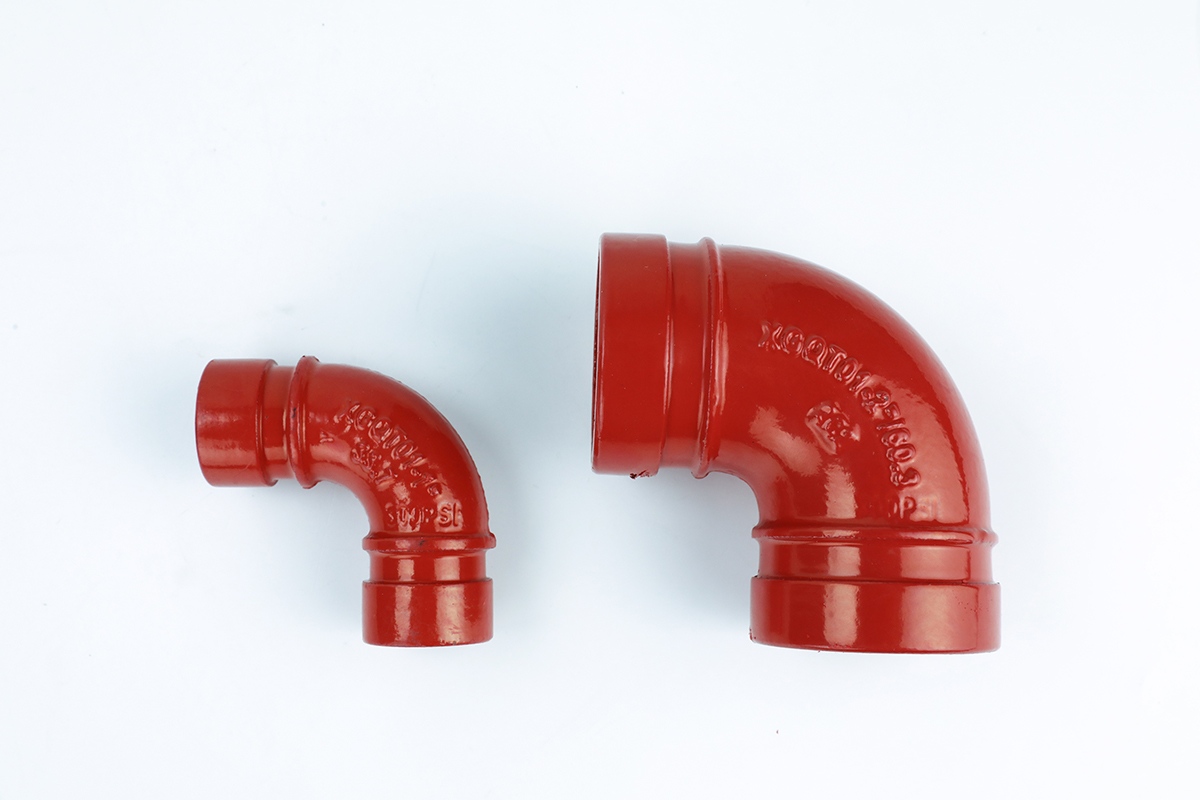
For example, FLUID TECH lists its 4″ grooved 90° elbow as DN100. Meanwhile, the actual outside diameters available for it include 108 mm and 114.3 mm.
What Is DN?
DN, or nominal diameter, is a metric sizing tag. It helps identify piping dimensions worldwide. Typical examples include DN50, DN65, DN100, and DN150.
Both DN and NPS work well to show the general size family. Yet, they are not enough by themselves when you order a grooved fitting. The actual pipe OD needs to match the fitting perfectly. It must also fit the grooving system.
Why Is Actual Pipe OD So Important for Grooved Fittings?
OD is a real, measurable physical distance. This makes it very different from a simple nominal label. You must pick grooved couplings and fittings based on the correct pipe outside diameter. They also need to match the specific groove profile.
Why Can One DN Size Have More Than One OD?
Different global markets use different pipe standards. These rules can create various outside diameters under the exact same nominal size tag. Because of this, a supplier’s spec chart might list multiple OD options for a single NPS or DN.
For instance, FLUID TECH’s grooved 90° elbow specifications display 2½” / DN65 with either 73 mm or 76.1 mm OD. Looking at the 6″ / DN150 size, the table provides 159 mm, 165.1 mm, and 168.3 mm options.
Because of this, a purchase order just asking for a “DN65 grooved elbow” lacks crucial details. Buyers really need to check the pipe’s actual OD before they place an order.
What Does Center-to-End Mean on a Grooved Fitting Drawing?
First, you confirm the pipe size and OD. Next, you must look at the physical space the fitting takes up. This measurement becomes highly critical for prefabrication tasks. It also matters a lot for BIM coordination and pipe cutting.
How Is Center-to-End Measured?
Center-to-end normally means the distance from a fitting’s theoretical centerline intersection out to its connection end. Different makers use different drawing styles. So, this dimension might show up as a letter like L, A, C, or a similar symbol.
This length changes based on the fitting type and its angle. For example, FLUID TECH currently lists an L dimension of 102 mm for a 4″ / DN100 90° grooved elbow. Meanwhile, their 4″ / DN100 45° elbow shows an L dimension of 76 mm.
This gap in size matters greatly when you swap an elbow type on a blueprint. You simply cannot treat a 45° fitting like it takes up the same room as a 90° fitting.
How Does Center-to-End Affect Pipe Cut Length?
You should figure out the pipe cut length based on the final installed layout. Do not just copy numbers directly from the nominal size of a fitting.
How Can You Estimate the Straight Pipe Length?
For a basic straight run connecting two fittings, you can frame a rough layout like this:
Pipe cut length ≈ center-to-center distance − fitting takeout at one end − fitting takeout at the other end − applicable joint allowances
Imagine a drawing shows the gap between two fitting centerlines. The center-to-end measurements of those fittings take up a portion of that total distance. Therefore, you must subtract them to find the true straight section between the fitting ends.
Still, you should view this as a layout principle rather than a universal fabrication formula. Grooved systems often demand specific pipe-end gaps and exact groove spots. They also involve coupling allowances, strict tolerances, and special installation needs. You must always verify final cut dimensions against the chosen fitting drawings. Also, check the coupling data, groove specs, and local project rules.
What Should You Check Before Ordering Grooved Pipe Fittings?
A dimension chart gets much easier to read when you review the needed details in a steady, step-by-step order.
Which Dimensions Should Be Verified First?
Before you buy parts or cut any pipe, please verify:
- NPS or DN
- Actual pipe OD
- Fitting type and angle
- Center-to-end or published fitting dimension
- Groove specification
- Coupling compatibility
- Required working pressure
- Pipe material and wall thickness where applicable
- Project-specific joint and fabrication allowances
Never assume two fittings sharing the same DN will automatically fit the identical pipe. Also, do not think items from different sizing systems can swap places easily. Their nominal size tags might look similar, but the physical parts often differ.
Where Can You Source Grooved Pipe Fittings with Clear Size Options?
Good fabrication starts with solid dimensional data and properly matched parts. Distributors, contractors, and project buyers need reliable partners. Buying fittings from a dedicated supplier makes checking specifications much simpler.
Why Consider FLUID TECH PIPING SYSTEMS (TIANJIN) CO.,LTD?
FLUID TECH PIPING SYSTEMS (TIANJIN) CO.,LTD provides a huge variety of ductile iron grooved pipe fittings. These parts serve fire protection, water supply, HVAC, and similar piping setups well. Their product catalog features grooved 90°, 45°, 22.5°, and 11.25° elbows. It also holds equal and reducing tees, crosses, reducers, end caps, drain fittings, and grooved-to-threaded transition pieces.
The company shares clear dimensional tables for many of its goods. They offer multiple OD choices for standard nominal sizes. This setup helps global buyers match fittings to various piping needs easily. FLUID TECH also notes that its exported fire protection line holds major approvals. These include certifications from groups like FM, UL, CE, LPCB, and VdS, based on the specific item.
Conclusion
Reading a grooved fitting size chart takes more effort than just spotting the right NPS or DN. Nominal size identifies the size family, actual OD confirms physical compatibility, and center-to-end dimensions define how much space the fitting occupies in the piping layout. Afterward, these specific numbers help you calculate the proper straight pipe length between your fittings.
When handling purchases and prefabrication, you should always follow this exact path: NPS/DN → actual OD → fitting geometry → center-to-end dimension → groove and coupling requirements → final cut length. Reviewing each detail before you start building prevents major headaches. It cuts down on mismatched fittings, wrong pipe cuts, messy field fixes, and long installation delays.
FAQs
Is DN100 Always the Same as 114.3 mm OD?
No, it is not. DN100 acts as a nominal size tag. It does not promise one single actual OD. For example, FLUID TECH’s current 4″ / DN100 grooved elbow chart shows both 108 mm and 114.3 mm OD options. You must always check the actual pipe OD before you pick a fitting.
Is the L Dimension Always the Same as Center-to-End?
Not always. Different makers tend to use unique letters and drafting rules. Never assume that L, A, C, or any other letter automatically means center-to-end. You should always read the drawing legend and check the dimension diagram for that exact item.
Can I Calculate Pipe Cut Length Using Center-to-End Dimensions Alone?
No, you cannot rely on them alone. Center-to-end measurements are crucial for figuring out the fitting takeout. However, the final pipe cut length depends on other factors too. These include coupling style, needed pipe-end spacing, groove shape, fabrication limits, and strict project rules. Always review the maker’s dimension and installation data before you cut any pipe.