When selecting a fire sprinkler head for a fire protection system, choosing the correct style is critical. Among the many types of fire sprinklers used in commercial, industrial, and residential applications, the K5.6 pendent fire sprinkler with a standard response temperature is one of the most commonly used sprinkler heads. As a fire sprinkler contractor, fire protection engineer, sprinkler distributor, or building owner, understanding what K5.6 means, how a pendent fire sprinkler works, and why a standard response temperature rated as “standard” is so commonly used, will help you design and specify the best fire protection system for most building applications. This article will describe a K5.6 fire sprinkler and why it is so popular, explain how a pendent fire sprinkler functions, and why a fire sprinkler with a standard response temperature is the most commonly specified temperature for fire sprinkler systems.
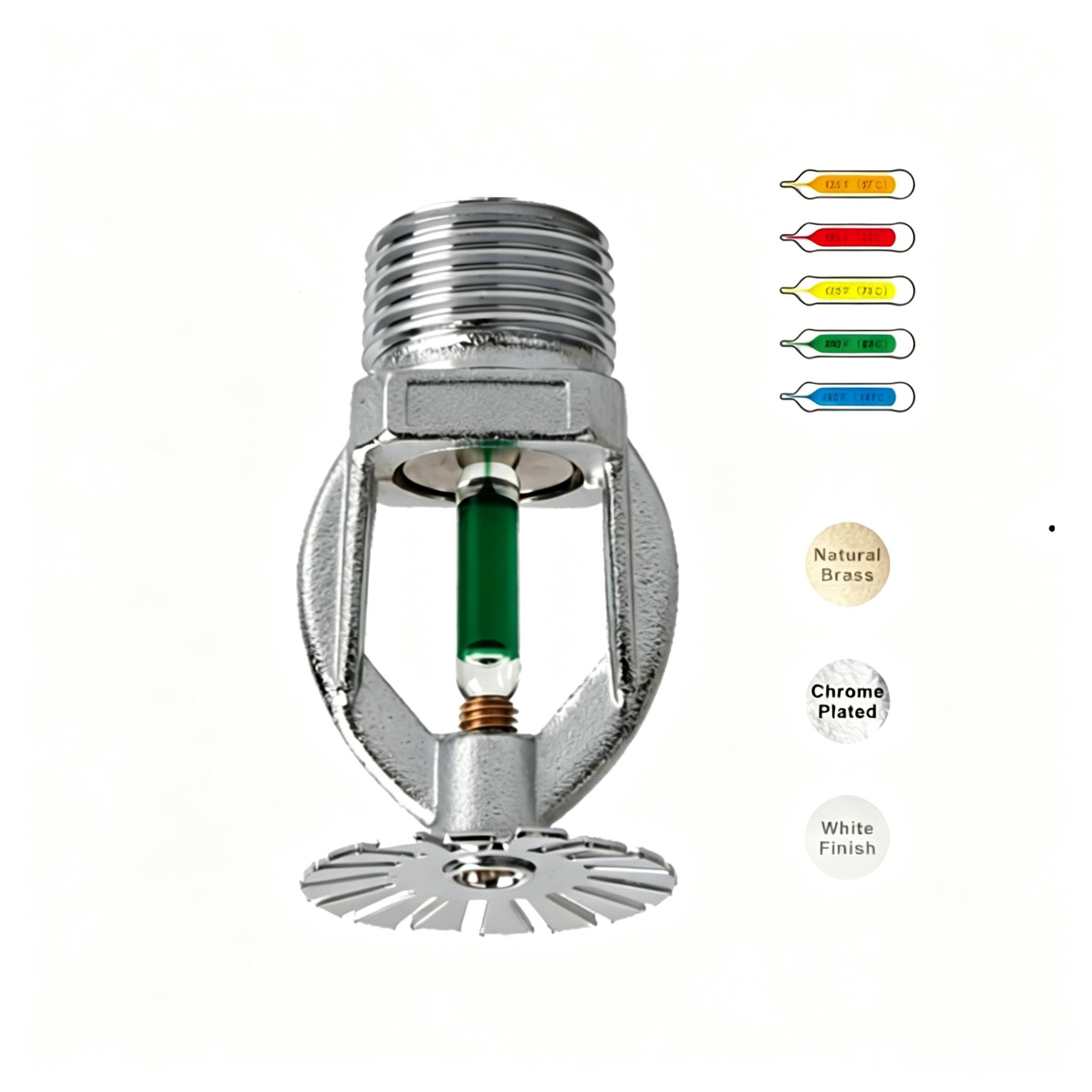
What Does the Term “K5.6” Represent in Fire Sprinkler Systems?
The K-factor is a critical parameter that indicates how a sprinkler will release under pressure. To the fire protection engineer, the K-factor is the key to relating the sprinkler’s hydraulic performance to the overall fire protection system design. The “K5.6” model reports a flow coefficient of 5.6 (U.S.) or 80 (metric) which suggests moderate water discharge for typical fire hazards. The model is FM Approved / UL Listed to meet safety requirements worldwide.
The Role of the K-Factor in Hydraulic Design
The K-factor is a critical parameter used in hydraulic design to relate discharge (Q) and pressure (P) to the formula Q = K√P. A K5.6 sprinkler offers a balanced water flow that is suitable for applications classified as ordinary hazard such as commercial office buildings or retail stores. The K5.6 sprinkler will allow designers to select optimum pipe and pump size, while maintaining an acceptable coverage density as required by NFPA 13. Importantly, the K-factor of a sprinkler provides precise information as to the operating pressure of the sprinkler and thus can prevent problems of either excessive sprinkler spray or insufficient coverage.
How K5.6 Affects System Performance
The K5.6 coefficient affects not only the water discharge but also the drop size and the regularity of the spray upon activation. This affects fire control rather than fire extinguishment, and is crucial for determining the required hydraulic parameters for calculation of friction losses in pipelines as well as for selection of suitable pumps. By selecting a coefficient that matches the design density for standard response sprinklers, as specified in NFPA 13, engineers can be assured of expected performance for various occupancies.
How Does a Pendent Sprinkler Function Within Fire Protection Systems?
A pendent sprinkler is a type of sprinkler that is mounted to drop from the ceiling and operate by releasing a downward flow of water in a circular “pendent” spray pattern. A standard response pendent sprinkler is a type of sprinkler that is designed to open during a fire and drop water in a circular spray pattern down to the floor in order to protect a given area. It is one of the most typical sprinkler types used for ceiling protection in commercial, industrial, and residential buildings with flat ceilings because it offers the best protection.
Key Components of a Pendent Sprinkler
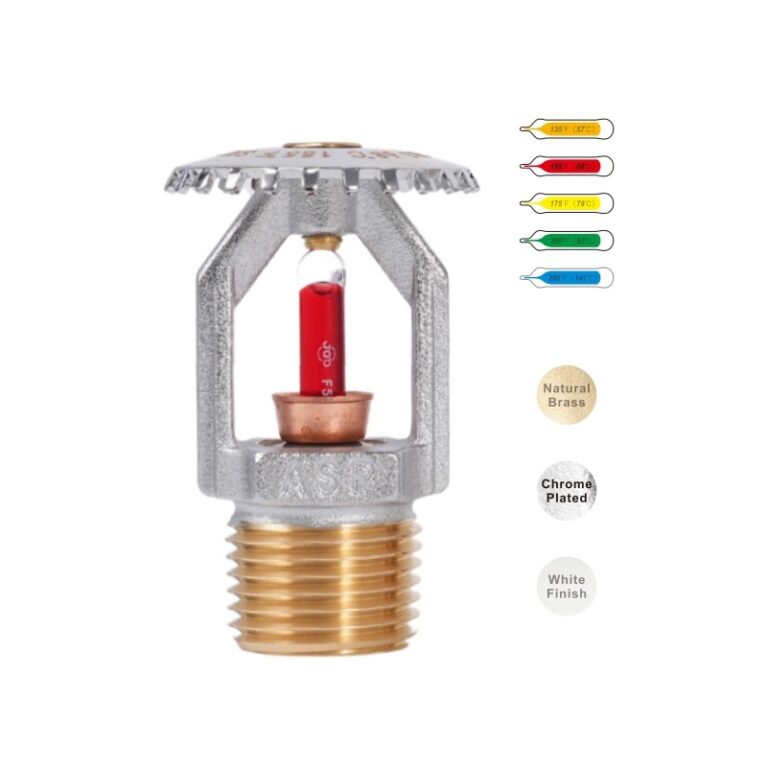
A pendent sprinkler consists of three primary components:
- Frame: Provides structural support for the deflector and thermal element while connecting to the branch line pipework.
- Deflector: Shapes the water stream into an even distribution pattern below the ceiling plane, ensuring consistent coverage throughout the protected area.
- Thermal Element: Contains either a glass bulb or fusible link that ruptures at predetermined temperatures—commonly ranging from 135°F (57°C) to 360°F (182°C)—allowing immediate water discharge when triggered by heat.
Activation Mechanism and Water Distribution Pattern
When the ambient temperature exceeds the design temperature for the thermal element, it will burst or melt and discharge water through the orifice. The water is then dispersed in a uniform circular distribution pattern downward from the sprinkler. This distribution is called a spray distribution and is influenced by the fixed mounting height, the fixed spacing between similar sprinklers and the fixed ceiling configuration. This is all considered when designing a sprinkler system.
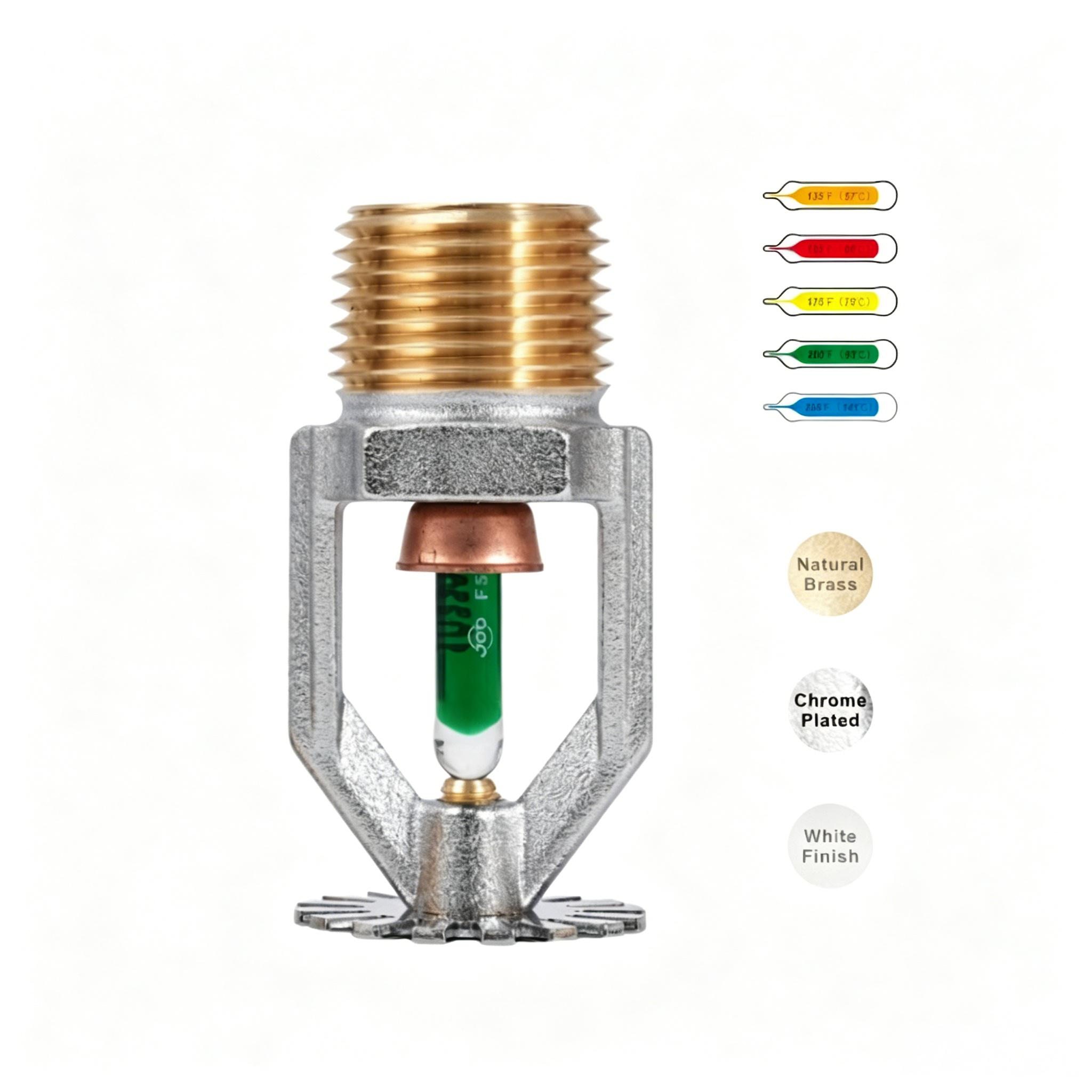
Why Is “Standard Response” Important in Fire Protection Engineering?
Standard response sprinklers are engineered primarily to control fire growth rather than extinguish it instantly, providing valuable time for evacuation and firefighting operations. Their activation characteristics make them suitable for environments where structural integrity and compartmentation already limit fire spread.
Characteristics of Standard Response Sprinklers
In general, standard sprinklers are set to activate at a higher temperature than quick response sprinklers. They are designed to provide a safe and adequate response when exposed to a continued high temperature over a period of time and are suitable for use where there are longer time-scales for evacuation and where ambient temperatures may vary.
Applications Where Standard Response Sprinklers Are Preferred
Standard response sprinklers are typically specified in applications of warehouses, mechanical rooms, factories, etc. of large volume and are classified under Ordinary Hazard Groups 1 & 2 per NFPA 13. These sprinklers deliver a controlled discharge which allows for effective fire control while minimizing water damage – a critical consideration in many types of industrial applications.
How Does Selecting a K5.6 Pendent Sprinkler Impact System Design?
The choice of sprinkler can have significant implications for the hydraulic, cost and reliability performance of a fire suppression system. The K5.6 pendent sprinkler is a versatile device that is suited for both new installation and retrofit applications in a wide range of standard hazard occupancies.
Hydraulic Considerations in System Planning
Designers must cross reference available supply pressures with required flow for each required area using the formula Q = K√P. Adequate pipe sizing will prevent pressure drop across friction in the pipes and thus maintain required density throughout the area of protection. Head for a deluge can be affected by ceiling height and other obstacles, and thus it is important to check the pattern of water from the nozzles to ensure uniform coverage.
Balancing Cost Efficiency and Safety Performance
The K5.6 pendent sprinkler offers an optimal combination of operational performance and cost effectiveness by virtue of the medium water flow rate and the use of standard parts throughout. The same sprinkler is thus suitable for use in both wet-pipe and dry-pipe systems. Sprinkler Finish: Natural Brass / Chrome Plated / White Finish. These finishes allow the sprinkler to be designed to blend with any building’s architecture, ensuring ease of maintenance as the most common of spare parts will be readily available from all suppliers.
Who Is FLUID TECH PIPING SYSTEMS (TIANJIN) CO., LTD?
Fluid tech group is the first company in northern China that specializes in the field of fire protection with his own brand -IF grooved coupling and grooved fittings. In 2018, flutech piping systems was established in tianjin in cooperation with several foundries and pipe fittings processing plants. The company provides one-stop procurement services for construction companies around the world. The fire protection products exported by us have passed FM/UL/CE/LPCB/VDS certifications, and the factories involved in the production have passed iso, sgs, and tuv certifications. Our aim is to use high-quality products to ensure the safety of the project, use professional knowledge to solve customer questions, and use professional one-stop services to reduce customer costs. This commitment positions FLUID TECH as a dependable partner delivering certified components such as valves, fittings, couplings, and sprinklers globally.
What Are the Key Benefits of Using K5.6 Pendent Sprinklers?
K5.6 pendent sprinklers offer a combination of precise discharge and robust quality of construction which has been verified as meeting the requirements of FM/UL certification programs.
Advantages for Fire Protection Professionals
These devices are designed to activate reliably under average hazard situations and maintain adequate coverage while being compatible with various configurations of fire protection systems. Also they meet the requirements of building regulations worldwide and are accepted by local building codes. Therefore these devices are a perfect standard solution for fire protection engineers designing fire protection systems worldwide according to for example NFPA 13 or EN12845.
Summary Insights on K5.6 Pendent Sprinkler Application
The K5.6 pendent sprinkler is a vital component in current fire protection systems. It is efficiently designed, flexible in application to various types of buildings, and meets relevant safety criteria of recognized testing and approval bodies. Sprinklers of this type are certified by FM/UL criteria by manufacturers such as FLUID TECH PIPING SYSTEMS (TIANJIN) CO., LTD.
Frequently Asked Questions (FAQs)
What does “K” stand for in sprinkler terminology?
“K” equals the discharge coefficient for the pump. It describes the relation between the water flow (Q) and the pressure (P) by the formula Q = K * √P. It describes the efficiency of water discharge.
Can K5.6 sprinklers be used interchangeably with other K-factor models?
No, substitution of materials requires recalculation of the hydraulic parameters to check against design density targets and to confirm code compliance before the substitution can be made.
How often should pendent sprinklers be inspected or replaced?
NFPA 25 states that annual visual inspections are to be performed with functional testing to be performed every 10 years or as recommended by the manufacturer to ensure reliable operation throughout the service life of the fire suppression system.