A riser clamp and a U-bolt may both appear on a fire protection piping system bill of materials, but they are not interchangeable support devices. A riser clamp is made to support a vertical pipe at an appropriate structural bearing location. A conventional U-bolt wraps around a pipe and is typically used to restrain, guide or secure it to a suitable support, depending on the approved assembly. Selecting the correct component starts with pipe direction, the actual load path and the approved support detail—not the similarity of the two product names.
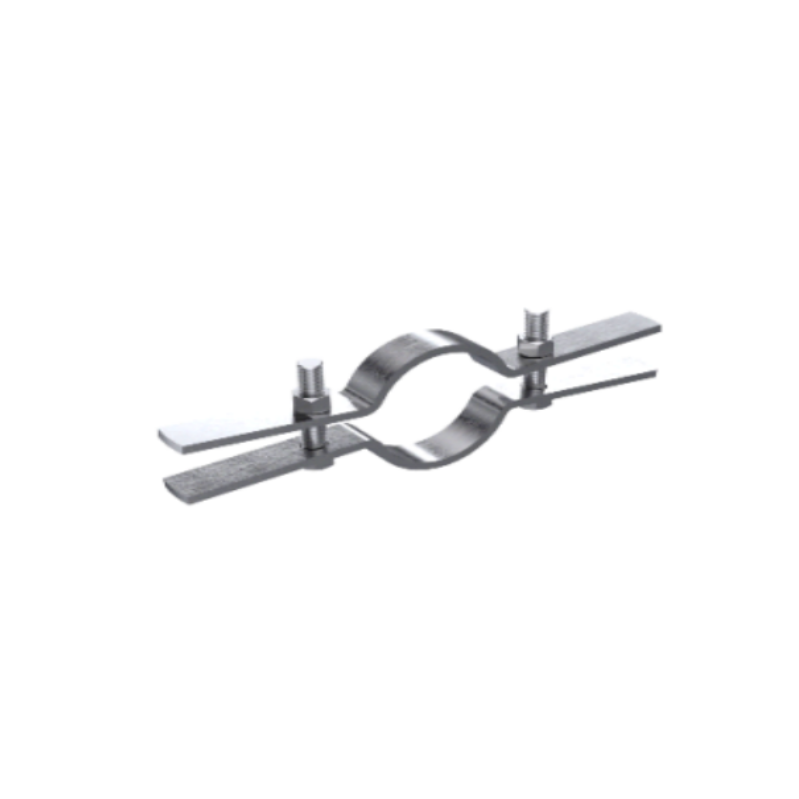
How Do a Riser Clamp and a U-Bolt Work Differently?
The shape of a fitting matters less than how forces move from the water-filled pipe into the building structure. A support detail must account for pipe weight and the specific movement or restraint that the system requires.
Where Does a Riser Clamp Carry the Load?
A riser clamp typically consists of opposed arms that grip a vertical pipe and extend to bear on an approved structural support, such as a floor or engineered framing detail. It is intended to transfer the supported riser load into that structure rather than leave the full vertical weight on the nearest coupling or branch connection.
Fluid Tech describes its riser clamp as designed for supporting vertical pipes. The published product information gives a carbon steel body, electro-galvanized finish with an alternative finish on request, and size-dependent maximum recommended loads. Use the rating for the exact ordered size; do not apply the value for one diameter to every clamp in a riser.
What Is a Conventional U-Bolt Intended to Do?
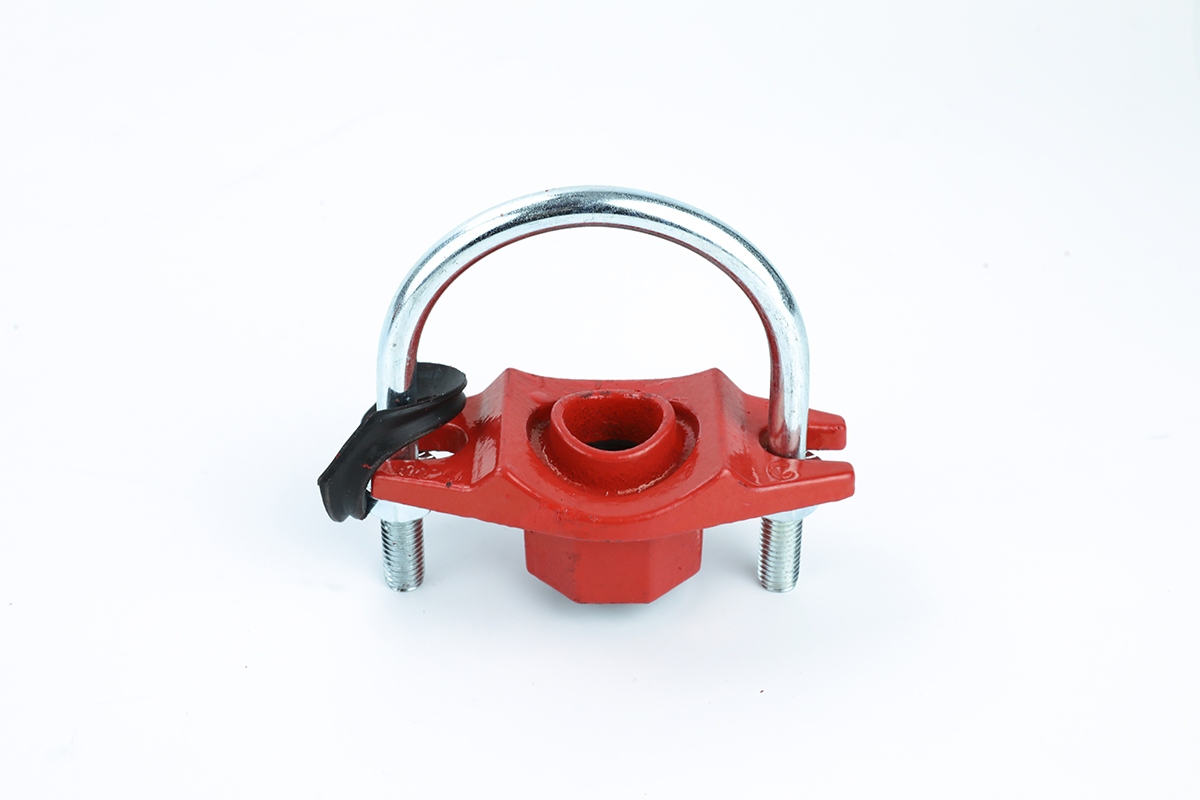
A conventional U-bolt curves around the pipe and has two threaded legs that fasten to a structural member, plate or support channel. Depending on the detail, it may secure the pipe to a support, help guide movement or participate in an engineered restraint assembly. Its performance depends on the complete load path, including nuts, washers, spacing, backing member and anchorage.
The U-bolt in Fluid Tech’s supplied product notes is a carbon steel, electro-galvanized accessory described for use as a pipe support, anchor or guide. That description does not establish a universal suspended-load rating or make it a direct substitute for a riser clamp. Verify the exact U-bolt’s drawing and rated use before specifying it.
Which Support Fits Vertical and Horizontal Pipe Runs?
Pipe orientation provides a starting point, but it cannot replace the engineer’s support detail. A horizontal pipe may need gravity support, lateral restraint and movement allowance; a vertical riser needs a defined path for its accumulated weight and movement.
How Should a Vertical Riser Be Supported?
Vertical sprinkler risers can carry the mass of steel pipe, water, fittings and valves over several storeys. A riser clamp may support that load at designed intervals or floors, with its arms bearing against a suitable support surface. The clamp’s pipe-size fit, permitted load and structural bearing arrangement must all be checked together.
When Is a U-Bolt Useful on a Horizontal Run?
A U-bolt can secure a pipe to a channel, bracket or other approved support detail, particularly when pipe guidance or restraint is needed. It should not be assumed to replace a purpose-designed overhead hanger or a lateral/seismic brace merely because it wraps around the pipe. For a freely suspended run, a specified clevis or ring hanger may be more appropriate for the gravity load.
Fluid Tech’s pipe hangers and accessories range includes those alternative support components. Selecting from the whole assembly is more useful than forcing every pipe location to use either a riser clamp or a U-bolt.
How Do Installation Position and Load Direction Affect Safety?
A clamp that is correctly sized but installed against the wrong structure cannot reliably transfer the intended load. Equally, a U-bolt that prevents required movement can create stress at a nearby grooved coupling or branch line.
Which Loads Should Be Checked Before Installation?
Confirm dead load from the pipe, water and attached equipment; the approved support spacing; structural connection capacity; and any movement, vibration or lateral restraint requirements. Check whether the intended fitting supplies gravity support, guidance or restraint. These functions can require different hardware even when the pipe outside diameter is identical.
What Should Procurement Teams Specify for Each Component?
A line on a material takeoff that reads only “pipe clamp” is too vague for a safe comparison. Request the drawing and load data for the actual product, then match it to the project detail.
What Goes on a Riser Clamp RFQ?
Specify nominal pipe size and actual outside diameter, pipe orientation, required supported load, selected finish, quantity and any project-required approval documentation. Fluid Tech’s riser clamp page includes maximum recommended loads that vary by size; for example, the catalogue lists 599 lb for its 4-inch clamp and 1,059 lb for its 6-inch clamp. Those are published component figures, not independent approval of a floor support assembly or a recommended support spacing.
What Goes on a U-Bolt RFQ?
Specify the pipe OD, U-bolt inside width, rod diameter and thread, leg length, number and type of nuts and washers, finish, backing material and intended support function. Require the relevant load rating and manufacturer installation detail if the U-bolt will carry or restrain a design load. Do not confuse an ordinary support U-bolt with a similarly named threaded-branch tapping fitting; they serve different functions.
Can Fluid Tech Supply a Coordinated Pipe Support Package?
Fluid Tech Piping Systems (Tianjin) Co., Ltd. lists riser clamps, U-bolts, ring hangers, clevis hangers, threaded rods and related fasteners for fire protection procurement. Its product notes identify material, finish and ordering details for several components. Buyers can request a coordinated support package, while the project engineer confirms allowable loads, spacing, structure and approvals for each installed assembly.
Conclusion
Use a riser clamp where a designed vertical riser support is required; consider a conventional U-bolt where an approved bracket or channel assembly needs pipe securing, guidance or restraint. Pipe direction alone is not enough. Verify the exact fitting, supported weight, load path, structural connection and required movement before making a substitution or placing an order.
FAQs
Can a U-Bolt Replace a Riser Clamp on a Vertical Pipe?
Not automatically. A U-bolt and its backing structure would need an engineered and approved arrangement capable of carrying the intended vertical load. A standard pipe-securing detail is not proof that it can support a riser.
Can a Riser Clamp Be Used on a Horizontal Pipe?
A riser clamp is designed for vertical pipe support. Horizontal runs generally need support components and load paths specified for their installation arrangement; do not repurpose a riser clamp without an approved design.
What Is the Most Important Specification When Ordering Either Support?
Check the pipe OD and the complete load-bearing assembly. Size, material, finish, permitted load, structural anchorage and project approval all matter; nominal size or clamp shape alone cannot confirm suitability.